

Commentary
European reactions to the war in Iran have lost sight of wider political dynamics. The EU must position itself for the next phase of the crisis without giving up on its principles.
Richard Youngs
{
  "authors": [
    "Paul Haenle",
    "Douglas H. Paal"
  ],
  "type": "legacyinthemedia",
  "centerAffiliationAll": "dc",
  "centers": [
    "Carnegie Endowment for International Peace",
    "Carnegie China"
  ],
  "collections": [
    "China’s Foreign Relations"
  ],
  "englishNewsletterAll": "asia",
  "nonEnglishNewsletterAll": "",
  "primaryCenter": "Carnegie China",
  "programAffiliation": "AP",
  "programs": [
    "Asia"
  ],
  "projects": [],
  "regions": [
    "North America",
    "United States",
    "East Asia",
    "China"
  ],
  "topics": [
    "Political Reform",
    "Economy",
    "Foreign Policy"
  ]
}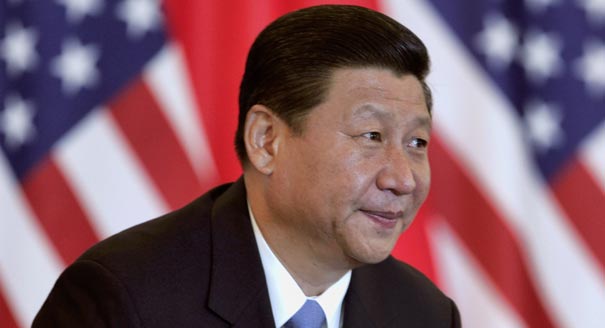
Source: Getty
The United States and China must find ways to cooperate if the rebalance of American policy toward Asia is to succeed.
Source: China Daily

The US' relations with each nation in the region are important and require tailored care, but no bilateral relationship will be successful if Washington fails to handle its relations with Beijing wisely. The greatest challenges facing this relationship - deficit of trust, regional tension over territorial disputes as well as US and Chinese domestic hurdles - have implications well beyond the bilateral aspects.
Washington's Asia-Pacific policy should have at its core upholding the stability and rules-bound system that have delivered growing success for small and large powers alike for decades while accommodating the re-emergence of China as an increasingly important power with a voice in regional and global affairs.The Barack Obama administration sought to rebalance American policy toward Asia in the middle of 2011. The rebalance, or misnamed "pivot to Asia", is usually depicted in military or security terms, with the US shifting its focus and resources from the wars in Iraq and Afghanistan back to the Asia-Pacific region, where American economic and security interests are greater.
Unforeseen events have complicated the picture. Tensions erupted between the Philippines and China, and Vietnam and China in the South China Sea, between Japan and China in the East China Sea, and between Japan and the ROK over disputed territorial claims. And the US became entangled in the disputes further straining Sino-American relations.
The Obama administration faces a cascade of decisions that will largely be viewed as relatively low priorities in the American domestic context but could prove supremely important in terms of great-power relations and the future of the US economy if they are mismanaged.
If Beijing and Washington, despite their many complementarities, fail to manage their real differences, the potential costs would be unimaginable. The trick will be to exploit the complementary aspects of Sino-American ties to resolve, contain or, if deterrence fails, defeat the threats that the differences may produce.
The Obama administration needs to decide how to position Sino-American ties. This will not be a binary process but one with many complicating factors, starting with the formulation of policies to revitalize the US economy. A confident and growing US will have few impediments to exercising its influence.
Restoring US competitiveness requires an end to talk and the implementation of a coherent strategy to make the American revival a reality. This will be enhanced if, as seems likely, China's skyrocketing growth trajectory encounters the transitional difficulties that other states which followed the Asian development model have met after the initial takeoff phase.
The agenda going forward has political, economic, and military dimensions. Politically, the newly re-elected American administration will be dealing with a new leadership in China. Early interactions between the two sides will assume outsized symbolism as indications of the directions in which new leaders may seek to proceed.Finally, there is a huge surplus of mistrust between the peoples, especially the militaries, of the US and China. Obama's cabinet would benefit from having at least one or two officials with hands-on experience in the Asia-Pacific region. Choices of commanders in the armed forces are complex, but adding qualifications of Asia work experience for certain positions is essential.
Sustaining and deepening military-to-military interaction can only help both camps demystify the other side and hopefully improve communications to reduce misunderstandings. From the US' perspective, China's greater military reach, especially at sea, but also in the air, space and cyber domains, will challenge the US military and its partners to adjust doctrine and strategy.
Washington needs to quickly get past any talk about declaring China a currency manipulator. China's surplus was 10 percent of GDP in 2009. Today, that surplus has shrunk to a normal 2 percent. Currency is not the issue.
But there are plenty of trade issues to take up with China and other regional trade partners. American business is largely prospering in China, which is the US' second largest trade partner and fastest growing export destination. As the US seeks to restore economic dynamism at home, these facts must not be forgotten.
Moreover, China is at the beginning of what promises to be a massive campaign of outward investment that could benefit American workers. US administration representatives will be asked to review potential investments many times for their impact on national security. It is imperative that these reviews are as transparent as possible and do not send the mistaken signal that no investment is welcome in the US. That implication would be incompatible with US national economic priorities, inconsistent with the American tradition of welcoming and benefiting from foreign direct investment, and could invoke reciprocal constraints on US investors.
US-China ties are too consequential to move along a deliberate path of confrontation. China and the US have shared interests in regional and international peace and prosperity and must find ways to cooperate and avoid unhealthy competition.
In the final presidential debate, Obama referred to China for the first time as an "adversary". But Xi Jinping, the new Party leader and head of the military, has promoted a novel concept, which he calls a "new kind of great-power relationship" that apparently means finding a way for a rising power and an existing power to avoid conflict. Obama should seek an early opportunity next year to deeply probe Xi's thinking to help make this a reality.
The first scheduled meeting between the two leaders will not occur until the G20 meets in 2013. Given the looming challenges between Beijing and Washington, Obama would do well to break with precedent and invite Xi for a long, unscripted weekend chat, say, in Hawaii early in their new terms, and both sides should welcome such an exploration of their mistrust and capacity for cooperation. An offer of this sort would be seen as a sign of the US president's strength, not weakness, and of respect for his Chinese counterpart, providing a constructive basis for managing the coming challenges.
Douglas H. Paal is vice-president for studies, Carnegie Endowment for International Peace, and Paul Haenle is director of Carnegie-Tsinghua Center for Global Policy. The article is an excerpt from their essay, A New Great-Power Relationship with Beijing.

Former Maurice R. Greenberg Director’s Chair, Carnegie China
Paul Haenle held the Maurice R. Greenberg Director’s Chair at the Carnegie Endowment for International Peace and is a visiting senior research fellow at the East Asian Institute, National University of Singapore. He served as the White House China director on the National Security Council staffs of former presidents George W. Bush and Barack Obama.

Distinguished Fellow, Asia Program
Paal previously served as vice chairman of JPMorgan Chase International and as unofficial U.S. representative to Taiwan as director of the American Institute in Taiwan.
Carnegie does not take institutional positions on public policy issues; the views represented herein are those of the author(s) and do not necessarily reflect the views of Carnegie, its staff, or its trustees.
European reactions to the war in Iran have lost sight of wider political dynamics. The EU must position itself for the next phase of the crisis without giving up on its principles.

Richard Youngs
For years, the United States anchored global cyber diplomacy. As Washington rethinks its leadership role, the launch of the UN’s Cyber Global Mechanism may test how allies adjust their engagement.


Patryk Pawlak, Chris Painter
Europe isn’t as weak in the new geopolitics of power as many would believe. But to leverage its assets and claim a sphere of influence, Brussels must stop undercutting itself.

Dimitar Bechev

Europe’s reaction to the war in Iran has been disunited and meek, a far cry from its previously leading role in diplomacy with Tehran. To avoid being condemned to the sidelines while escalation continues, Brussels needs to stand up for international law.

Pierre Vimont
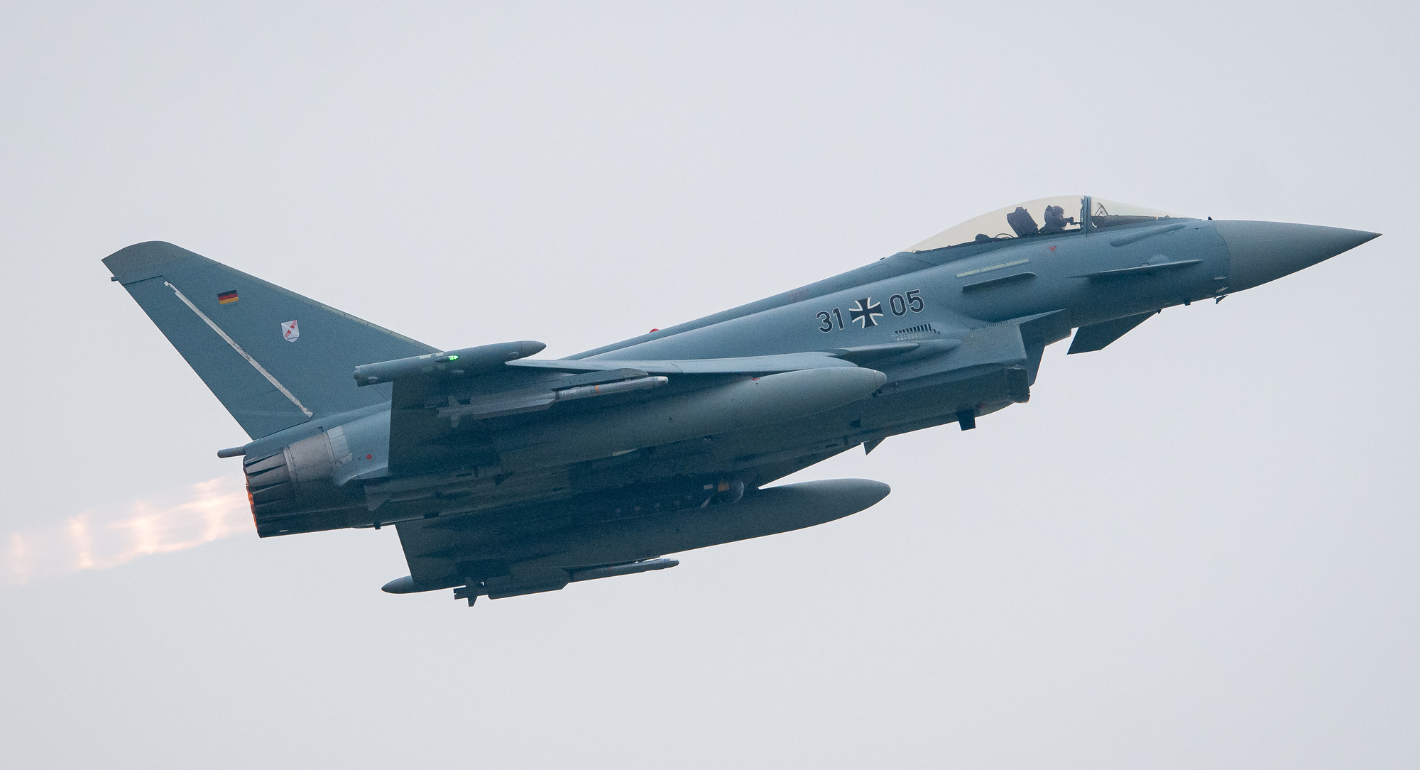
France and Germany’s failure to agree on the Future Combat Air System (FCAS) raises questions about European defense. Amid industrial rivalries and competing strategic cultures, what does the future of European military industrial projects look like?

Rym Momtaz, ed.