

Commentary
Nathan J. Brown
{
  "authors": [
    "Nathan J. Brown"
  ],
  "type": "legacyinthemedia",
  "centerAffiliationAll": "dc",
  "centers": [
    "Carnegie Endowment for International Peace",
    "Malcolm H. Kerr Carnegie Middle East Center"
  ],
  "collections": [],
  "englishNewsletterAll": "menaTransitions",
  "nonEnglishNewsletterAll": "",
  "primaryCenter": "Carnegie Endowment for International Peace",
  "programAffiliation": "MEP",
  "programs": [
    "Middle East"
  ],
  "projects": [],
  "regions": [
    "Middle East",
    "Palestine",
    "Levant"
  ],
  "topics": [
    "Political Reform"
  ]
}
Source: Getty
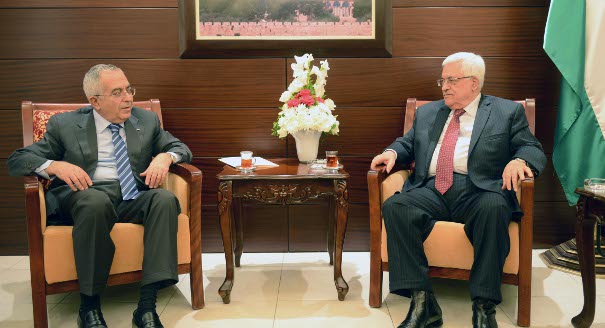
Palestinian Prime Minister Salam Fayyad never had a chance to meet the outlandishly high expectations placed on him by his international boosters.
Source: Foreign Policy
This past weekend, Palestinian President Mahmoud Abbas accepted the resignation of Salam Fayyad, caretaker prime minister since June 2007. Abbas also asked Fayyad to stay on as caretaker -- until a new caretaker prime minister could be found.
Why did all this make news? In a superficial sense, nothing had changed -- at most, Palestine might eventually get a new caretaker prime minister. And despite the praise "Fayyadism" received from enthusiastic foreign supporters, there may be no change in a deeper sense as well.
The attention given to Fayyad's departure obscures the fact that his state-building reform program had largely been in abeyance for two years. Even when it was in full swing -- between 2009 and 2011 -- Fayyad himself was expansive in tone, but his promises were carefully hedged when one read the fine print.
It was his foreign backers who were less restrained. The problem was that Fayyad's international boosters had built their expectations for the state-building program on contradictions that went well past the point of absurdity. Fayyadism was supposed to constitute Palestinian self-reliance, but it was sustained only because foreign countries bankrolled it. Unsurprisingly, then, it decayed as international attention began to wander.Fayyadism was said to promise political reform, but it was based on the denial of democracy and the continuation of authoritarian rule. Fayyad was only appointed, after all, as an emergency measure when the constitutional order had collapsed. In the absence of elections or even a viable electoral framework, he ruled by decree.
Fayyadism was supposed to be based on building institutions, but it was completely dependent on a single, indispensable individual. After six years of Fayyad's premiership, some institutions on the West Bank -- especially those that donors cared about most, related to public finances and security -- function much better. Other institutions, generally in places where the international community did not care to look, function worse.
This isn't all Fayyad's fault. He simply did not have the tools to do more of what his backers expected. Even in two areas that were his forte -- public finance and economic management -- he was utterly dependent on other actors. A very significant part of the Palestinian Authority's funds came from abroad, while significant tax revenues came through Israel. Those sources were both unreliable and highly conditional. In the economic realm, the West Bank is effectively annexed by Israel, allowing Fayyad only the ability to manage within the terms of this dependency.
The most important changes that have taken place over the past six years are based on accentuation of earlier trends. Disillusionment has been replaced by despair. Palestine's leaders have grown older while Israeli settlements have grown larger. The Israeli-Palestinian peace process, which has not been taken seriously by most of its supposed beneficiaries for years, has ground to a full halt. Division between the West Bank and Gaza has become routinized.
As prime minister, Fayyad managed to ameliorate some of the short-term effects of these developments. However, none of the parties seems to have used his ability to manage Palestinian affairs for any purpose other than procrastination and self-delusion. He will have done his people a tremendous service if his resignation challenges the inexplicable complacency that prevails today.
But will Fayyad's resignation serve as a wake-up call? There is a hopeful way to use this juncture to move things forward, though it may strain credulity.
Recent events suggest a possible path forward: A Palestinian leader, with significant support abroad but without much of a constituency at home (and who has not lived much of his life at "home"), grows tired of the backbiting and personal rivalries and makes clear that he wishes to leave office. His foreign backers, however, insist that their continued support -- financial and diplomatic -- hinges on his continued leadership. And so leading Palestinian decision-makers, bereft of any realistic plan of their own, feel forced to ask the leader to stay on.
That is what happened this month when Hamas decided to retain Khaled Meshaal as head of its political bureau.
Neither Meshaal nor Fayyad would likely appreciate the ways in which they came to resemble each other, but the parallels show that the international community's ability to guide Palestinian leadership is still alive. The point may be to use this fact in a coordinated and realistic fashion, acknowledging existing realities while helping build new ones.
There are no easy alternatives to offer. The basic building blocks of any resolution to the situation are now simply absent. The best path for international actors might therefore be to encourage Palestinians to construct some of those blocks themselves, by giving them the political space and support to rebuild the basic elements of their politics.
In more concrete terms, that means coordinated international sponsorship of reconciliation between Gaza and the West Bank. If this process is to hold out hope for eventual movement rather than paralysis, it must include elections that give the Palestinian people -- and not merely the stultified leaders of Hamas and Fatah -- a real voice.
The pitfalls along such a path are numerous, but renewed Palestinian voting could have real salutary effects. Both halves of the Palestinian leadership would be compelled to reorient themselves toward soliciting people's support rather than simply entrenching themselves. A Hamas movement that had to ask for Palestinians' votes would likely behave differently -- paying attention to public opinion, articulating its strategic vision, and seeking to persuade those outside Islamist circles. A Fatah movement encountering the same need would either have to adapt, or continue its slow fade from the scene.
As long as Palestinians remain voiceless in their own affairs, it is difficult to see any path forward. But it must be frankly acknowledged that attention to Palestinian reconciliation would probably make progress on Israeli-Palestinian negotiations impossible in the short term. An approach that takes Palestinian politics seriously and prioritizes the issues of Gaza and Hamas would be uncertain in its effectiveness, distasteful in its implications, and necessarily slow in its progress. But at least it would be grounded in the realities of today rather than pretending that conditions that died in 2000 -- a viable peace process and a slowly emerging Palestinian polity -- still offer hope.
Fayyad's latest resignation offers all actors the opportunity to wake up to long-denied facts. But it will be far easier to punch the "snooze" button and wait to be woken again.

Nonresident Senior Fellow, Middle East Program
Nathan J. Brown, a professor of political science and international affairs at George Washington University, is a distinguished scholar and author of nine books on Arab politics and governance, as well as editor of five books.
Recent Work
Nathan J. Brown
Nathan J. Brown
Carnegie does not take institutional positions on public policy issues; the views represented herein are those of the author(s) and do not necessarily reflect the views of Carnegie, its staff, or its trustees.

A notable degree of participative democracy has firmly arrived in Europe. But to have more far-reaching impact, democratic deliberation needs to move into a radically new phase.

Richard Youngs

Before the next wave of EU enlargement takes place, the union needs to grapple with thorny questions of how power is distributed among its members.


Emil Sondaj Hansen, Ditte Brasso Sørensen
As the EU confronts profound challenges, several leaders have called for fundamental reform to the union’s model—but only modest, superficial changes have resulted. What if Europe really could be reimagined from zero today: What should such a redesigned European order look like?
Richard Youngs, ed.

The EU’s new migration policy is not suited to today’s realities. With climate change increasingly becoming a driver of displacement, Europe needs to rethink its deterrence-focused approach.

Shana Tabak
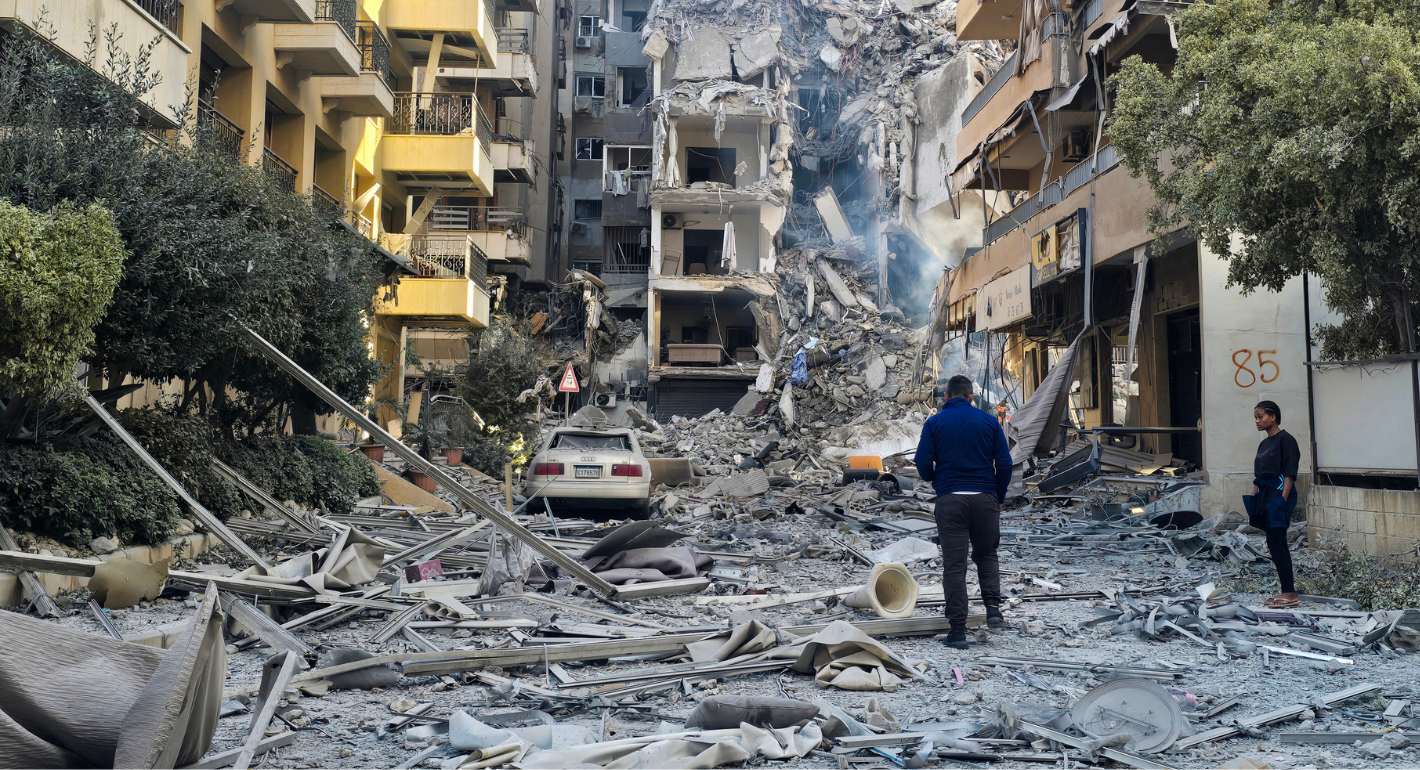
Europe seems to have accepted its sidelining in the Middle East. The EU must reassert its support for the international rules-based order and step up engagement.

Rym Momtaz