

In The Media
John Judis
{
  "authors": [
    "John Judis"
  ],
  "type": "legacyinthemedia",
  "centerAffiliationAll": "",
  "centers": [
    "Carnegie Endowment for International Peace",
    "Malcolm H. Kerr Carnegie Middle East Center"
  ],
  "collections": [],
  "englishNewsletterAll": "",
  "nonEnglishNewsletterAll": "",
  "primaryCenter": "Carnegie Endowment for International Peace",
  "programAffiliation": "",
  "programs": [],
  "projects": [],
  "regions": [
    "Middle East",
    "Israel",
    "Palestine",
    "Levant"
  ],
  "topics": [
    "Security"
  ]
}
Source: Getty
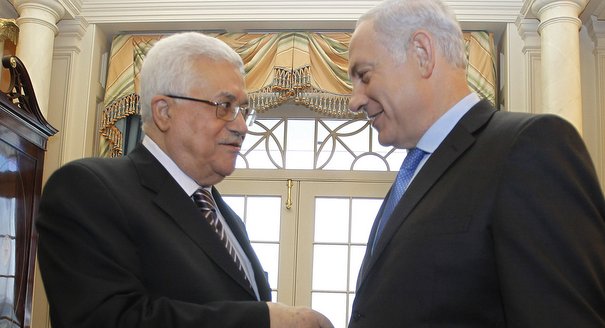
Members of Benjamin Netanyahu’s cabinet and party are now openly declaring the two-state solution dead.
Source: New Republic
No one except, perhaps, Secretary of State John Kerry, thinks that the current Israeli government is willing to negotiate in good faith a two-state solution. As Mairav Zonszein writes on the website, +972, members of Binyamin Netanyahu’s cabinet and party are now openly declaring the two-state solution dead.Prior to joining the government Economy Minister Naftali Bennett, the head of the Jewish Home party, had expressed opposition to a Palestinian state, but Bennett made sure yesterday that no one was under the illusion that he had changed his mind:
Bennett stated that "the idea of forming a Palestinian state in Israel has reached a dead end,” speaking at a settler council meeting Monday morning, comparing the “Palestinian problem” to a “piece of shrapnel” lodged in someone’s rear end; that one needs to learn to live with a pain in the ass rather than surgically remove it and risk becoming disabled.
Israeli cabinet officials often disagree with each other and with the Prime Minister, but if Netanyahu had been genuinely committed to the peace process, this kind of statement would have at least caused a tremor.

Former Visiting Scholar
As a visiting scholar at Carnegie, Judis wrote The Folly of Empire: What George W. Bush Could Learn from Theodore Roosevelt and Woodrow Wilson.
Recent Work
John Judis
John Judis
Carnegie does not take institutional positions on public policy issues; the views represented herein are those of the author(s) and do not necessarily reflect the views of Carnegie, its staff, or its trustees.

The new U.S.–Denmark–Greenland agreement will help Washington exert political, economic, and financial dominance under the guise of security. Yet, it acknowledged Copenhagen’s and Nuuk’s sovereignty on the island.

Marc Pierini

A summer of escalation in the Black Sea has hurt Ukraine economically and is exacerbating world food security. A truce is needed—as is a broader reframing of Europe’s Ukraine strategy.

Thomas de Waal

Are Germany’s economic, industrial, and political struggles becoming a liability for the EU’s ability to rise to the geopolitical moment?

Rym Momtaz, ed.

European states control several Overseas Countries and Territories around the world that carry strategic, economic, and environmental weight. As great powers challenge the rules-based order, defending them is a geopolitical imperative for Europe.
Marc Pierini

Mounting economic strain and battlefield losses will not necessarily make the Kremlin less dangerous. They could instead push Moscow toward a more aggressive hybrid campaign designed to test NATO’s Eastern flank, exploit allied hesitation, and fracture European resolve.

Maksym Beznosiuk