

In The Media
David Rothkopf
{
  "authors": [
    "David Rothkopf"
  ],
  "type": "legacyinthemedia",
  "centerAffiliationAll": "",
  "centers": [
    "Carnegie Endowment for International Peace"
  ],
  "collections": [],
  "englishNewsletterAll": "",
  "nonEnglishNewsletterAll": "",
  "primaryCenter": "Carnegie Endowment for International Peace",
  "programAffiliation": "",
  "programs": [],
  "projects": [],
  "regions": [
    "North America",
    "United States",
    "North Africa",
    "Egypt"
  ],
  "topics": [
    "Democracy",
    "Foreign Policy"
  ]
}
Source: Getty
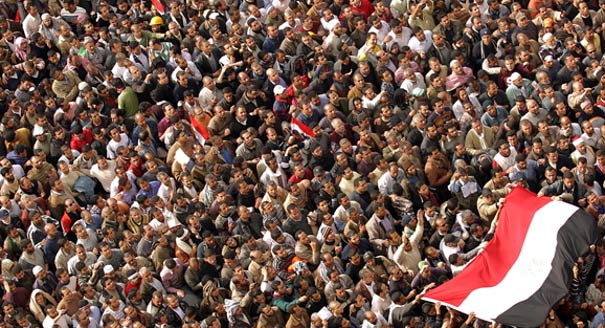
The Obama administration has found itself confounded by semantics as the debate over whether to call the upheaval in Egypt a coup or not continues.
Source: Foreign Policy
The cats in the foreign-policy community are just as hard to label as Munkustrap, Quaxo, or Coricopat were for poet T.S. Eliot. They have the names they give themselves, such as "realists" or practitioners of "smart power" -- the ones that make anyone who doesn't agree with them sound bad, in those two cases making opponents appear unrealistic or dumb. And then there are the names that others give them, like "idealists" or "pawns of the Israel lobby," which seek to pigeonhole them as naive or tools of secret cabals. And then, as with cats, there are their "ineffable effable effanineffable deep and inscrutable singular" names -- the ones that capture who they really are.
Recent events in Egypt have revealed that one particularly powerful group comprises those who, no doubt out of good intentions, find themselves confounded not so much by events as by semantics. The continuing debate over whether to call the upheaval in that country a coup or not and whether Barack Obama's administration is right or wrong to sidestep the term illustrates this. It reveals a group in the policy community that has done a great deal of damage to some of America's most enlightened impulses over the years. You might choose to call the group by the label that so many of its members have embraced professionally: lawyers. But another term that also captures their true nature is "literalists."
These literalists are the ones who have made the fundamental error of confusing democratic processes and democratic principles. Their views are the foundation on which illiberal democracies everywhere are based. They believe that if you check certain democratic boxes you are therefore advancing democracy, when, of course, in Russia, Iran, Venezuela, and, more recently, in Mohamed Morsy's Egypt, the people know better. The number of leaders who have hijacked the trappings of democracy in order to claim legitimacy and have then used the power they gained to crack down on the media, arrest comedians for the wrong kinds of jokes, or imprison their enemies is manifold and, thanks to the literalists, growing.While it is too early to say whether the reforms the Egyptian military allegedly is seeking will be realized, and while anyone with experience in the region must view the military's power grab with some concern, fearing a replay of past abuses, the Egyptian situation makes the deficiencies of the literalists absolutely clear. Because to the literalist, a duly elected leader is to be protected at all costs as a manifestation of democratic processes, and the overthrow of that leader is always anti-democratic. Literalists ignore that such leaders often become anti-democrats themselves, as Morsy did, and that the actions that remove them from power may actually be essential to advancing democratic principles such as pluralism, greater tolerance, accountability of the government to the people, and so on.
To their credit, Obama and his team were willing to remain pragmatic, avoid trapping themselves by characterizing the events in Egypt simplistically, and thus maintain as much influence as they possibly could. Behind the scenes, they knew that their stance would inflame both sides in the country, and they took the mature stance of acknowledging that this was an inevitable cost, acceptable if it might ultimately lead to greater stability and prosperity in Egypt and fewer of the direct threats to U.S. interests that were regularly emanating from Morsy and the Muslim Brotherhood (both within Egypt and throughout the region).
But as contentious as the debate over the meaning of what is or is not "pro-democratic" or what is or is not a "coup," a more important semantic debate looms concerning another confusion-inducing label: "moderate." No term or debate is more important to America's interests and future role in the region -- and none is more important to the future of the people and countries of the Middle East.
The swift action of Saudi Arabia, Kuwait, and the United Arab Emirates in support of the interim Egyptian government -- among them the three promised $12 billion in aid, almost 10 times the amount the United States provides annually -- and the simultaneous crackdown on Al Jazeera in Egypt illustrate just how intense that debate is. At its core, the divide pits states that support a more Islamist view of "moderation," like Turkey and Al Jazeera's Qatari sponsors, against those who see Islamic extremism as a direct threat and seek a different model of an Islamic state. The United Arab Emirates is increasingly playing a leading role in this regard, working with many in the Saudi government, with Bahrain, with Jordan, and with others. (Elsewhere on ForeignPolicy.com, Marc Lynch argues that what the Saudis, Kuwaitis, and Emiratis are doing is meddling and that their formula for progress is not exactly America's. I have a lot of respect for Lynch, but I can't help but disagree with his critique in this case. Of course, these countries, like the United States and all others, provide aid to help advance their interests. And, of course, those interests are not aligned precisely with U.S. interests. But on net they are helpful -- possibly extremely helpful. And Lynch, in referencing an FP article by Emirati Foreign Minister Anwar Gargash on this subject, ignores Gargash's specific focus on some issues that are and should be very important to the United States, such as welcoming religious diversity, stopping the sectarian divide, supporting women's rights, etc.)
Until recently, the tension between these two groups was most clear in Syria, where the Turks and the Qataris were supporting anti-Assad groups that embraced a more Islamist ideology and where the Saudis, the Emiratis, the Jordanians, and others worked to actively promote different groups among the rebels. Both the Turks and the Qataris were closer to the Morsy government, and the fact that Al Jazeera seemed to have an inside line to the Brotherhood not only illustrated this but in the end led to perceptions of bias that produced mass resignations at the television outlet.
For the United States and the region, this is a critical divide -- and one that will require us to refine not only our definition of "moderate," but also what we mean by the terms "ally" and "national interest." Because whatever the Obama administration may say publicly, American direct involvement in the Middle East is only going to diminish. And U.S. resources are going to be limited. And, more importantly, as we have learned, America is never going to be able to impose or even engineer a transformation of the region.
So now it is clear: To maintain influence, the United States must work with new regional allies on the ground. And to be successful, it must find partners that embrace as many of America's values and goals as possible -- being careful not to be so literalist that the country rejects those that are not entirely like it. Literalists, absolutists, and idealists would set standards for American collaboration so rigidly that the potential for alliances, and thus influence, would dwindle to zero.
When the United States finally takes a step back from its very reactive, crisis-driven Middle East approach of the moment and starts getting strategic -- seeing the important links between the situations in Egypt, Palestine, Syria, Iraq, Iran, the Maghreb, and the Persian Gulf -- it will see that in all it must cultivate a moderate alliance with which it can work. Indeed, the United States must recognize that this alliance will do more of the work than it will, foot more of the bill than it will, be closer to the problems than it is, be better equipped to help find the economic solutions that work in the region than it is, and, in fact, really be the players on the field going forward. The United States must be, as one regional leader put it with regard to Syria, "the coach." America must be engaged. Its support is seen as important. Its links to economic and military resources are still the best in the world.
So America's job will be to find, cultivate, and help support and guide a new team. While that won't be a team with which the United States agrees on everything, that only means the team will be like America's other important alliances in Europe, the Americas, and Asia. We may call that team "the moderates," but we need to carefully decide what we want that term to mean. We can't let literalists define it too narrowly. And the United States can't let self-defined moderates who actually are promoting less-tolerant, less-Western-friendly, less-likely-to-succeed-economically-and-socially models take the lead. The bigger the group, the better. The sooner America reduces divisions between moderates, the more it does to help the group cohere, the clearer it is in its support for steps that potentially advance U.S. interests in the way a more pluralist Egypt would do, the better. But above all we must remember that the label that will best describe those governments that truly promote peace and U.S. interests in the Middle East is not one found on lists of ideological terms. It is "effective." Governments that work for their people are governments that will last. None will look exactly as we imagine an ideal state might. All will confound the literalists and those who think that to be successful every state must look just like America -- which means that the United States ought to promote policies less driven by semantics and more measured in terms of results. The one word most likely to bring peace and stability to the Middle East happens to be the same one that is most important in America. It is "jobs."
Former Visiting Scholar
David Rothkopf was a visiting scholar at the Carnegie Endowment as well as the former CEO and editor in chief of the FP Group.
Recent Work
David Rothkopf
David Rothkopf
Carnegie does not take institutional positions on public policy issues; the views represented herein are those of the author(s) and do not necessarily reflect the views of Carnegie, its staff, or its trustees.

Before the next wave of EU enlargement takes place, the union needs to grapple with thorny questions of how power is distributed among its members.


Emil Sondaj Hansen, Ditte Brasso Sørensen

The new U.S.–Denmark–Greenland agreement will help Washington exert political, economic, and financial dominance under the guise of security. Yet, it acknowledged Copenhagen’s and Nuuk’s sovereignty on the island.

Marc Pierini

A summer of escalation in the Black Sea has hurt Ukraine economically and is exacerbating world food security. A truce is needed—as is a broader reframing of Europe’s Ukraine strategy.

Thomas de Waal

Are Germany’s economic, industrial, and political struggles becoming a liability for the EU’s ability to rise to the geopolitical moment?

Rym Momtaz, ed.

European Commission President Ursula von der Leyen is about to give her annual address on the state of the EU. Here’s what she won’t—but should—say.
Rym Momtaz