

Article
C. Raja Mohan, Darshana M. Baruah
{
  "authors": [
    "C. Raja Mohan"
  ],
  "type": "legacyinthemedia",
  "centerAffiliationAll": "dc",
  "centers": [
    "Carnegie Endowment for International Peace",
    "Carnegie India"
  ],
  "collections": [],
  "englishNewsletterAll": "ctw",
  "nonEnglishNewsletterAll": "",
  "primaryCenter": "Carnegie India",
  "programAffiliation": "SAP",
  "programs": [
    "South Asia"
  ],
  "projects": [],
  "regions": [
    "South Asia",
    "India"
  ],
  "topics": [
    "Foreign Policy"
  ]
}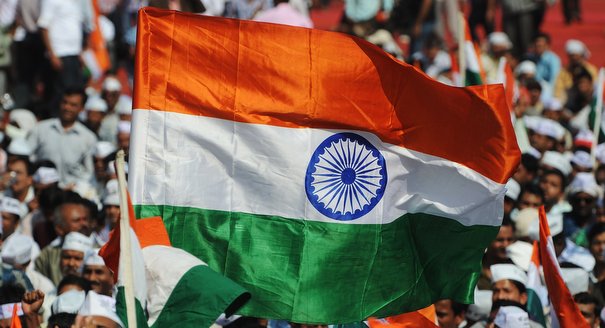
Source: Getty
Early parliamentary approval of the land boundary agreement with Bangladesh is in India’s interest. If the BJP sees itself as a champion of national security, it must support the bill.
Source: Indian Express
As UPA 2 enters the last lap of its tenure, it is not just the Indian economy that is unravelling. New Delhi's loss of purpose and direction in the last few years has had an equally damaging impact on the diplomatic front.
Former Prime Minister Atal Bihari Vajpayee's bold effort to transform bilateral relations with the U.S., pursued with equal vigour by his successor Manmohan Singh during UPA 1, is now under a cloud. Vajpayee's attempt to normalise relations with Pakistan, pushed further by Singh over the last decade, appears to be disintegrating. A more successful outreach to Bangladesh, begun by the NDA, and finalised by UPA 2, is now in danger of being undermined, thanks to Delhi's dysfunctional politics.
While the levers for economic regeneration are largely in the hands of the government, Delhi needs support from the opposition to bring some of its historic foreign policy moves to a closure. The breakdown of national unity during the nuclear debate in the UPA's first term had complicated what was in essence a simple and mutually beneficial nuclear accommodation between Delhi and Washington. If the BJP leadership's tactical temptations and the CPM's ideological blinkers messed up UPA 1's historic civil nuclear initiative, UPA 2 has faced unprecedented challenges from state governments in the pursuit of its regional goals. Competitive populism in Tamil Nadu has seen Delhi meekly surrender its responsibility to craft a coherent policy towards Sri Lanka. West Bengal Chief Minister Mamata Banerjee's tantrums, in turn, have nearly wrecked India's historic outreach to Bangladesh. While regional parties have the luxury of irresponsibility on foreign policy issues, national parties can't abandon their duty to protect India's security interests. This week in Parliament will show if they are up to it, or if they simply play politics.After a prolonged delay, the government hopes to table in Parliament this week the bill on a comprehensive land boundary settlement with Bangladesh. In the last session, External Affairs Minister Salman Khurshid stepped back as members of the AGP, opposed to the settlement, disrupted the proceedings. One hopes Khurshid will be a little bolder this time and the PM will articulate the strong political case for Parliament to approve the bill. It is even more important for the BJP, which has been playing political hide-and-seek on the bill, to come out explicitly in favour of the legislation, since India's collective stakes in the agreement are so high.
For one, it resolves a major set of boundary issues that have been hanging fire since the partition of the subcontinent in 1947. The British lawyer, Cyril Radcliffe, drew a line through Bengal in a great hurry and saddled India with a messy boundary, first with East Pakistan and, later, with Bangladesh. The Protocol to the Land Boundary Agreement signed by Prime Ministers Singh and Sheikh Hasina completed the negotiations for a comprehensive boundary settlement with Dhaka that began after the liberation of Bangladesh. Delhi and Dhaka found it hard, until recently, to finish what Prime Ministers Indira Gandhi and Mujibur Rahman initiated more than four decades ago thanks to the volatility in bilateral relations.
In fully demarcating the boundary, exchanging territorial enclaves and populations stuck deep in each other's territory, and cleaning up the adverse possession of territories on the border, the agreement has resolved an important item on the unfinished agenda of Partition. Second, clear separation of territorial sovereignties is critical for better boundary management and good relations between neighbours. At a time when India's disputed boundary with China is witness to renewed tensions, and the ceasefire with Pakistan on the Line of Control in Kashmir is breaking down, you don't have to be a rocket scientist to figure that a comprehensive boundary settlement with Bangladesh significantly improves India's national security condition.
Third, the resolution of the boundary dispute with Dhaka could not have been possible without strong commitment from Hasina to a sweeping transformation of the bilateral relationship in a sustained and comprehensive negotiation after she came to power in 2009. When India's relations with all its neighbours entered a turbulent phase, Hasina spelt out a vision for a very different approach to Delhi. If India fails to ratify the agreements — on sharing the Teesta waters and the land boundary settlement — negotiated in good faith with Dhaka, Delhi's credibility as an interlocutor will take a terrible beating. For her part, Hasina has gone all out to address India's concerns on terrorism. If the goodwill and political risk taken by leaders next door find no resonance in Delhi, there is little reason for India's smaller neighbours to seek cooperative partnerships.
Finally, as the leader of one of the world's largest Islamic nations, Hasina has stood for the separation of religion from state affairs, political moderation and regional economic integration — values that are under great stress across our western frontier. If it lets down Sheikh Hasina, India would have actively contributed to the resurgence of extremism in Bangladesh. At a time when jihadi politics is gaining ground in Afghanistan and Pakistan, it will be suicidal for India to facilitate its rise in the east.
Viewed from any perspective then, early parliamentary approval of the land boundary agreement is in India's supreme national security interest. Critical to the passage of the bill in Parliament is political support from the BJP. If the BJP sees itself as an unflinching champion of India's national security, it must end its ambiguity on the land boundary bill. There are times when tactical play on foreign policy might make sense. This can't be one of those moments. The BJP can't let its units in Bengal and Assam define a national position that will so harm India's interests.
Former Nonresident Senior Fellow, Carnegie India
A leading analyst of India’s foreign policy, Mohan is also an expert on South Asian security, great-power relations in Asia, and arms control.
Recent Work

C. Raja Mohan, Darshana M. Baruah


Alexander Gabuev, Paul Haenle, C. Raja Mohan, …
Carnegie does not take institutional positions on public policy issues; the views represented herein are those of the author(s) and do not necessarily reflect the views of Carnegie, its staff, or its trustees.

Trump is distracted and Ukraine wants Europe to step up. The continent’s leaders must find their voice and assert it in talks with Russia.

Alissa de Carbonnel

Mounting economic strain and battlefield losses will not necessarily make the Kremlin less dangerous. They could instead push Moscow toward a more aggressive hybrid campaign designed to test NATO’s Eastern flank, exploit allied hesitation, and fracture European resolve.

Maksym Beznosiuk
Over the past ten years, NATO has held almost as many summits as it did during the entirety of the Cold War. Are they still useful, or is it time to stop holding annual meetings?

Rym Momtaz, ed.
Nearly a year and a half after Europeans leaned into sucking up to Trump, the strategy has produced some benefits when it comes to Ukraine.
Rym Momtaz
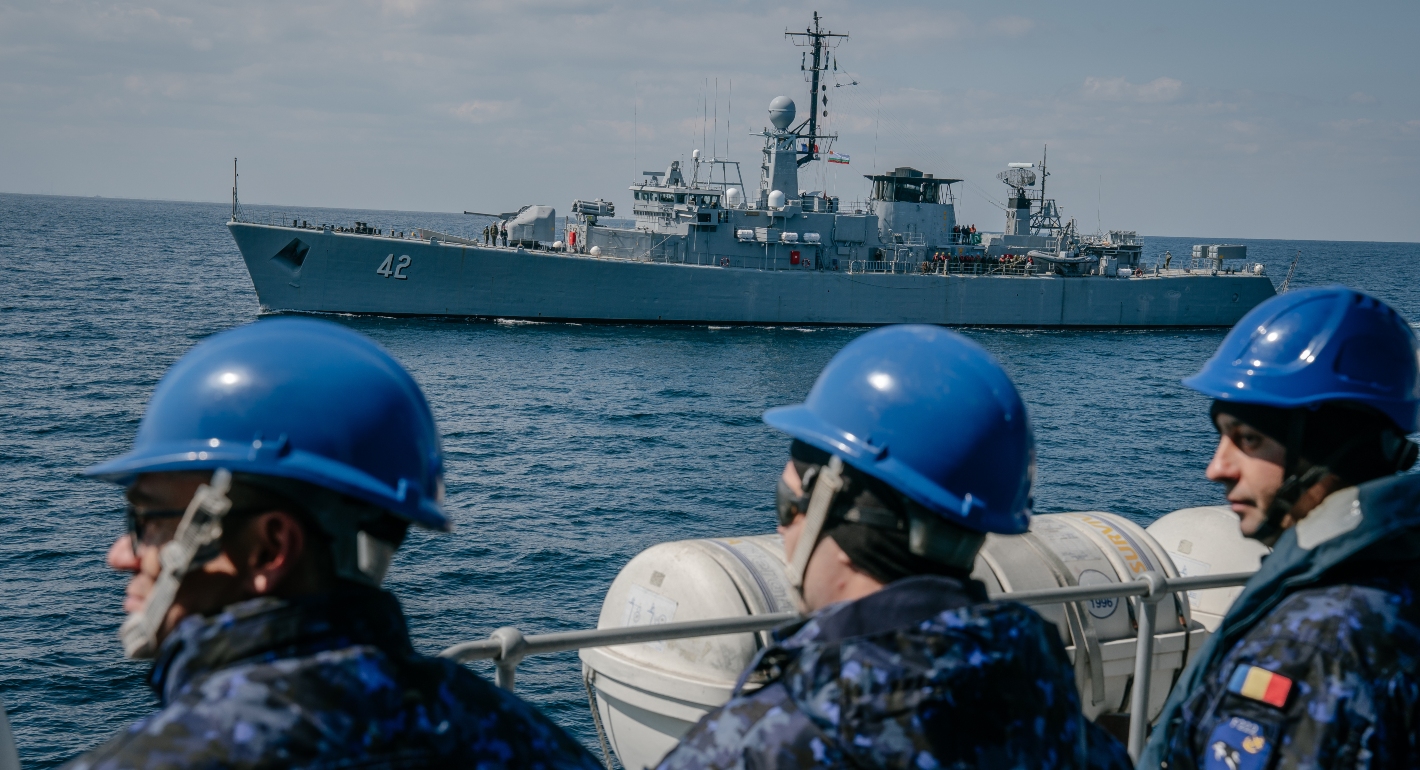
As Russia's war on Ukraine drags on, NATO is expanding its footprint in the Black Sea. Turkey, Romania, and Bulgaria are upgrading their fleets and deepening trilateral cooperation.

Dimitar Bechev