

Q&A
- +1
Sheena Chestnut Greitens, Oriana Skylar Mastro, Yukon Huang, …
{
  "authors": [
    "Yukon Huang"
  ],
  "type": "legacyinthemedia",
  "centerAffiliationAll": "dc",
  "centers": [
    "Carnegie Endowment for International Peace",
    "Carnegie China"
  ],
  "collections": [],
  "englishNewsletterAll": "asia",
  "nonEnglishNewsletterAll": "",
  "primaryCenter": "Carnegie China",
  "programAffiliation": "AP",
  "programs": [
    "Asia"
  ],
  "projects": [],
  "regions": [
    "East Asia",
    "China"
  ],
  "topics": [
    "Economy"
  ]
}
Source: Getty
China needs a more efficient urbanization process that allows cities to evolve organically. But this doesn’t mean China needs more cities.
Source: Bloomberg
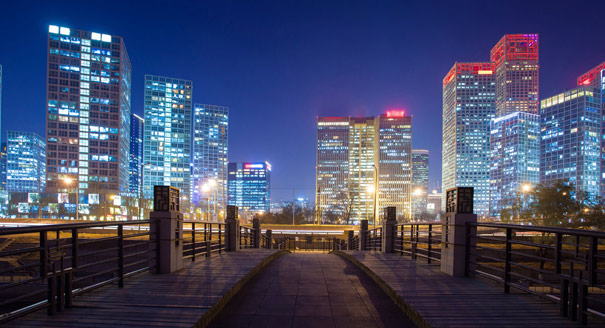
One of the most critical and controversial economic debates in China today revolves around how the country should urbanize. Already, more Chinese live in cities than on the land, a proportion that is expected to rise to 70 percent by 2030.
Proponents of further urbanization are hoping that Premier Li Keqiang will announce reforms this fall that will make it easier for migrants to move to cities and receive the same rights as locals. This, they believe, will unlock the productivity gains needed to sustain growth over the coming decades. They’re right about the need for more city dwellers -- but not about the need for more cities.Like many things in China, urbanization policy is driven by the central government, which has sought to discourage growth of the largest cities and instead promote smaller, often entirely new ones. On the surface, this makes sense: If Beijing and Shanghai -- which already host a combined 43 million people -- were to grow even bigger, they could sink under the weight of social and environmental decay, not to mention wasted expenditures.
China is already in a class by itself in accounting for 30 of the 50 largest cities in east Asia. It boasts half a dozen megacities with populations of more than 10 million and 25 “large” cities exceeding 4 million. In fact, though, the only way China will achieve its desired productivity gains is if its leaders allow cities to evolve more organically in response to market forces. They need to let cities like Beijing get bigger.
The pressure for cities to grow comes from the combination of rural poverty -- which pushes migrants to seek out better-paying jobs -- and the power of “agglomeration economies.” These are the benefits gained by the concentration of companies and workers. The resulting economies of scale and network effects drive down costs and lead to specialization.
Yet China’s planners continue to see urbanization in terms of developing new cities and facilitating the flow of people into the smaller ones. Incentives for this to happen are reinforced by limited local-level financing options. Provincial governments have relied on the conversion of rural land to urban use to fund their obligations. They have strong incentives to encourage property appreciation and industrialization to strengthen their revenue base. At its worst, this has led to the creation of scores of “ghost” cities based on the mistaken view that once built, residents will naturally come.
Even in megacities like Beijing and Shanghai, incorporating suburban land is more appealing than making rational use of the core, which is replete with dilapidated low-rise buildings from the pre-reform era. As a result, urbanization has ended up dispersing people and activities rather than increasing density. Over the past several decades, China’s urban population has expanded by 2.5 times, but urban land area has increased eightfold.
Instead of actively trying to spread out growth to small new cities, China’s planners should embrace the agglomeration economies, which militate for larger metropolises. As land and wage costs escalate, some industries will eventually gravitate to medium-size cities, but services will continue to drive expansion in the larger ones. Smart people like to mix with other smart people, and globalization has amplified their financial returns. Beijing and Shanghai have continued to grow because of buoyant higher-value services, even as their manufacturing bases have shrunk. All this explains why in China, productivity in urban areas is more than three times that in rural areas.
But aren’t China’s megacities already too big to be sustainable? As a matter of fact, some urban specialists have concluded that even China’s biggest cities may be too small. They cite “Zipf’s law,” one of the great curiosities of urban research. The law, which is surprisingly accurate for many countries, claims that the biggest city in a country should be about twice the size of the second-biggest, three times the size of the third-biggest, and so forth. On this basis, China’s largest cities appear too small.
Certainly, there are negative consequences as cities mushroom in size. For companies, the rising costs of land and labor reduce the advantages of big cities; for workers, congestion and higher living expenses reduce their appeal. If Beijing handles its urbanization the wrong way, its citizens will join other Asian countries whose largest cities are caught in a net of pollution, clogged streets and underemployed poor.
These risks, however, have less to do with city size than with misguided urban-management policies. Beijing’s core, for example, is not being appropriately developed: Vast parcels of land sit underutilized, while affordable housing is pushed too far out from where the jobs are. A fascination with ring roads impedes traffic flow. The result is excessively long commutes with more traffic-related pollution than is necessary and a costlier provision of social services because of the higher capital costs of serving a dispersed population. These are all costs that could be avoided by taking a more rational, density-oriented approach to urban planning.
What China needs Li to implement this fall is a more efficient urbanization process -- one in which cities are allowed to evolve organically in response to changing conditions. This will require a financing system that provides the right incentives; social services and residency policies that facilitate rather than restrict labor mobility; land-use guidelines that promote more concentrated rather than dispersed development; and transport systems that encourage a more efficient location of activity.
This would probably lead to larger and denser but more environmentally friendly and livable cities. If China gets it right, its biggest cities will then generate the productivity gains needed for the economy to grow at 7 percent or more for the rest of this decade.

Senior Fellow, Asia Program
Huang is a senior fellow in the Carnegie Asia Program where his research focuses on China’s economy and its regional and global impact.
Recent Work


Sheena Chestnut Greitens, Oriana Skylar Mastro, Yukon Huang, …


Yukon Huang, Isaac B. Kardon, Matt Sheehan

With its public finances in shambles, the far right polling at 35 percent ahead of the 2027 presidential election, and a growing protest movement, is France’s crisis a threat to the EU’s geopolitical awakening?

Rym Momtaz, ed.

While the EU and European governments are embracing the much-lauded middle-power moment, this entails three difficult conundrums.

Richard Youngs

Europe is facing rising populism internally as well as external pressures from Russia, China, Turkey, and the United States.

Dimitar Bechev

The European Commissioner for Trade is headed to China. But after President Xi’s bridge-building visit to Washington, can a more isolated EU overcome Beijing’s stranglehold on critical raw materials? Who will blink first?
Rym Momtaz, ed.

The domestic impacts of how long it is taking to end the war in Ukraine have pushed the French electorate to the political extremes and compromised the country’s diplomatic capacity.
Rym Momtaz