

Commentary
Dmitri Trenin
{
  "authors": [
    "Dmitri Trenin"
  ],
  "type": "commentary",
  "centerAffiliationAll": "",
  "centers": [
    "Carnegie Endowment for International Peace",
    "Carnegie Russia Eurasia Center"
  ],
  "collections": [],
  "englishNewsletterAll": "",
  "nonEnglishNewsletterAll": "",
  "primaryCenter": "Carnegie Russia Eurasia Center",
  "programAffiliation": "",
  "programs": [],
  "projects": [],
  "regions": [
    "Middle East",
    "Israel",
    "Russia"
  ],
  "topics": [
    "Political Reform",
    "Foreign Policy",
    "Civil Society"
  ]
}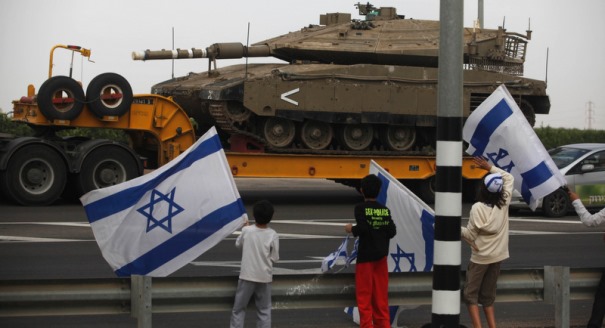
Source: Getty
Vladimir Putin’s respectful message on the passing of former Israeli Prime Minister Ariel Sharon proves that to quite a few Russian supporters of a strong state, Israel is the ideal in terms of the cohesion existing between the state and the nation, the effectiveness of and coordination among the military, intelligence and law-enforcement agencies, and defense of its interests.
Vladimir Putin's message last Friday to the Israeli leaders on the passing of former Prime Minister Ariel Sharon spoke about Sharon's "high personal qualities," his efforts "to defend Israel's interests," the "respect he enjoyed with his compatriots," and his cutting a "figure of authority on the world stage." President Putin dispatched State Duma Speaker Sergei Naryshkin to Sharon's funeral.
The language of Putin's condolences and the level of Russia's representation are consonant with what has been heard from Washington and London. Sharon's life and legacy were also extensively and generally positively covered by state-run Russian TV. It is particularly striking because of Sharon's reputation as a tough military commander and a hawkish political leader.
These features, however, may be the key to understanding the respect with which President Putin and Russian government officials usually reserve for the State of Israel. They see the Israelis as serious in both word and deed, united by a strong sense of national solidarity, resolute and confident in their defense of the national interest, capable of standing up to criticism from much of the rest of the world, and—crucially—led by weathered individuals not emasculated by political correctness.
To quite a few Russian gosudarstvenniki, supporters of a strong state, Israel is the ideal in terms of the cohesion existing between the state and the nation, the effectiveness of and coordination among its military, intelligence and law-enforcement agencies, and the defense of its interests in the regional and global context. They also appreciate strong leadership when they see it. For Russia to approach that ideal, however, strong personal leadership is not enough. Rather, the country needs to start building a nation. Greater civic solidarity in exchange for more government accountability would be a good start.
Former Director, Carnegie Moscow Center
Trenin was director of the Carnegie Moscow Center from 2008 to early 2022.
Recent Work
Dmitri Trenin
Dmitri Trenin
Carnegie does not take institutional positions on public policy issues; the views represented herein are those of the author(s) and do not necessarily reflect the views of Carnegie, its staff, or its trustees.

Are Germany’s economic, industrial, and political struggles becoming a liability for the EU’s ability to rise to the geopolitical moment?

Rym Momtaz, ed.

European Commission President Ursula von der Leyen is about to give her annual address on the state of the EU. Here’s what she won’t—but should—say.
Rym Momtaz

Radical-right parties are expected to do well in upcoming elections in four of the EU's biggest member states. If successful, they could prevent the union from addressing key challenges ahead.

Stefan Lehne

The aftermath of the Ceuta crisis shows Europe has drawn the wrong lessons. Rather than doubling down on failed migration policies, the EU needs to address the underlying roots of such episodes.

Richard Youngs

Canadian Prime Minister Mark Carney has twice inspired praise for standing up to U.S. President Donald Trump: at the 2026 World Economic Forum in Davos and on Canada-U.S. trade negotiations. Is Carney showing a third way better than the EU has in dealing with the Trump administration?
Rym Momtaz, ed.