

Article
C. Raja Mohan, Darshana M. Baruah
{
  "authors": [
    "C. Raja Mohan"
  ],
  "type": "legacyinthemedia",
  "centerAffiliationAll": "dc",
  "centers": [
    "Carnegie Endowment for International Peace",
    "Carnegie China",
    "Carnegie India"
  ],
  "collections": [
    "China’s Foreign Relations"
  ],
  "englishNewsletterAll": "ctw",
  "nonEnglishNewsletterAll": "",
  "primaryCenter": "Carnegie India",
  "programAffiliation": "SAP",
  "programs": [
    "South Asia"
  ],
  "projects": [],
  "regions": [
    "East Asia",
    "China",
    "Japan"
  ],
  "topics": [
    "Security",
    "Military",
    "Foreign Policy"
  ]
}
Source: Getty
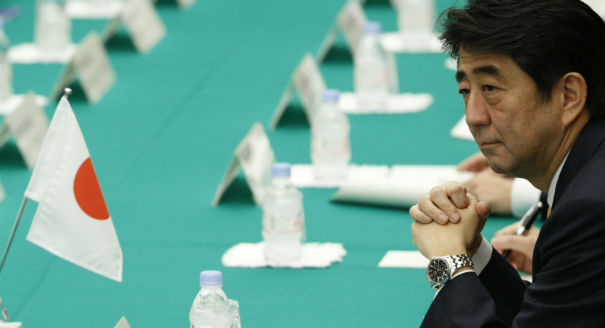
After decades of pacifism and strategic marginalisation, Japan is now shaking up the region’s geopolitics by responding vigorously to China’s rise.
Source: Indian Express
As it heralds a new year, Asia is waking up to a very different Japan. After decades of pacifism and strategic marginalisation, Japan is now shaking up the region's geopolitics by responding vigorously to China's rise. The talk of a war between Japan and China might be excessive, but the mounting tension between the two is now part of the region's political landscape.
India, which hosts Japanese Prime Minister Shinzo Abe as chief guest at the Republic Day celebrations later this month, must come to terms, like the rest of the region, with Tokyo's determination to shape the Asian security order. After he returned to power a year ago, Abe has set about transforming Japan's military strategy. He has proposed a 5 per cent increase in defence spending to $240 billion for the next five years. While approving more money for defence, Abe is aware that Tokyo can never match Beijing's rapidly growing defence budget or the size of the PLA. He, therefore, wants a military doctrine that will leverage the Japanese lead in technology, focus on Chinese vulnerabilities and let Tokyo stare Beijing in the eye.
In a recently released document on national security strategy, the first ever in Japan, Abe has underlined the importance of a "dynamic deterrence" and "active defence" against the growing Chinese military challenge. Japan will now develop a marine corps of its own, integrate unmanned drones into defence plans, strengthen its capacity for real-time military intelligence, and respond effectively and immediately to Chinese intrusions into the disputed air and maritime spaces.Abe is complementing changes in the military strategy with policy change and institutional innovation. He wants to lift the ban on Japan's arms exports in order to strengthen the domestic defence industrial base. He is trying to dismantle the many self-imposed political constraints on Japan's ability to cooperate with other nations in securing the region from military threats.
Abe has also established a national security council (NSC) that will help Japan better coordinate its defence, security and foreign policies. The four-member NSC, headed by the PM at the ministerial level, will have staff support from a 60-member national security bureau. A full-time national security adviser, a post to be held by a political figure, will assist the PM in bringing greater coherence and purpose to Japan's national security policy.
Abe knows that Japan on its own can't balance China, whose comprehensive power is growing by the day. Alliances, therefore, are central to Abe's strategy, especially the longstanding one with the United States. Some in Japan are indeed questioning the sustainability of American alliance commitments amidst the rise of China. Will the US defend Japan against China, when Washington's stakes in a good relationship with Beijing have risen so much in recent years?
While keeping a wary eye on the US debate, Japan is determined to hold on to the US as long as it's possible. Abe's focus, meanwhile, is on strengthening Japan's own defence capabilities and developing strategic partnerships with key Asian neighbours. In an intense round of diplomacy over the last year, Abe travelled to all the 10 countries of Southeast Asia and held a summit meeting with the leaders of ASEAN in Tokyo in December.
The message from Abe was that Japan was not going to stand by and quietly watch Southeast Asia slide into China's sphere of influence. Unlike China and Korea, which have reacted harshly to Abe's stoking of Japanese nationalism, Southeast Asia has been more forgiving. Despite the memories of Japanese imperialism, the ASEAN is eager to see Japan contribute actively to the construction of a stable regional balance. India too figures quite high in Abe's Asian strategy and his visit could turn out to be consequential for both nations, provided there is some political and administrative energy left in the UPA government.
Japan's new strategy is not all about hard power. Recognising that Japan has lost much ground to China in the global cultural sphere, Abe has developed a "Cool Japan" initiative. In November, Tokyo launched a one billion dollar fund to promote Japanese cultural exports, including food and drink, comic books and animated films. As part of the new soft power strategy, Tokyo is launching a "Japan Channel" for TV audiences in Southeast Asia in the new year.
This article was originally published in the Indian Express.
Former Nonresident Senior Fellow, Carnegie India
A leading analyst of India’s foreign policy, Mohan is also an expert on South Asian security, great-power relations in Asia, and arms control.
Recent Work

C. Raja Mohan, Darshana M. Baruah


Alexander Gabuev, Paul Haenle, C. Raja Mohan, …

Are Germany’s economic, industrial, and political struggles becoming a liability for the EU’s ability to rise to the geopolitical moment?

Rym Momtaz, ed.

European Commission President Ursula von der Leyen is about to give her annual address on the state of the EU. Here’s what she won’t—but should—say.
Rym Momtaz

The aftermath of the Ceuta crisis shows Europe has drawn the wrong lessons. Rather than doubling down on failed migration policies, the EU needs to address the underlying roots of such episodes.

Richard Youngs

Canadian Prime Minister Mark Carney has twice inspired praise for standing up to U.S. President Donald Trump: at the 2026 World Economic Forum in Davos and on Canada-U.S. trade negotiations. Is Carney showing a third way better than the EU has in dealing with the Trump administration?
Rym Momtaz, ed.

The EU’s responses to two recent incidents expose the gulf between European perceptions and capabilities. Unless the union can bridge that gap, it will never become a real geostrategic power.
Rym Momtaz