

Q&A
- +1
Amr Hamzawy, Andrew Leber, Eric Lob, …
{
  "authors": [
    "Marwan Muasher"
  ],
  "type": "legacyinthemedia",
  "centerAffiliationAll": "dc",
  "centers": [
    "Carnegie Endowment for International Peace",
    "Malcolm H. Kerr Carnegie Middle East Center"
  ],
  "collections": [
    "Arab Awakening"
  ],
  "englishNewsletterAll": "menaTransitions",
  "nonEnglishNewsletterAll": "",
  "primaryCenter": "Carnegie Endowment for International Peace",
  "programAffiliation": "MEP",
  "programs": [
    "Middle East"
  ],
  "projects": [],
  "regions": [
    "Middle East",
    "North Africa",
    "Egypt",
    "Levant",
    "Maghreb"
  ],
  "topics": [
    "Political Reform",
    "Democracy"
  ]
}
Source: Getty
Only when Arab societies and their elected leaders truly embrace tolerance, diversity, the peaceful rotation of power, and inclusive economic growth will the promise of a new Arab world be realized.
Source: Washington Diplomat
Liberal revolutions have come to the Arab world before. Beginning in the mid-19th century, a “first” Arab awakening took the form of an intellectual revolution in which a number of Arab thinkers started questioning the control of distant Ottoman despots over their nations, and criticizing their own limited contact with the outside world. Their calls for intellectual, economic and political change laid the groundwork for a new Arab world, eventually resulting in a wave of independence struggles in the 1940s and 1950s.
Ultimately, however, the first Arab Awakening fell short of the aspirations of many of those who inspired it. In the end, colonial autocracies were replaced with domestic ones — often military-backed single parties that took advantage of their revolutionary legitimacy to cement their grip on power. New regimes paid little attention to developing political systems whose checks and balances guaranteed access for all. They saw pluralism as a potential threat.Unrealized political as well as economic expectations and the failure to solve the Palestinian issue and provide good governance marked the post-independence era in the Arab world. For years, the only groups that contended with the ruling elites were those whose organizing principle was religion. Political Islam emerged as the only alternative to one-party rule. Abuses by government personnel, especially the security and intelligence services, and wealth concentrated in the hands of a few kept tensions seething just beneath the surface. Eventually, something had to give. When a Tunisian peddler set himself on fire in December 2010, the Second Arab Awakening was launched, taking many by surprise.
The uprisings that breathed new life into the Arab world in 2011 were inevitable, but achieving the protesters’ goals is not. That eventual outcome lies in the hands of the people of the countries involved. Outsiders, however, including powerful Western governments, can affect events. And to do so in a constructive fashion requires clear thinking about events and their root causes.
But much Western thinking about the Awakening is mistaken — with the resulting danger that Western action may be misguided. In the span of two short years, the West lurched from calling this awakening an “Arab Spring”— a name that implied expectations of an immediate transition from autocratic regimes to democratic ones — to seeing it now as some kind of an Arab inferno, because of the rise of Islamic parties with their implicit or perceived threat to liberal democratic advances and their potential flirtation with jihadi violence.
Neither of these two scenarios need be permanent or inevitable. And perhaps most important, the profound transformations Arab countries are undergoing will take time. Although some Eastern European nations can be said to have sped up the clock after the fall of the Soviet Union, revolutionary political transformation usually takes decades, not years. Western observers and policymakers need to have strategic patience as they follow unfolding events.
The rise of Islamist parties was also to be expected, and should neither surprise nor overly alarm anyone. They alone had the pre-existing organizational capabilities required to run nationwide campaigns, and that allowed them to score electoral victories far beyond their level of popular support.
But success in first-ever elections will not necessarily translate into permanent control. Their promise of better governance, which has helped attract support from many Arabs fed up with the status quo, is now being put to the test. As they enter the political fray, this time as decision-makers, their perceived “holiness” will be confronted with reality, and their ability to deliver will be called upon. The question will be whether the constitutional instruments that emerge from the transitional period allow Arab publics — which are conservative but not by and large supporters of theocratic states — to judge Islamists and secular forces alike based on performance, not ideology.
It will take decades to build the foundations of political systems that actually defend democracy and preserve its basic tenets year after year. It is a process in which some countries will succeed, others will struggle, and yet others will fail. It is not a process that can be seen through a two- or even five-year prism. It must take its due course.
What will help determine any country’s outcome is which elements of society will lead the transformation. The Arab world has long been dominated by two forces — an entrenched, unaccountable elite on the one hand and Islamists on the other. But neither of these groups — which often achieved an uneasy modus vivendi — has ever demonstrated a genuine commitment to pluralism.
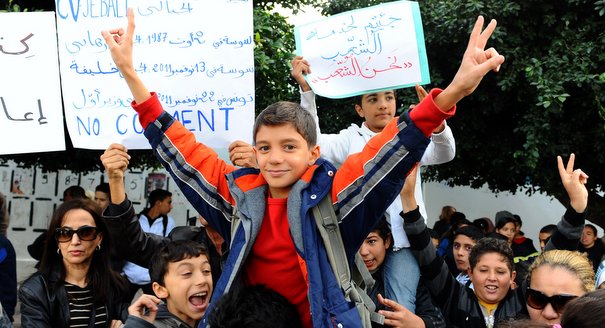
Third forces are needed. Hope rests with a new generation — the youth who started it all in the streets — that is more committed to the principles of democracy than their elders. So far, this revolutionary young generation has done a better job of defining what they are against than what they are for, and it will take years to establish the organizational capacity and financial wherewithal to achieve a lasting break from the past.
If it is to succeed where the first Arab Awakening failed, this second Arab Awakening needs to be an assertion of universal values: democracy, pluralism, human rights. These are not ideals that can be imposed upon a region from outside, but they can be encouraged to grow. This requires patience and an accurate understanding of both the actual conditions and the kinds of actions that are likely to be effective.
In the end, the battle is not solely against the old powers — for new ones may be animated by the same drives. More importantly, it is a battle for pluralism. Only when societies and their elected leaders truly embrace tolerance, diversity, the peaceful rotation of power and inclusive economic growth will the promise of a new Arab world be realized.
This article was originally published in the Washington Diplomat.

Vice President for Studies
Marwan Muasher is vice president for studies at Carnegie, where he oversees research in Washington and Beirut on the Middle East. Muasher served as foreign minister (2002–2004) and deputy prime minister (2004–2005) of Jordan, and his career has spanned the areas of diplomacy, development, civil society, and communications.
Recent Work



Amr Hamzawy, Andrew Leber, Eric Lob, …
Marwan Muasher
Carnegie does not take institutional positions on public policy issues; the views represented herein are those of the author(s) and do not necessarily reflect the views of Carnegie, its staff, or its trustees.

Before the next wave of EU enlargement takes place, the union needs to grapple with thorny questions of how power is distributed among its members.


Emil Sondaj Hansen, Ditte Brasso Sørensen

Radical-right parties are expected to do well in upcoming elections in four of the EU's biggest member states. If successful, they could prevent the union from addressing key challenges ahead.

Stefan Lehne

An overwhelming victory by a far-right-wing party in a small state in eastern Germany will have major repercussions for Chancellor Friedrich Merz’s coalition.

Judy Dempsey

In supporting Europe’s far-right, MAGA and Russia both want the same thing: a weaker EU. Europe must defend itself without abandoning the openness these forces exploit.

Armida van Rij

The hybrid warfare landscape is evolving rapidly, leaving policymakers without clear strategies. To better inform their work in addressing emerging challenges, governments must dig deeper into the underlying dynamics at play.


Raluca Csernatoni, Alicia Wanless