

Commentary
Michael Pettis
{
  "authors": [
    "Michael Pettis"
  ],
  "type": "legacyinthemedia",
  "centerAffiliationAll": "dc",
  "centers": [
    "Carnegie Endowment for International Peace"
  ],
  "collections": [],
  "englishNewsletterAll": "asia",
  "nonEnglishNewsletterAll": "",
  "primaryCenter": "Carnegie Endowment for International Peace",
  "programAffiliation": "AP",
  "programs": [
    "Asia"
  ],
  "projects": [],
  "regions": [
    "East Asia",
    "China"
  ],
  "topics": [
    "Economy"
  ]
}
Source: Getty
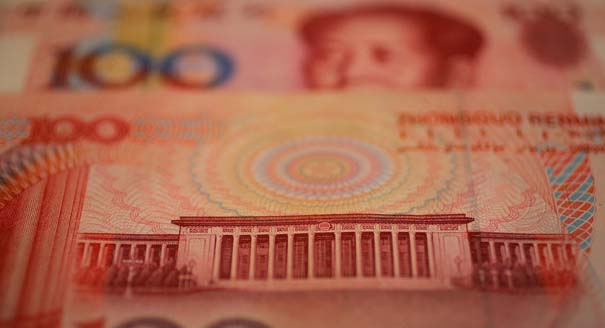
The simple formula that says a cheaper renminbi will spur exports and increase China’s growth is misguided; far more important are concerns about destabilizing capital flows and economic adjustment.
Source: Financial Times
Recently a number of economists, most of them foreign, have called for China to devalue the renminbi, arguing that the more than 30 per cent revaluation since 2005 has left it with an overvalued currency. This, they claim, has hurt Chinese exports and is holding back economic growth.
They are probably wrong about growth and almost certainly wrong about their evaluation of China’s currency regime. The policies of the People’s Bank of China (PBoC) reflect a domestic debate that is as much political as it is economic.
Two main issues matter. First, capital flows are very sensitive to medium-term currency expectations. Any significant change in the direction or pace of capital inflows can hurt the banking system. For 20 years, China’s foreign currency reserves have soared because of net inflows. As the PBoC monetised these inflows, the country’s financial system developed around the consequent rapid money expansion. In recent years, while net inflows have remained high, the bulk of these inflows has switched from the current account to the capital account.
What drives reserve growth today, in other words, are capital inflows, of which a significant share may be speculative money seeking the positive interest carry on the renminbi plus currency appreciation. If the PBoC were credibly to change appreciation expectations without raising interest rates, speculative inflows could easily become outflows which, when combined with what may be significant flight capital, would put potentially dangerous pressure on the domestic financial system.The second issue that matters concerns the role of the currency in China’s economic adjustment. The currency regime helps determine how the costs associated with China’s difficult rebalancing will be assigned among different sectors within the economy. Policies that boost growth in the tradable goods sector can easily come at the expense of growth in other sectors. Devaluing the renminbi, in other words, might not increase growth so much as transfer growth from the capital intensive, service or government sectors to the tradable goods sector.
This is something that has been missed by most analysts calling for renminbi devaluation. If China were suffering from unemployment, a cheaper currency would certainly boost export growth and, probably with it, GDP growth. Unemployment would also drop.
But unemployment levels in China are low and wages rising. Devaluing the renminbi, while boosting exports and constraining imports, would cause the tradable goods sector to bid up wages, so that its growth would come largely at the expense of non-tradable goods, most importantly the service sector. This is the opposite of what China needs and contradicts the rebalancing plan called for by Beijing during the Third Plenum last year.
Rebalancing requires that interest rates, wages and the currency rise in the aggregate in order to increase the household income share of GDP, along with higher direct and indirect transfers from the state to households. Only by sharply increasing household income can higher domestic consumption growth prevent a sharp downturn as Beijing reins in runaway investment.
But devaluing the renminbi puts even more pressure on the other transfer mechanisms. Whatever exporters would gain from a cheaper currency, the capital-intensive sector would lose from higher interest rates or the labour-intensive sector would lose from higher wages. This is likely to hurt economic growth in the aggregate as much as a cheaper currency will help higher exports spur economic growth.
This is how we must think about the currency regime – not in isolation but as part of the process of rebalancing the economy away from its over-reliance on investment and towards a greater role for consumption. If China were suffering from high unemployment, devaluing the currency, assuming that it does not increase trade tensions and invite retaliation, would boost GDP growth and lower unemployment.
Under current conditions, however, it merely reduces the share of the adjustment cost that must be borne by the tradable goods sector and increases the share that must be borne by other sectors. In the end there may be good reasons for doing so, but for now it isn’t obvious either that China should help exporters at the expense of non-exporters or that exporters are politically more powerful than other sectors of the economy.
The simple formula that says that a cheaper renminbi will spur exports and increase China’s growth – especially needed as Beijing weans the country off its addiction to investment – is misguided. Beijing’s choice of a currency regime must accommodate concerns about a destabilising shift in capital flows and about how the costs of economic adjustment are to be shared. These concerns are far more important than simply reducing export prices.

Nonresident Senior Fellow, Carnegie China
Michael Pettis is a nonresident senior fellow at the Carnegie Endowment for International Peace. An expert on China’s economy, Pettis is professor of finance at Peking University’s Guanghua School of Management, where he specializes in Chinese financial markets.
Recent Work
Michael Pettis
Michael Pettis

The hybrid warfare landscape is evolving rapidly, leaving policymakers without clear strategies. To better inform their work in addressing emerging challenges, governments must dig deeper into the underlying dynamics at play.


Raluca Csernatoni, Alicia Wanless
As geopolitical rivalry weaponizes global supply chains, the EU’s true vulnerability lies in emerging-risk imports. For these goods, suppliers are growing more concentrated, substitution more difficult, and political risk is looming.

Sinan Ülgen

The EU is putting together a new security strategy to meet today’s myriad challenges. But for any proposal to be effective, the union needs to grapple with its identity and ambitions.

Pierre Vimont

Amid uncertainty caused by the Iran war, the global drive for nonproliferation has stalled. With Europe diplomatically marginalized and countries reassessing their nuclear options, efforts to curb the spread of nuclear weapons risk becoming irrelevant.

Jane Darby Menton
Between the United States’ market-driven approach and China's state-led industrial strategy, Europe is reckoning with how it can remain competitive in the global economy. But is Europe in danger of becoming a U.S. or China colony?


Noah Barkin, Anu Bradford