

Paper
James L. Schoff, Douglas E. Rake, Joshua Levy
{
  "authors": [
    "James L. Schoff"
  ],
  "type": "legacyinthemedia",
  "centerAffiliationAll": "dc",
  "centers": [
    "Carnegie Endowment for International Peace",
    "Carnegie China"
  ],
  "collections": [],
  "englishNewsletterAll": "asia",
  "nonEnglishNewsletterAll": "",
  "primaryCenter": "Carnegie China",
  "programAffiliation": "AP",
  "programs": [
    "Asia"
  ],
  "projects": [],
  "regions": [
    "East Asia",
    "Japan",
    "North Korea"
  ],
  "topics": [
    "Security",
    "Military",
    "Foreign Policy"
  ]
}
Source: Getty
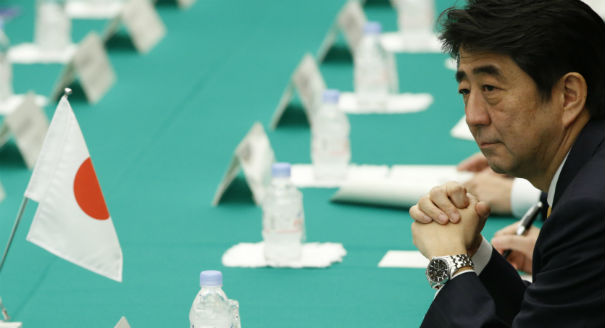
Japan’s new self-defense initiative is the right move at the right time: Japan has more to offer in service of regional and national security and it has earned the right to participate.
Source: U.S. News and World Report
Japan’s governing coalition is expected to soon announce an historic reinterpretation of the nation’s constitution that will allow Japan to support collective self-defense efforts with other countries for the first time since World War II, even if it has not been directly attacked. Confusion and some hyperbole has accompanied the political debate leading to this decision, but viewed objectively it is a modest and legitimate step for Japan that can enhance its own security and foster deeper alliance integration with the United States.
The only loser in the decision could be North Korea, since it will face a more capable coalition allied against it. The upshot should be a more stable security structure in the region over the long run, even if there is uncertainty in the near term about how Japan’s role might change. Continued diplomatic effort within the alliance and in the region is required to clarify details and make the most of this opportunity.
Depending on whom you talk to, Japan’s exercising of collective self-defense either means it will be able to participate aggressively in overseas wars – contradicting its “no war” constitution – or it is a long-overdue policy change that is now so watered down as to be meaningless. Neither extreme is accurate. The final scope of the cabinet decision must still be shaped by legislation, but chances are good that it will produce a substantive (yet incremental) policy change that the Japanese and other nations will embrace over time, and, like Japan’s Peace Keeping Operations law of 1992 , allow Japan to contribute tangibly to regional peace and stability.Japan has long recognized that it possesses an inherent right to collective self-defense, as referenced in the United Nations Charter, but successive cabinets determined that the constitution’s renunciation of war and the use of force to settle disputes prohibited exercising this right. This means the U.S. commitment to Japan’s defense is not reciprocated, although Japan does host U.S. bases in return. This arrangement allowed Japan to avoid entanglement in U.S. conflicts abroad, while Washington was content to utilize bases in Japan to support wars in Korea, Vietnam, and later deployments to the Middle East and Afghanistan. But the security equation in Asia is changing, and a more proactive approach by Japan is warranted.
North Korea’s development of nuclear-tipped missiles, China’s military spending spree and a declining defense budget in the United States are causing many in Japan to think that simply relying on the old bargain is not enough. They want Japan to do – and be seen as doing – more to preserve security in the region. This dynamic coincides with the political rise of Prime Minister Shinzo Abe, who has long sought to normalize Japan’s military posture.
Opposing Abe’s push for reinterpretation, however, is his coalition partner (the New Komeito Party, which has a pacifist-leaning religious affiliation), and a portion of the pubic alarmed that Japan’s constitution and its democracy are being undermined by this executive decision. Much of the rest of the public is ambivalent, but their understanding and support will eventually be needed to make these changes functional.
What has emerged is a compromise that clearly ties collective self-defense to Japan’s own self-defense (i.e., only a situation where Japanese lives, liberty and their pursuit of happiness are fundamentally endangered, even if not yet formally attacked), and there is no other appropriate means to dispel the threat. Japanese military action in the Middle East, therefore, will be hard to justify, but responding collectively to North Korean aggression – a country with missiles pointing at Japan – is another matter.
Subject to legislative authorization in each case, Japan would soon be able to provide more direct logistical and defensive support to U.S. forces in a conflict on the Korean peninsula. This might include helping to protect U.S. ships or providing a wide range of logistical and reconnaissance support. For these reasons, South Korea should welcome Japan’s new policy, especially since Tokyo has been clear that it would not engage in activities around Korea without Seoul’s approval. The decision would also allow Japan to contribute more comprehensively to U.N. authorized peacekeeping operations.
With luck, Japan will never have to exercise its right to collective self-defense, but the policy has value regardless. Near-term benefits include closer planning and training relationships between the United States and Japan, as they prepare to collaborate on various missions in a more integrated manner. Also important is an appreciation that Japan is sharing additional responsibility to support regional stability, which is in everyone’s interest. After all, security should not be something that Japan simply receives or pays for, but rather something achieved jointly through collective effort.
Several months of legislative deliberation are required before the full scope of Japan’s new policy is established, and during this time continued transparency and communication about the process will be important. Japan should develop ways to utilize its expanded rights responsibly and efficiently, preferably in close coordination with the United States and in consultation with other nations in the region. The Japanese government will also need to build domestic understanding and support related to exercising these rights. Japan has more to offer in service of regional and national security, and it has earned the right to participate. When the world respects and takes Japan’s new security contributions for granted, the Japanese will know that they have successfully updated their defense posture.
This article originally appeared in the U.S. News and World Report.

Former Senior Fellow, Asia Program
James L. Schoff was a senior fellow in the Carnegie Asia Program. His research focuses on U.S.-Japan relations and regional engagement, Japanese technology innovation, and regional trade and security dynamics.
Recent Work
James L. Schoff, Douglas E. Rake, Joshua Levy
James L. Schoff
Carnegie does not take institutional positions on public policy issues; the views represented herein are those of the author(s) and do not necessarily reflect the views of Carnegie, its staff, or its trustees.

Are Germany’s economic, industrial, and political struggles becoming a liability for the EU’s ability to rise to the geopolitical moment?

Rym Momtaz, ed.

European Commission President Ursula von der Leyen is about to give her annual address on the state of the EU. Here’s what she won’t—but should—say.
Rym Momtaz

The aftermath of the Ceuta crisis shows Europe has drawn the wrong lessons. Rather than doubling down on failed migration policies, the EU needs to address the underlying roots of such episodes.

Richard Youngs

Canadian Prime Minister Mark Carney has twice inspired praise for standing up to U.S. President Donald Trump: at the 2026 World Economic Forum in Davos and on Canada-U.S. trade negotiations. Is Carney showing a third way better than the EU has in dealing with the Trump administration?
Rym Momtaz, ed.

The EU’s responses to two recent incidents expose the gulf between European perceptions and capabilities. Unless the union can bridge that gap, it will never become a real geostrategic power.
Rym Momtaz