

In The Media
Lina Khatib
{
  "authors": [
    "Lina Khatib"
  ],
  "type": "legacyinthemedia",
  "centerAffiliationAll": "dc",
  "centers": [
    "Carnegie Endowment for International Peace",
    "Malcolm H. Kerr Carnegie Middle East Center"
  ],
  "collections": [],
  "englishNewsletterAll": "menaTransitions",
  "nonEnglishNewsletterAll": "",
  "primaryCenter": "Malcolm H. Kerr Carnegie Middle East Center",
  "programAffiliation": "MEP",
  "programs": [
    "Middle East"
  ],
  "projects": [],
  "regions": [
    "Gulf",
    "Middle East"
  ],
  "topics": [
    "Political Reform",
    "Security",
    "Foreign Policy"
  ]
}
Source: Getty
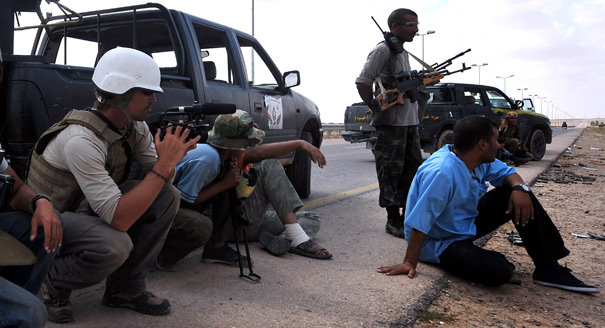
With no mainstream media channel through which to communicate, Islamic State uses extreme acts of violence in order to attract global attention online.
Source: Hurst Publishers
The Islamic State (IS) has made a name for itself as a purveyor of propaganda that makes al-Qaeda’s appear tame by comparison. In this, IS propaganda is very much a product of its time. According to its own strategy, IS needs to show the world that it surpasses al-Qaeda. Therefore, both its violence and media use must necessarily go beyond what al-Qaeda came to be known for. It is also a product of its time technologically because IS has fully embraced the potential of social media, making Osama bin Laden’s video messages of 2001 look archaic.
But beyond the factors of historical era and strategy, one can see in IS a distinct strand not witnessed in the propaganda of established paramilitary groups like al-Qaeda or Hezbollah. Al-Qaeda is a terrorist group that operates through loose networks. It has used digital media in a significant way, establishing its own media production company, As-Sahab. But because of its loose networks model, the material it produces can often only be accessed through peer-to-peer, proxy-based online communication. Parallel to this, in its early days, al-Qaeda sent video messages directly to global television channels, mainly al-Jazeera, relying on their craving for scoops to get free publicity for itself. Over the years, this strategy began to fail as al-Jazeera and other television channels refrained from letting their broadcasts become vehicles for al-Qaeda propaganda.Hezbollah, on the other hand, is considered by many to have legitimacy within Lebanon. It has therefore managed to create its own mainstream media institutions for the dissemination of messages. It owns several websites, a radio station, a television station and a newspaper. It is able to use these communication channels openly and freely because it is an above-board participant in Lebanese political life, represented in government and with wide popular support. But Hezbollah’s sensitivity about its operations means that its use of social media is limited as it chooses to communicate with allies and opponents alike in a top-down fashion.
Compared with the above two models, IS faces a number of challenges. Although mainstream channels are covering the activities of Islamic State, including the recent beheadings of western journalists, ultimately no channel is repeating the mistakes made by al-Jazeera during the heyday of al-Qaeda. This robs IS of a reliable mainstream channel through which it can regularly communicate. Unlike Hezbollah, no country considers the Islamic State legitimate, which means that IS can try to establish its own media channels but will be unable to use them on a large scale. With increased cyber security measures following years of al-Qaeda and other terrorist activity online, it has become harder for terrorist groups to use the Deep Web—the part of the internet that is not visible to search engines—for outreach. With IS seeking further recruits and global visibility, these challenges leave it heavily dependent on the use of mainstream social media platforms like Twitter and YouTube.
Recently, both portals have begun to cooperate with western governments to remove accounts associated with IS. A narrower communication space is pushing IS to increase the ferocity of its violence in order to attract the attention of the world. With the United States leading air strikes on IS bases in Iraq, American hostages have in turn become IS targets. The two American journalists beheaded by IS, James Foley and Steven Sotloff, are the Islamic States’ Twin Towers. It’s no wonder then that the United States has declared the act of beheading Foley a ‘terrorist attack against the US’.
Despite this horrendous turn of events, there is no doubt that IS will be hurt significantly if it loses access to mainstream social media. One should not forget that IS uses propaganda to make itself appear larger and stronger than it actually is. Any plan to eradicate IS must include a media strategy in addition to a military and political one.
Former Director, Middle East Center
Khatib was director of the Carnegie Middle East Center in Beirut. Previously, she was the co-founding head of the Program on Arab Reform and Democracy at Stanford University’s Center on Democracy, Development, and the Rule of Law.
Recent Work
Lina Khatib
Lina Khatib
Carnegie does not take institutional positions on public policy issues; the views represented herein are those of the author(s) and do not necessarily reflect the views of Carnegie, its staff, or its trustees.

French President Emmanuel Macron has unveiled his country’s new nuclear doctrine. Are the changes he has made enough to reassure France’s European partners in the current geopolitical context?

Rym Momtaz, ed.
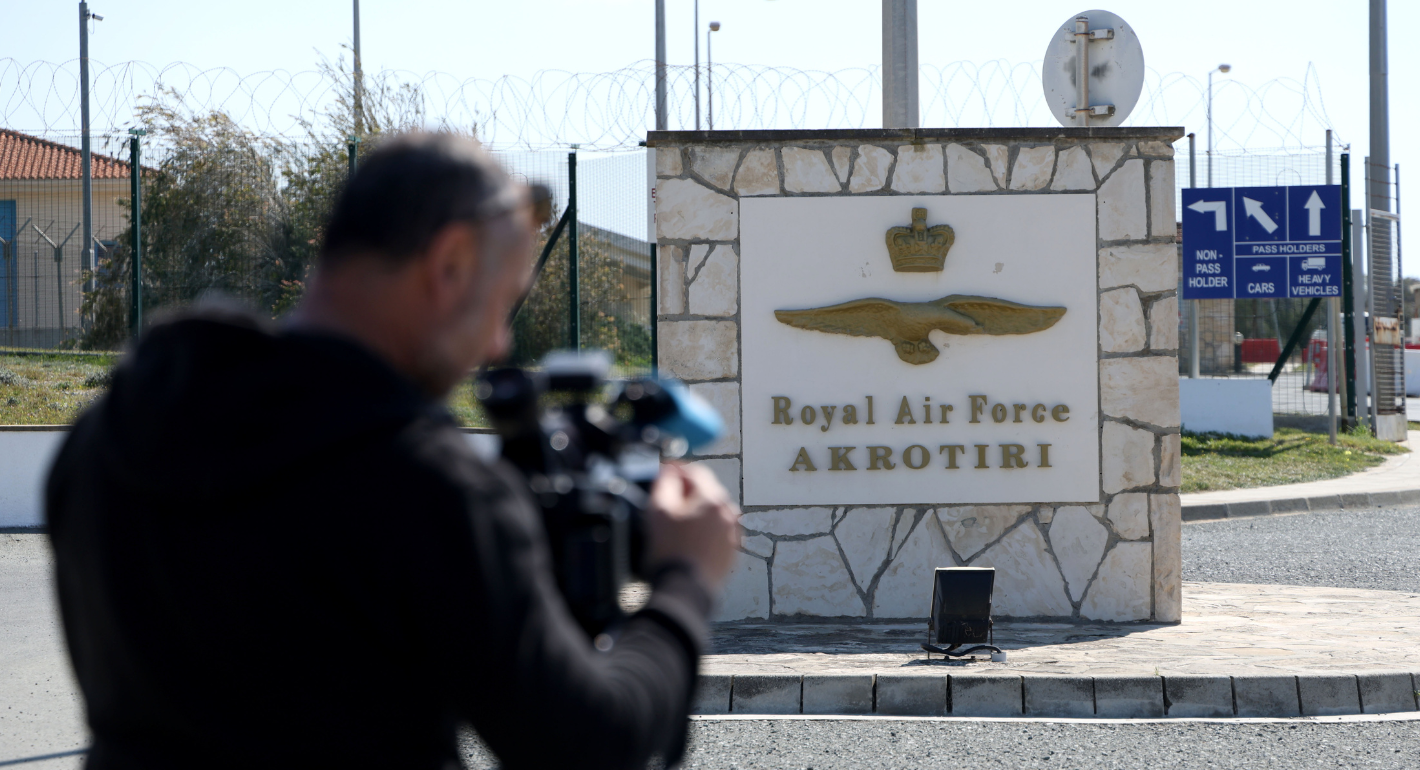
The drone strike on the British air base in Akrotiri brings Europe’s proximity to the conflict in Iran into sharp relief. In the fog of war, old tensions in the Eastern Mediterranean risk being reignited, and regional stakeholders must avoid escalation.

Marc Pierini
European reactions to the war in Iran have lost sight of wider political dynamics. The EU must position itself for the next phase of the crisis without giving up on its principles.

Richard Youngs
For years, the United States anchored global cyber diplomacy. As Washington rethinks its leadership role, the launch of the UN’s Cyber Global Mechanism may test how allies adjust their engagement.

Patryk Pawlak, Chris Painter
Europe isn’t as weak in the new geopolitics of power as many would believe. But to leverage its assets and claim a sphere of influence, Brussels must stop undercutting itself.

Dimitar Bechev