

In The Media
Petr Topychkanov
{
  "authors": [
    "Petr Topychkanov"
  ],
  "type": "commentary",
  "centerAffiliationAll": "",
  "centers": [
    "Carnegie Endowment for International Peace",
    "Carnegie Russia Eurasia Center"
  ],
  "collections": [],
  "englishNewsletterAll": "",
  "nonEnglishNewsletterAll": "",
  "primaryCenter": "Carnegie Russia Eurasia Center",
  "programAffiliation": "",
  "programs": [],
  "projects": [],
  "regions": [
    "North America",
    "United States",
    "South Asia",
    "India"
  ],
  "topics": [
    "Security",
    "Military",
    "Foreign Policy"
  ]
}
Source: Getty
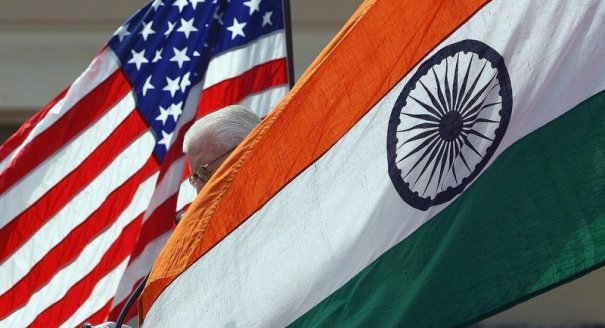
Indian and U.S. leaders recently discussed military-technological cooperation. Time will tell whether the countries will be ready to transform their cooperation by translating words into actions.
The prospects for military-technological cooperation were among the topics that Indian Prime Minister Narendra Modi discussed with President Barack Obama, Defense Secretary Chuck Hagel, and other representatives of American political and military industrial circles.
At first glance, New Delhi and Washington are tasked with renewing the New Framework for the U.S.-India Defense Relationship, signed in 2005 by the Indian Defense Minister (the country’s current president), Pranab Mukherjee, and U.S. Defense Secretary Donald Rumsfeld. For its part, the 2005 agreement replaced the Agreed Minute on Defense Relations Between the United States and India signed in 2005.
Of course, back in 2005, Pranab Mukherjee and other Indian proponents of the military-technological cooperation with the United States also hoped that the New Framework for the U.S.-India Defence Relationship would allow India and the United States to co-develop and co-produce weapons and military equipment in addition to the two-way trade. But despite the loud pronouncements, India and the United States have not a single joint defense project to show for since the agreement was signed.
Moreover, in all these years, India and the United States could not agree on the common principles for the transfer of military technologies, which had an adverse effect on the scale of their military-technological cooperation. India was not prepared to sign technology safeguard agreements that are an integral part of the military-technological cooperation between the United States and other countries. As a result, the parties had to settle for a case-by-case approach that enabled them to sign a number of agreements on the sales of American weapons and military equipment to India. This approach does not resolve the issue of safeguards in future deals between India and the United States.
Indian and American leaders have also demonstrated their intention to co-develop and co-produce weapons and military equipment in the past, but this intention now raises more serious questions. Are the current Indian leaders able to carry out these intentions—first on paper and subsequently by jointly developing and producing specific weaponry and military equipment? Are India and the United States prepared for the level of trust that exists between other countries that jointly develop military technologies (for instance, the United States and Israel, the European Union members, China and Pakistan, and, finally, Russia and India)?
We are still unable to answer these questions. As Ashley Tellis wrote on the eve of Modi’s U.S. visit, referring to the problems facing the Indian-American relations, ”none of these challenges can be resolved overnight or through a single visit by a prime minister.” However, Indian and U.S. leaders will be forced to answer these questions in the next few years. The new defense framework agreement that New Delhi and Washington may sign next year, as well as the resulting contracts, will demonstrate the seriousness of the parties’ intentions to jointly produce and develop weapons and military equipment.
While assessing the prospects of their military-technological cooperation between India and the United States high figures should not be emphasised. The parties may increase the volume of their cooperation without qualitatively changing its nature. While the countries’ officials may boast the record amounts of their deals, these will still be the sales of American weapons and military equipment to India (albeit based on the offset schemes that allow for certain localization of production).
The Russian experience however indicates that such military-technological cooperation with India may lead to a stable presence on the Indian arms market only for a relatively short period of time. Such presence cannot be maintained without a qualitatively different level of cooperation. This is precisely the reason for the deepening of the Russian-Indian military-technological cooperation illustrated by the successful cruise missile, atomic submarine, and aircraft carrier projects. But the Russian experience also reveals all of the difficulties on the path to developing cooperation and the failures the parties may encounter along this path.
Time will tell whether India and the United States will in fact be ready to transform their military-technological cooperation by translating words into actions.

Former Fellow, Nonproliferation Program, Moscow Center
Topychkanov was a fellow in the Carnegie Moscow Center’s Nonproliferation Program.
Recent Work
Petr Topychkanov
Petr Topychkanov
Carnegie does not take institutional positions on public policy issues; the views represented herein are those of the author(s) and do not necessarily reflect the views of Carnegie, its staff, or its trustees.
The EU is putting together a new security strategy to meet today’s myriad challenges. But for any proposal to be effective, the union needs to grapple with its identity and ambitions.

Pierre Vimont
Three years after the Ohrid Agreement, Kosovo and Serbia remain far from normalization. To revive implementation, the EU should abandon its ambiguity and act as an even-handed arbitrator.



Miloš Pavković, Fitim Gashi, Iliriana Gjoni, …

The EU’s new migration policy is not suited to today’s realities. With climate change increasingly becoming a driver of displacement, Europe needs to rethink its deterrence-focused approach.

Shana Tabak
The battle over free speech has taken center stage since U.S. Vice President JD Vance accused Europe of censorship. From travel bans to social media regulation, especially around the Israel-Palestine conflict, are liberal democratic governments weaponizing free speech?

Rym Momtaz, ed.
Europe seems to have accepted its sidelining in the Middle East. The EU must reassert its support for the international rules-based order and step up engagement.
Rym Momtaz