

Article
- +1
Toby Dalton, Mark Hibbs, Nicole Grajewski, …
{
  "authors": [
    "Mark Hibbs"
  ],
  "type": "questionAnswer",
  "centerAffiliationAll": "dc",
  "centers": [
    "Carnegie Endowment for International Peace"
  ],
  "collections": [
    "Japan's Nuclear Crisis",
    "U.S. Nuclear Policy"
  ],
  "englishNewsletterAll": "ctw",
  "nonEnglishNewsletterAll": "",
  "primaryCenter": "Carnegie Endowment for International Peace",
  "programAffiliation": "NPP",
  "programs": [
    "Nuclear Policy"
  ],
  "projects": [],
  "regions": [
    "North America",
    "United States",
    "East Asia",
    "Japan",
    "Western Europe",
    "France"
  ],
  "topics": [
    "Nuclear Policy",
    "Nuclear Energy"
  ]
}
Source: Getty
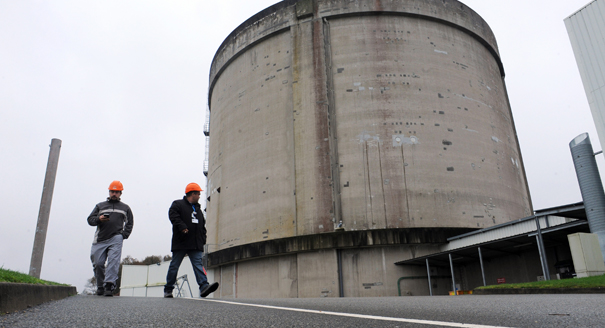
The Fukushima disaster prompted a push to toughen a convention on the safety of nuclear power plants. But some countries with older reactors didn’t like the idea.
The Convention on Nuclear Safety (CNS), which includes nearly every country that operates nuclear power plants, has been considering whether to legally compel participating states to meet specific safety standards. A push to amend the convention was launched after the Fukushima nuclear disaster. After a year of diplomacy, the effort failed in February 2015.
In a Q&A, Mark Hibbs examines the origins and aims of the CNS, as well as the effort to amend the convention. He says that countries with older reactors, especially the United States, the world’s leading nuclear power–generating country, worried that the proposal would have required shutting down their plants.The CNS is a legally binding instrument designed to get all countries in the world that operate nuclear power plants to commit to specific principles of nuclear safety. It came about in response to the 1986 disaster at the Chernobyl nuclear power plant in Ukraine, which revealed that safety authorities did not uphold important standards.
Today, the CNS has 77 contracting parties, including all countries that use nuclear power plants, except Iran. Its members are legally bound to uphold a high level of nuclear safety and oversight—but not specific technical benchmarks such as those written into safety standards published by the International Atomic Energy Agency (IAEA), which are voluntary.
Every three years, the CNS convenes a review conference, during which all parties present detailed reports on how they manage nuclear safety. These reports are critiqued by the parties in the interest of identifying good practices as well as deficiencies. Many parties raising the same concern about one state’s report is a signal that changes in that state’s safety regime may be needed. The idea is that, over time, this peer reviewing will result in a more harmonized global nuclear safety regime with all parties committed to the same high standards; gaps and problems in individual countries will be pinpointed and then rectified.
The CNS covers all of the general factors that played a part in the disaster at Japan’s Fukushima Daiichi Nuclear Power Station: siting, design, regulation, and emergency preparedness. Japan’s national report submitted to the CNS in 2010, just before the accident, asserted that “Japan has ensured implementation of the CNS.” In retrospect, it would appear that, at the time of and before the accident, Japan did not uphold the convention’s standards for licensing, rulemaking, and oversight, especially provisions in article 8 concerning regulatory independence and those on safe siting of nuclear power plants in article 17. In any case the CNS has no means to compel states to implement the standards that they are legally bound to uphold.
The CNS’s lack of authority played a part. Right after Fukushima, Russia and Switzerland began by proposing that IAEA peer reviews and safety standards be compulsory. The IAEA, which is the convention’s depositary, put forth similar ideas. But important nuclear power–generating states, including China, India, and the United States, rejected these initiatives as an unwelcome incursion into their sovereignty.
In December 2013, Switzerland proposed that article 18 of the CNS be amended to include specific safety targets that both existing and new reactors would have to meet. Proponents argued that this was compatible with the convention’s goal to legally commit participating states operating nuclear power plants to maintain a high level of safety by setting international benchmarks.
For many parties, the proposal’s implications for new reactors were, in principle, not problematic. But its potential impact on existing plants led countries operating older reactors—including the United States—to object. They argued that these plants would have to be shut down because equipping them with state-of-the-art features would be prohibitively expensive and in some cases not feasible.
According to calculations of the theoretical probabilities of accident scenarios, older nuclear power plant designs are less safe. But there may be mitigating factors in the real world. At stake in the amendment debate were different philosophies about how to reduce the risk associated with older plants.
European countries, which overwhelmingly supported the amendment, have for years compelled nuclear power plant owners to continually upgrade their units, at a cost that was not considered prohibitive because electricity markets were highly regulated and monopolistic. In the United States, where market forces reign supreme, a different approach to safety has been followed, resulting in fewer expensive plant design changes and, instead, less intrusive and less costly measures that industry and regulators assert are effective.
U.S. experts acknowledge that if the CNS were to compel older units to undergo major surgery, many of the units may have to be closed. During the run-up to debate on the amendment, European nuclear firms similarly feared that European governments were not prepared “to recognize the operational differences between old and new reactor designs.”
If the amendment had passed, the parties would then have had to decide what it would specifically require. There is no doubt that nuclear power plant vendors viewed the debate through the lens of their commercial opportunity and risk. Different reactor models were designed to meet safety targets in different ways. The passively cooled Westinghouse AP1000, for example, was designed to retain molten core material inside the reactor vessel in the case of a severe accident; the French EPR reactor and the Russian VVER-1000 were designed instead with an external “core catcher.” Vendors urged their national governments to make sure that their technologies wouldn’t be singled out as noncompliant with CNS requirements, or, conversely, that the requirements would not uniquely benefit their competitors. These considerations may have affected how important nuclear power countries responded to the amendment proposal.
After eight days of debate at the last review conference, in April 2014, Switzerland did not persuade all parties to adopt its amendment, and it was decided that the proposal would be raised again at a diplomatic conference in early February in Vienna. During the months prior to the 2015 conference, opponents of the amendment virtually assured that it would be defeated in favor of a nonbinding statement reflecting Swiss concerns. In the view of safety officials who supported the amendment, such as France’s regulator, that outcome was a setback because it “does not strengthen the legal obligations of the signatory states.”
The battle lines have now been firmly drawn. Critics object that the CNS’s longstanding approach is too soft and doesn’t result in real safety improvements. The other side argues that if the CNS were to contain compulsory language on specific requirements, some nuclear power–generating countries would not participate in a legally binding arrangement.
Even without the firm opposition of the United States, amending the CNS would be a challenge because it requires a two-thirds majority, and entry into force of the amendment requires approval or ratification by three-fourths of the parties. The difficulty of amending an international convention is shown by the Convention on the Physical Protection of Nuclear Material. In 2005 its parties adopted an amendment that ten years later has still not entered into force because two-thirds of the parties have not ratified it.
The CNS’s dilemma remains: it works at a snail’s pace, involving years of internal and confidential discussion among parties meeting in three-year intervals. The CNS may well have raised countries’ aspirations and contributed to a higher global safety standard, but its success can’t really be quantified.
Some amendment advocates were clearly frustrated by this process. They viewed Fukushima as an opportunity to at once give the convention a more public profile and to show that it is capable of forcing parties to make tangible safety improvements. But in the end, the parties fell back to their default position of peer reviewing and offering guidance. So the CNS will continue to work in obscurity—and the debate about whether it is effective will soldier on.

Nonresident Senior Fellow, Nuclear Policy Program
Hibbs is a Germany-based nonresident senior fellow in Carnegie’s Nuclear Policy Program. His areas of expertise are nuclear verification and safeguards, multilateral nuclear trade policy, international nuclear cooperation, and nonproliferation arrangements.
Recent Work


Toby Dalton, Mark Hibbs, Nicole Grajewski, …
Mark Hibbs
Carnegie does not take institutional positions on public policy issues; the views represented herein are those of the author(s) and do not necessarily reflect the views of Carnegie, its staff, or its trustees.

With its public finances in shambles, the far right polling at 35 percent ahead of the 2027 presidential election, and a growing protest movement, is France’s crisis a threat to the EU’s geopolitical awakening?

Rym Momtaz, ed.

Ahead of a tough winter for Ukraine, Donald Trump’s swing back toward Russia bodes ill. But instead of panicking, Kyiv’s European allies are focusing on action.
Rym Momtaz

While the EU and European governments are embracing the much-lauded middle-power moment, this entails three difficult conundrums.

Richard Youngs

Europe is facing rising populism internally as well as external pressures from Russia, China, Turkey, and the United States.

Dimitar Bechev

A notable degree of participative democracy has firmly arrived in Europe. But to have more far-reaching impact, democratic deliberation needs to move into a radically new phase.
Richard Youngs