

Commentary
The new U.S.–Denmark–Greenland agreement will help Washington exert political, economic, and financial dominance under the guise of security. Yet, it acknowledged Copenhagen’s and Nuuk’s sovereignty on the island.
Marc Pierini
{
  "authors": [
    "James F. Collins",
    "Michael Sfraga",
    "Ross A. Virginia",
    "Kenneth S. Yalowitz"
  ],
  "type": "other",
  "centerAffiliationAll": "dc",
  "centers": [
    "Carnegie Endowment for International Peace"
  ],
  "collections": [],
  "englishNewsletterAll": "ctw",
  "nonEnglishNewsletterAll": "",
  "primaryCenter": "Carnegie Endowment for International Peace",
  "programAffiliation": "russia",
  "programs": [
    "Russia and Eurasia"
  ],
  "projects": [],
  "regions": [
    "North America",
    "United States",
    "Russia"
  ],
  "topics": [
    "Climate Change",
    "Security"
  ]
}
Source: Getty
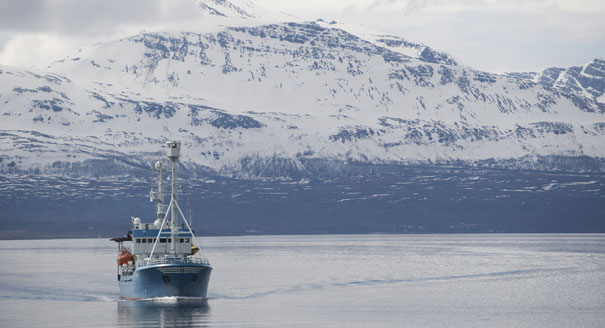
The Arctic must and can, with adequate political will, remain an area for peaceful cooperation, scientific research, and sustainable development.
Source: Recommendations from the February 2015 Meeting at the Carnegie Endowment for International Peace
A group of 45 international experts, government officials and representatives of leading NGO’s met in Washington, DC, on February 23, 2015, and unanimously concluded that the Arctic must and can, with adequate political will, remain an area for peaceful cooperation, scientific research and sustainable development. And to the extent possible, it should be kept apart from the current complex geo-political environment. This vision is already challenged by events in the region and outside. Russia’s increased military presence raises the specter of a more militarized Arctic, and US energy sanctions on Russian oil and gas projects in response to Russian involvement in the war in Ukraine have raised questions about the Arctic’s economic development. But, climate change, environmental dangers, the prospect of increased Arctic Ocean shipping, the development of the rich energy and natural resource base of the Arctic, and the need for improved maritime infrastructure and shipping safety all necessitate continued cooperation.
All participants agreed that the Arctic Council and the UN Convention on the Law of the Sea (UNCLOS) continue to be the primary mechanisms to ensure this outcome. Therefore, a principal task of the US Arctic Council chairmanship, beginning in April 2015, is to guide consensus toward cooperation, engagement and transparency in the Arctic and channel the dynamism of rapid change in the Arctic into timely and effective work by the Arctic Council on its own agenda and Arctic issues that need to be taken up with other international bodies.
The US Chairmanship program for the Arctic Council sets priorities in these areas: Arctic Ocean safety, security and stewardship; improving economic and living conditions; and addressing the impacts of climate change. A consensus of meeting participants supported the US Chairmanship goals and objectives and the need to address climate change challenges resulting from loss of sea ice, sea level rise, and thawing permafrost. Equally important was a consideration of actions to limit black carbon pollution and improve air quality in the Arctic, continue research and programs to ensure the health of the Arctic Ocean ecosystem as energy development increases, and implement the Polar Code and other measures to improve the safety of Arctic navigation.
The February 23, 2015, meeting followed a preparatory session held on October 16, 2014, which was also convened by the Carnegie Endowment for International Peace, Dartmouth, the University of Alaska Fairbanks and the University of the Arctic, at which policy recommendations for the US Chairmanship were initially discussed. The purpose of the February meeting was to choose and prioritize recommendations. Several of the October proposals have already been incorporated by US planners into the US agenda for the chairmanship and are not repeated below. The following additional recommendations were made by the group in the four categories of issues discussed.
Arctic Council Initiatives to Sustain Arctic Cooperation is a contribution to the UArctic Institute of Arctic Policy. IAP is a collaboration between Dartmouth College and the University of Alaska Fairbanks that promotes discussion and analysis of critical issues facing the circumpolar north and its peoples. Meetings bring together representatives of governments, the academy, non-governmental organizations and indigenous peoples to discuss critical issues and to identify and prioritize policy related requirements and help develop governmental agendas. The Carnegie Endowment for International Peace has been a critical partner in developing a series of meetings addressing a range of Arctic security issues.
Nonresident Senior Fellow, Russia and Eurasia Program; Diplomat in Residence
Ambassador Collins was the U.S. ambassador to the Russian Federation from 1997 to 2001 and is an expert on the former Soviet Union, its successor states, and the Middle East.
Michael Sfraga
Sfraga currently serves as vice chancellor for university and student advancement and is professor of arctic policy in the School of Natural Resources and Extension.
Ross A. Virginia
Dartmouth College
Kenneth S. Yalowitz
Dartmouth College
Carnegie does not take institutional positions on public policy issues; the views represented herein are those of the author(s) and do not necessarily reflect the views of Carnegie, its staff, or its trustees.

The new U.S.–Denmark–Greenland agreement will help Washington exert political, economic, and financial dominance under the guise of security. Yet, it acknowledged Copenhagen’s and Nuuk’s sovereignty on the island.

Marc Pierini

A summer of escalation in the Black Sea has hurt Ukraine economically and is exacerbating world food security. A truce is needed—as is a broader reframing of Europe’s Ukraine strategy.

Thomas de Waal

Are Germany’s economic, industrial, and political struggles becoming a liability for the EU’s ability to rise to the geopolitical moment?

Rym Momtaz, ed.

European Commission President Ursula von der Leyen is about to give her annual address on the state of the EU. Here’s what she won’t—but should—say.
Rym Momtaz

Radical-right parties are expected to do well in upcoming elections in four of the EU's biggest member states. If successful, they could prevent the union from addressing key challenges ahead.

Stefan Lehne