

Article
Frederic Grare
{
  "authors": [
    "Frederic Grare"
  ],
  "type": "legacyinthemedia",
  "centerAffiliationAll": "dc",
  "centers": [
    "Carnegie Endowment for International Peace"
  ],
  "collections": [],
  "englishNewsletterAll": "ctw",
  "nonEnglishNewsletterAll": "",
  "primaryCenter": "Carnegie Endowment for International Peace",
  "programAffiliation": "SAP",
  "programs": [
    "South Asia"
  ],
  "projects": [],
  "regions": [
    "South Asia",
    "India",
    "Western Europe",
    "France"
  ],
  "topics": [
    "Economy",
    "Security",
    "Foreign Policy"
  ]
}
Source: Getty
Indian and French policies are increasingly converging on ensuring stability in the Indian Ocean.
Source: CNN-IBN
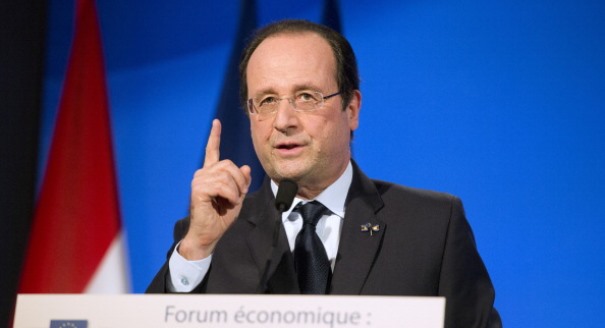
As Prime Minister Narendra Modi on Thursday left for his 3-nation visit of France, Canada, and Germany, CNN-IBN’s Executive Editor Zakka Jacob discussed the key issues between India and France with panel of experts, including Carnegie’s Frederic Grare.
The discussion began with India’s potential acquisition of Rafale fighter aircraft from French manufacturer Dassault. Grare explained that while the deal has been in the works for years, it increasingly appears as though it will fall through. Even if it were concluded, Grare raised the question of India's capacity to absorb the technology transfers that it would entail. Grare also discussed the potential sale of French radar technology to India for use in the Indian Ocean, seeing it as an important aspect of Indian and French convergence on ensuring stability in the Indian Ocean. Finally, Grare commented on the progress of nuclear negotiations with Iran and the consequences for India, cautioning that “a framework is not a deal.”
Former Nonresident Senior Fellow, South Asia Program
Frédéric Grare was a nonresident senior fellow at the Carnegie Endowment for International Peace, where his research focuses on Indo-Pacific dynamics, the search for a security architecture, and South Asia Security issues.
Recent Work
Frederic Grare
Frederic Grare
Carnegie does not take institutional positions on public policy issues; the views represented herein are those of the author(s) and do not necessarily reflect the views of Carnegie, its staff, or its trustees.

Funding Ukraine remains a priority for European leaders. As Russia’s war of aggression heads into another winter, two feasible options to mobilize support for Kyiv should be fast-tracked.


Vladyslav Rashkovan, Gregory P. Wilson

While the EU and European governments are embracing the much-lauded middle-power moment, this entails three difficult conundrums.

Richard Youngs

Europe is facing rising populism internally as well as external pressures from Russia, China, Turkey, and the United States.

Dimitar Bechev

A notable degree of participative democracy has firmly arrived in Europe. But to have more far-reaching impact, democratic deliberation needs to move into a radically new phase.
Richard Youngs

Much has been said of the changes Brussels is trying to make to the EU enlargement process. Here’s why gradual integration might—or might not—be the answer.
Dimitar Bechev