

Research
- +4
Milan Vaishnav, Rahul Verma, Rukmini S., …
{
  "authors": [
    "Christophe Jaffrelot"
  ],
  "type": "legacyinthemedia",
  "centerAffiliationAll": "dc",
  "centers": [
    "Carnegie Endowment for International Peace",
    "Malcolm H. Kerr Carnegie Middle East Center"
  ],
  "collections": [],
  "englishNewsletterAll": "ctw",
  "nonEnglishNewsletterAll": "",
  "primaryCenter": "Carnegie Endowment for International Peace",
  "programAffiliation": "SAP",
  "programs": [
    "South Asia"
  ],
  "projects": [],
  "regions": [
    "Middle East",
    "Iran",
    "Saudi Arabia",
    "South Asia",
    "Pakistan",
    "Gulf"
  ],
  "topics": [
    "Security",
    "Foreign Policy"
  ]
}
Source: Getty
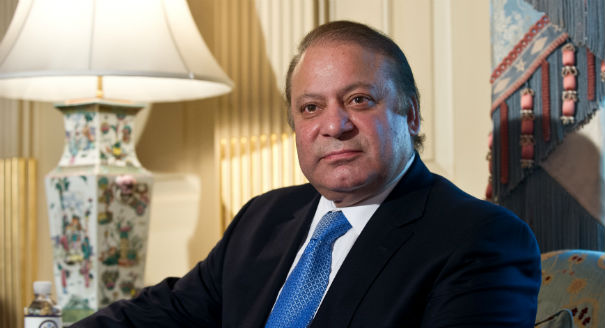
The implications of the Pakistani refusal to help Saudi Arabia in Yemen should not be underestimated.
Source: Indian Express
The implications of the Pakistani refusal to help Saudi Arabia in Yemen should not be underestimated. If China is Islamabad’s “all-weather friend”, former Saudi intelligence chief Prince Turki bin Sultan once said that Pakistan and Saudi Arabia have “one of the closest relationships in the world between any two countries”. And Wikileaks revealed that in 2007, the Saudi ambassador to the US had boasted that his authorities were not “observers in Pakistan, we are participants”.
The recent rebuff, therefore, came as a shock to Riyadh. Certainly, this decision is the result of a series of circumstances. First, the Pakistani army is conducting a military operation in North Waziristan. To open another front would have been a dangerous distraction. Second, taking Saudi Arabia’s side could have alienated Iran at a time when Islamabad wants to engage Tehran in talks about a post-Nato Afghanistan.
But the Iran factor needs to be seen in a larger context. Islamabad has signed an agreement with it on building a gas pipeline that Pakistan badly needs. While Iran has moved on building its segment, Pakistan has not yet started because of external — Western and Saudi — pressures. Iran also matters because of sectarian tensions that have acquired a transnational dimension. The Jundallah, a Sunni militant group, has been launching attacks on Sistan-Baluchistan from Quetta, where it allegedly has a safe haven. This had resulted in tensions between Tehran and Islamabad, till Pakistan arrested Jundallah leaders in March.But sectarianism has also become one of the major domestic, existential challenges that Pakistan is facing. Since the 1990s, about 5,000 people have been killed in violence between Shias and Sunnis. If Islamabad had sided with Saudi Arabia, Iran would have been encouraged to support the Shias of Pakistan to relaunch the proxy war that Tehran and Riyadh have been fighting in Pakistan since the late 1970s.
It would also have meant that Pakistan sided with Sunni militants, who are part of the terrorist nebula that the army is, at last, targeting after the Peshawar tragedy — a sign of a paradigmatic shift. Indeed, Pakistan distancing itself from Saudi Arabia seems to be the external face of this shift.
Why is Pakistan’s new attitude so significant? First, Islamabad has always stood by Saudi Arabia militarily. Most recently, when the Sunni dynasty of Bahrain, a close ally of Saudi Arabia, was under attack because of an Arab Spring-like mobilisation supported by the Shia-majority populace, Pakistan obliged Riyadh by sending troops.
Second, PM Nawaz Sharif has always been close to Riyadh. When he was deposed in 1999, he found refuge in Jeddah, and when Benazir Bhutto was allowed to return to Pakistan in 2007, the Saudis interceded for him with Pervez Musharraf so that he could return as well.
This new attitude is probably also linked to Islamabad’s anxieties over sovereignty. The Abbottabad raid and US drone strikes have made it a major issue. The PTI successfully tapped into it before the last elections and again during the joint session of parliament to discuss support to Saudi Arabia. Nawaz’s insecurities on sovereignty had also probably been heightened by the manner in which Pakistani support was being taken for granted. The Saudis presented Pakistan as part of the coalition they were putting together — at a press conference on April 2, the Pakistani flag was displayed along with those of others who had agreed to join. This, when Islamabad had not yet made a decision.
When Pakistan decided to maintain neutrality, the UAE’s foreign minister warned that it would “pay a heavy price” for its “ambiguous stand”. In response, Pakistan’s Home Minister Nisar Ali Khan said the statement was an “offence against the ego of Pakistan and its people”.
But can Pakistan afford to alienate the Gulf countries? After all, Islamabad depends on financial support from Riyadh, and more than two million Pakistanis work in Saudi Arabia. If Pakistan does keep Saudi Arabia at arm’s length, the fear that the Saudis would “benefit” from the Pakistani bomb will be diminished. The recent US-Iran talks had made these fears more acute. Indeed, according to Bruce Riedel, in 2003, “a secret agreement… that would ensure Pakistan would provide Saudi Arabia with nuclear technology and a bomb if Saudi Arabia felt threatened by a third party nuclear programme” had been signed.
There is much at stake. That Saudi-Pakistani relations are not as strong as they used to be because of Islamabad’s decision cannot be said for certain yet. After all, Islamabad could also provide military support covertly, as it did in Bahrain.
This article was originally published in the Indian Express.

Former Nonresident Scholar, South Asia Program
Jaffrelot’s core research focuses on theories of nationalism and democracy, mobilization of the lower castes and Dalits (ex-untouchables) in India, the Hindu nationalist movement, and ethnic conflicts in Pakistan.
Recent Work

Milan Vaishnav, Rahul Verma, Rukmini S., …
Christophe Jaffrelot
Carnegie does not take institutional positions on public policy issues; the views represented herein are those of the author(s) and do not necessarily reflect the views of Carnegie, its staff, or its trustees.

Funding Ukraine remains a priority for European leaders. As Russia’s war of aggression heads into another winter, two feasible options to mobilize support for Kyiv should be fast-tracked.


Vladyslav Rashkovan, Gregory P. Wilson

While the EU and European governments are embracing the much-lauded middle-power moment, this entails three difficult conundrums.

Richard Youngs

Europe is facing rising populism internally as well as external pressures from Russia, China, Turkey, and the United States.

Dimitar Bechev

Much has been said of the changes Brussels is trying to make to the EU enlargement process. Here’s why gradual integration might—or might not—be the answer.
Dimitar Bechev

The European Commissioner for Trade is headed to China. But after President Xi’s bridge-building visit to Washington, can a more isolated EU overcome Beijing’s stranglehold on critical raw materials? Who will blink first?

Rym Momtaz, ed.