

Research
- +10
Rosa Balfour, Frances Z. Brown, Yasmine Farouk, …
{
  "authors": [
    "Moisés Naím"
  ],
  "type": "legacyinthemedia",
  "centerAffiliationAll": "",
  "centers": [
    "Carnegie Endowment for International Peace"
  ],
  "collections": [],
  "englishNewsletterAll": "",
  "nonEnglishNewsletterAll": "",
  "primaryCenter": "Carnegie Endowment for International Peace",
  "programAffiliation": "",
  "programs": [],
  "projects": [],
  "regions": [
    "North America",
    "United States",
    "Middle East",
    "North Africa",
    "Western Europe"
  ],
  "topics": [
    "Political Reform",
    "Security",
    "Civil Society",
    "Religion"
  ]
}
Source: Getty
From the self-proclaimed Islamic State to Dylann Roof, internal struggles are the dominant theme in conflict today.
Source: Atlantic
Friday, June 26 was a day of terror. In Tunisia, a gunman killed 38 tourists, nearly all of them European, at a beach resort. In Kuwait, a suicide bomber murdered 27 people at a Shiite mosque. In France, an assailant decapitated his boss and attempted to blow up a chemical plant. ISIS claimed responsibility for the first two attacks; the perpetrator of the third appears to have ties to radical Islamist groups.
Although there is so far no evidence that the three attacks were coordinated, they further underscore that Islamic terrorism is a growing global threat. But do attacks like these confirm Samuel Huntington’s post-Cold War hypothesis about the coming “clash of civilizations”? With the end of ideological confrontation between communism and capitalism, the distinguished Harvard professor theorized, major international conflicts would arise between countries with cultural and religious differences. “On both sides the interaction between Islam and the West is seen as a clash of civilizations,” Huntington wrote in a 1993 article for Foreign Affairs. He continued:It is my hypothesis that the fundamental source of conflict in this new world will not be primarily ideological or primarily economic. The great divisions among humankind and the dominating source of conflict will be cultural. Nation states will remain the most powerful actors in world affairs, but the principal conflicts of global politics will occur between nations and groups of different civilizations. The clash of civilizations will dominate global politics. The fault lines between civilizations will be the battle lines of the future.
For some, the ascent of al-Qaeda and the 9/11 attacks, the wars in Afghanistan and Iraq, the rise of the Islamic State and similar jihadist groups, and attacks like those on Friday all seem to support Huntington’s view.
The reality, however, is that since Huntington advanced this idea, the world has witnessed something very different: In terms of terrorism, one of the defining modes of conflict of our time, the deadliest clashes are currently occurring within civilizations, not between civilizations. Based on media coverage and the rhetoric of government officials, you’d think that the bloodiest conflict of the 21st century is the one between Muslim extremists and Westerners.
This perception is wrong. Today, internecine struggles are the dominant theme in geopolitical conflict. Militant jihadists have in fact killed far more fellow Muslims than members of any other group or, as Huntington would call it, “civilization.” Behind these casualties is a centuries-old conflict in Islam between Shiites and Sunnis that has grown more acute and multifaceted in recent years. According to the Global Terrorism Index (GTI), created by the Institute for Economics and Peace, in 2013 nearly 18,000 people around the world died from terrorist attacks. Eighty-two percent of the victims were in just five countries: Iraq, Afghanistan, Pakistan, Nigeria, and Syria. Of the attacks for which groups claimed responsibility, 66 percent were executed by ISIS, Boko Haram, the Taliban, or al-Qaeda. In the past 14 years, just 5 percent of deaths from terrorist attacks have occurred in the industrialized countries of the Organization for Economic Cooperation and Development, which includes the United States. Of the 162 countries in the GTI study, Iraq ranks as the nation most affected by terrorism. France, to cite just one example in the West, places 56th.


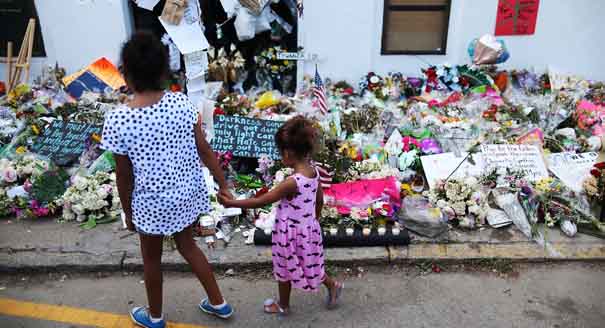
Many people also believe that Islamist radicals commit the majority of terrorist attacks in the United States. This, too, is false. Since 9/11, according to a recent study by New America, terrorist attacks by white supremacists and other right-wing, non-Muslim extremists have resulted in nearly double the number of deaths as attacks perpetrated by jihadists. Non-Muslim terrorists have killed 48 people in 19 attacks, while their Muslim counterparts have slain 26 people in seven attacks. A jarring reminder of this often-concealed truth came when Dylann Roof murdered nine people at a church in Charleston, South Carolina.
Terrorism is not going away. But the strategies that are adopted to fight it should be based on reality, not prejudice or preconceptions.

Distinguished Fellow
Moisés Naím is a distinguished fellow at the Carnegie Endowment for International Peace, a best-selling author, and an internationally syndicated columnist.
Recent Work



Rosa Balfour, Frances Z. Brown, Yasmine Farouk, …
Moisés Naím
Carnegie does not take institutional positions on public policy issues; the views represented herein are those of the author(s) and do not necessarily reflect the views of Carnegie, its staff, or its trustees.

The EU can impose sanctions but struggles to enforce them without the United States. With Washington increasingly disinterested in backing European interests, the bloc must now fend for itself.


Nicu Popescu, Tiago Antunes

Russia is testing the waters of NATO’s mutual defense clause. What do strikes in Romanian territorial waters mean for the alliance’s posture toward Moscow?

Dimitar Bechev

With its public finances in shambles, the far right polling at 35 percent ahead of the 2027 presidential election, and a growing protest movement, is France’s crisis a threat to the EU’s geopolitical awakening?

Rym Momtaz, ed.

Ahead of a tough winter for Ukraine, Donald Trump’s swing back toward Russia bodes ill. But instead of panicking, Kyiv’s European allies are focusing on action.
Rym Momtaz

While the EU and European governments are embracing the much-lauded middle-power moment, this entails three difficult conundrums.

Richard Youngs