

Commentary
Russia is testing the waters of NATO’s mutual defense clause. What do strikes in Romanian territorial waters mean for the alliance’s posture toward Moscow?
Dimitar Bechev
{
  "authors": [
    "Toby Dalton",
    "Michael Krepon"
  ],
  "type": "other",
  "centerAffiliationAll": "dc",
  "centers": [
    "Carnegie Endowment for International Peace"
  ],
  "collections": [],
  "englishNewsletterAll": "ctw",
  "nonEnglishNewsletterAll": "",
  "primaryCenter": "Carnegie Endowment for International Peace",
  "programAffiliation": "NPP",
  "programs": [
    "Nuclear Policy"
  ],
  "projects": [],
  "regions": [
    "South Asia",
    "Pakistan"
  ],
  "topics": [
    "Security",
    "Nuclear Policy",
    "Arms Control"
  ]
}
Source: Getty
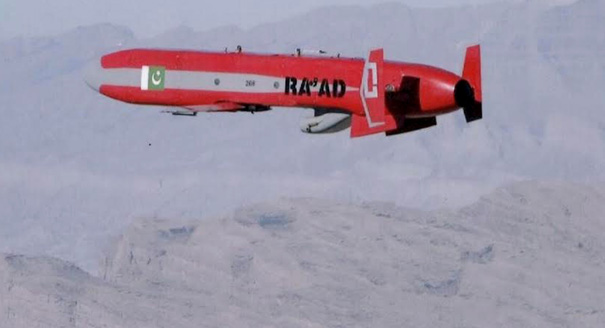
Pakistan’s military leadership can choose to accept success in achieving a “strategic” deterrent against India, or it can choose to continue to compete with India in the pursuit of “full spectrum” deterrence.
Source: The Stimson Center and the Carnegie Endowment for International Peace
Pakistan has worked hard and successfully to build diverse nuclear capabilities. It will retain these capabilities for the foreseeable future as a necessary deterrent against perceived existential threats from India. At this juncture, Pakistan’s military leadership in Rawalpindi can choose to accept success in achieving a “strategic” deterrent against India — a nuclear force posture sufficient to prevent limited nuclear exchanges and a major conventional war. Alternatively, it can choose to continue to compete with India in the pursuit of “full spectrum” deterrence, which would entail open-ended nuclear re- quirements against targets both near and far from Pakistan. These choices would lead Pakistan to two starkly different nuclear futures and places in the global nuclear order.
Pakistan is now competing successfully with — and in some respects is outcompeting — India. Paki- stan operates four plutonium production reactors; India operates one. Pakistan has the capability to produce perhaps 20 nuclear warheads annually; India appears to be producing about five warheads an- nually. But given its larger economy and sizable nuclear infrastructure, India is able to outcompete Pa- kistan in fissile material and warhead production if it chooses to do so. Pakistan has prepared for this eventuality by investing in a large nuclear weapons production complex. Whether New Delhi chooses to compete more intensely or not, it is a losing proposition for Pakistan to sustain, let alone expand, its current infrastructure to produce greater numbers of nuclear weapons and their means of delivery. Just as the Soviet Union’s large nuclear arsenal was of no help whatsoever for its manifold economic and societal weaknesses, Pakistan’s nuclear weapons do not address its internal challenges.Pakistan seeks to be viewed as a “normal” state possessing nuclear weapons, as exemplified by member- ship in the Nuclear Suppliers Group (NSG). Its diplomats seek a civil-nuclear cooperation agreement similar to the one accorded to India. A commercial pathway to being mainstreamed into the global nuclear order is highly unlikely for Pakistan, which lacks the commercial leverage and support that resulted in a nuclear deal for India. A different path toward mainstreaming is available to Pakistan, via nuclear-weapon-related initiatives. Having succeeded in achieving the requirements of “strategic” deterrence, Pakistan is in a position to consider nuclear initiatives that would clarify its commitment to strengthening nuclear norms, regimes, and practices, and would address widely held perceptions that its nuclear deterrence practices are a major source of danger in South Asia.
We propose that Pakistan consider five nuclear weapon-related initiatives:
None of these initiatives would impair Pakistan’s successful accomplishment of strategic deterrence against India. They would, however, require difficult and fundamental adjustments to thinking about nuclear weapons and Pakistan’s deeply ingrained habits of transactional bargaining. Precisely because these initiatives would be so difficult and unusual for Pakistan, they would change perceptions about Pakistan and its place in the global nuclear order. As such, they could facilitate Pakistan’s entrance into the nuclear mainstream, while strengthening nonproliferation norms, bolstering global disarmament hopes, and setting the bar higher for new entrants into the NSG.
The global nuclear order will not be strengthened by trying to accommodate a Pakistan that is greatly increasing its nuclear capabilities while rejecting the Comprehensive Test Ban Treaty and Fissile Material Cutoff Treaty. Nor will Pakistan become a normal, nuclear state by competing with India or by harboring groups that could spark a war with India. The international community is unlikely to accommodate Pakistan’s desire to enter the nuclear mainstream without corresponding steps by Paki- stan to align aspects of its nuclear policy and practices closer with international norms. The steps we propose lend themselves to mainstreaming. More importantly, these steps would advance Pakistan’s national, social, and economic security interests...

Senior Fellow and Co-director, Nuclear Policy Program
Toby Dalton is a senior fellow and co-director of the Nuclear Policy Program at the Carnegie Endowment. An expert on nonproliferation and nuclear energy, his work addresses regional security challenges and the evolution of the global nuclear order.
Michael Krepon
Michael Krepon co-founded the Stimson Center in 1989. He worked previously in the executive branch and on Capitol Hill.
Carnegie does not take institutional positions on public policy issues; the views represented herein are those of the author(s) and do not necessarily reflect the views of Carnegie, its staff, or its trustees.

Russia is testing the waters of NATO’s mutual defense clause. What do strikes in Romanian territorial waters mean for the alliance’s posture toward Moscow?

Dimitar Bechev

With its public finances in shambles, the far right polling at 35 percent ahead of the 2027 presidential election, and a growing protest movement, is France’s crisis a threat to the EU’s geopolitical awakening?

Rym Momtaz, ed.

Europe is facing rising populism internally as well as external pressures from Russia, China, Turkey, and the United States.
Dimitar Bechev

The new U.S.–Denmark–Greenland agreement will help Washington exert political, economic, and financial dominance under the guise of security. Yet, it acknowledged Copenhagen’s and Nuuk’s sovereignty on the island.

Marc Pierini

A summer of escalation in the Black Sea has hurt Ukraine economically and is exacerbating world food security. A truce is needed—as is a broader reframing of Europe’s Ukraine strategy.

Thomas de Waal