

Commentary
The EU can impose sanctions but struggles to enforce them without the United States. With Washington increasingly disinterested in backing European interests, the bloc must now fend for itself.
Nicu Popescu, Tiago Antunes
{
  "authors": [
    "Milan Vaishnav",
    "Sadanand Dhume"
  ],
  "type": "legacyinthemedia",
  "centerAffiliationAll": "dc",
  "centers": [
    "Carnegie Endowment for International Peace"
  ],
  "collections": [],
  "englishNewsletterAll": "ctw",
  "nonEnglishNewsletterAll": "",
  "primaryCenter": "Carnegie Endowment for International Peace",
  "programAffiliation": "SAP",
  "programs": [
    "South Asia"
  ],
  "projects": [],
  "regions": [
    "South Asia",
    "India"
  ],
  "topics": [
    "Political Reform",
    "Economy",
    "Foreign Policy"
  ]
}
Source: Getty
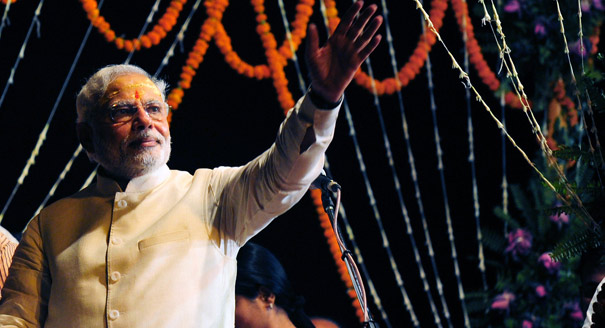
On the eve of Modi’s second visit to the United States, what are the outcomes of the U.S.-India Strategic and Commercial Dialogue and what is the status of the bilateral relationship?
Source: Bloomberg TV India
On the eve of Modi’s second visit to the United States, Carnegie’s Milan Vaishnav and Sandanand Dhune from the American Enterprise Institute discussed the outcomes of the U.S.-India Strategic and Commercial Dialogue, the BJP’s reform agenda, and the impact of upcoming state elections in Bihar. On U.S.-India cooperation, Vaishnav noted an increasingly convergent position regarding Pakistan. He also spoke of China, saying that whether or not the text of the joint statement has anything to say about China, the People’s Republic nonetheless looms large in the subtext of the U.S.-India relationship. On the economy, Vaishnav contended that India is trending in the right direction compared to other emerging markets, but not improving with the speed that most people hoped it would. A lot of reform, Vaishnav concluded, still needs to be done.

Director and Senior Fellow, South Asia Program
Milan Vaishnav is a senior fellow and director of the South Asia Program and the host of the Grand Tamasha podcast at the Carnegie Endowment for International Peace. His primary research focus is the political economy of India, and he examines issues such as corruption and governance, state capacity, federalism, and electoral behavior. He also conducts research on the Indian diaspora.
Sadanand Dhume
Council on Foreign Relations
Carnegie does not take institutional positions on public policy issues; the views represented herein are those of the author(s) and do not necessarily reflect the views of Carnegie, its staff, or its trustees.

The EU can impose sanctions but struggles to enforce them without the United States. With Washington increasingly disinterested in backing European interests, the bloc must now fend for itself.


Nicu Popescu, Tiago Antunes

Russia is testing the waters of NATO’s mutual defense clause. What do strikes in Romanian territorial waters mean for the alliance’s posture toward Moscow?

Dimitar Bechev

With its public finances in shambles, the far right polling at 35 percent ahead of the 2027 presidential election, and a growing protest movement, is France’s crisis a threat to the EU’s geopolitical awakening?

Rym Momtaz, ed.

Ahead of a tough winter for Ukraine, Donald Trump’s swing back toward Russia bodes ill. But instead of panicking, Kyiv’s European allies are focusing on action.
Rym Momtaz

Funding Ukraine remains a priority for European leaders. As Russia’s war of aggression heads into another winter, two feasible options to mobilize support for Kyiv should be fast-tracked.


Vladyslav Rashkovan, Gregory P. Wilson