

Article
Thomas de Waal
{
  "authors": [
    "Thomas de Waal"
  ],
  "type": "legacyinthemedia",
  "centerAffiliationAll": "dc",
  "centers": [
    "Carnegie Endowment for International Peace",
    "Carnegie Europe",
    "Carnegie Russia Eurasia Center"
  ],
  "collections": [],
  "englishNewsletterAll": "ctw",
  "nonEnglishNewsletterAll": "",
  "primaryCenter": "Carnegie Europe",
  "programAffiliation": "EP",
  "programs": [
    "Europe"
  ],
  "projects": [],
  "regions": [
    "Iran"
  ],
  "topics": []
}
Source: Getty
The situation in the Nagorno-Karabakh conflict zone grows more tense. What should the sparring parties and the mediators do to come closer to a resolution?
Source: EurAsia Daily
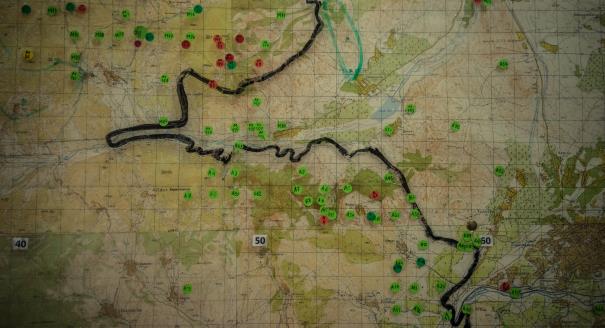
As the situation in the Karabakh conflict zone has grown more tense year by year, the rising number of ceasefire violations arouses more and more concerns. Heavy artillery shelling claims the lives of civilians and military on both sides. The conflicting parties make aggressive statements. The situation in the wider region (Ukraine, Middle East) is deteriorating too, distracting the attention of the major powers and requiring their pro-peace efforts. EADaily’s correspondent talked to Thomas de Waal, nonresident senior associate with Carnegie Europe, specializing in Eastern Europe and the Caucasus region, about the most recent episodes of violence on the Line of Contact in the Karabakh conflict zone and on the Armenian-Azerbaijani state border.
Despite numerous cases of the ceasefire violations, most experts still say the resumption of hostilities is unlikely. At the same time, reports from the frontline sometimes resemble war chronicles. If there is no intention to resume military actions, why does violence escalate on the frontline?
I think the main thing in the Karabakh conflict has not changed. I see no real interest from either the Armenian or Azerbaijani side in large-scale military actions. The situation with Armenia is clear. The country is happy with the status quo. As for Azerbaijan, a war carries a very high risk for it, as no one knows how it will end. I do not think that they have sufficient military capacity to unleash a war. There is another important point: it is not clear how Russia will respond to such a situation.
Nevertheless, the general situation in the conflict zone is deteriorating. Both parties, mainly the Azerbaijani Armed Forces, are using large-caliber weapons, mortars, which is very bad. The risk of incidents that may claim dozens of lives is growing. This will undermine the peace process. At present the negotiations for settlement of the Karabakh conflict, the OSCE Minsk Group co-chairs’ efforts are aimed at fulfilling a minimum goal: to prevent the resumption of military actions, ensure that the presidents meet, and Andrzej Kasprzyk’s (OSCE CiO Personal Representative – EADaily) mission continues. As for the maximum goal – resolution of the conflict – no one believes in it at the moment.
Against the background of the developments in Syria and Ukraine and despite statements by Russia, U.S., and EU on the need to establish peace in these regions, we can still see differences in their stances. Actually, they imagine peace and the ways to achieve it differently. The situation in Karabakh is similar. France, Russia, and U.S. as mediating countries speak of peace, but do not know how to achieve it. There is a high level of distrust between them. The situation is really risky, but it appears to me that the highest danger is that they may let the situation escalate by mistake.
The situation in the conflict zone is tense, as the ceasefire is more violated rather than observed. What may this lead to?
The situation is quite unpredictable. Any serious incident on the Line of Contact may change the situation dramatically. The political context in the region is deteriorating too. Armenian President Serzh Sargsyan’s second – the last one – term is expiring. The situation in Azerbaijan is turning unpredictable too, as oil prices that provide the largest share of the budget revenues have fallen. The ‘Golden Age’ when they had unlimited wealth thanks to high oil prices is coming to an end. It is no secret that the major task of the political elites in both Yerevan and Baku is to retain power. In this light, they may play the Karabakh card to retain their grip on power.
In the light of the latest escalation in the conflict zone, the Defense Ministry of Armenia has come out with rather a tough statement warning that Armenia will start using mortars and missiles systems too. The goal is to make Azerbaijan sit to a negotiating table and contribute to the peace process, the ministry said in its statement. Is it possible to speed up the peace process that has actually come to a standstill by military methods?
No, indeed, the situation, unfortunately, resembles Europe in 1914, when the Big Powers tried to use military pressure or threats of war against each other and eventually, a big war was unleashed. That is why, diplomatic measures are better than the threat of war.
Do you think that non-regional powers - U.S., EU, and Russia – are interested in escalation in the Karabakh conflict zone?
No one seeks escalation in the conflict zone, neither Western powers, nor Russia. They have enough problems on other fronts. They are happy to see Karabakh at least relatively peaceful. I do not think that these powers are interested in escalation.
Many, mainly the Western media and pro-Western political circles in Armenia say that Russia may use the fragile situation in the Karabakh conflict zone to deploy its peacekeepers in the region. How feasible are such suggestions?
We can see that Azerbaijan’s stance is changing with the rapprochement of Baku and Moscow. Azerbaijan had previously opposed the idea to deploy peacekeepers in the conflict zone. However, as its relations with the West have worsened and there is a certain rapprochement with Russia, the possibility of a secret deal is not be dismissed. However, all the parties have to give their consent to the deployment of peacekeepers. It will not be just Russian troops, as besides Russia, there are also other mediating countries: France and United States. Nothing is certain here. Anyway, should they decide to deploy peacekeepers, Russia will have a key role in that process.
President of Armenia has also come out with a strong and unexpected statement over escalation in the Karabakh conflict zone. He called Karabakh “an integral part” of Armenia. Previously this idea could be heard from nationalist political and public circles only, while the authorities avoided voicing such statements. Now, that thesis came from the president. Why? Can it be considered as recognition of Nagorno-Karabakh status by Yerevan?
No, I think that statement was part of a rhetorical battle with Azerbaijan. I do not think that it is a new definition of Karabakh’s status by Armenia. In the past years, differing positions were voiced. For instance, the decision of the Supreme Council of the Soviet Armenia dating back to 1989 says Karabakh and Armenia are unified. Stances change. It was a political statement and a threat addressed to Azerbaijan. Yerevan warned Baku against political consequences of the resumption of hostilities and warned that military tensions will lead to political tensions too. It is interesting that after the most recent escalation, the statement of the OSCE Minsk Group spotlights importance of introducing mechanisms to inquire into incidents on the border. It was for the first time that the co-chairs said that Yerevan agreed with the suggestion, while Baku didn’t. The assessments of the co-chairs are targeted now, while earlier they observed parity in responding to acts of aggression…
Apparently, the status quo is not in favor of Azerbaijan. Baku is not satisfied with the current state of affairs, as it lost territories and military action is the only lever of influence on the situation. I am speaking about destabilization of the situation, incidents and ceasefire breaches. Naturally, Azerbaijan will not agree to fully observe the ceasefire, as it may lose this lever of influence too. On the other hand, we do not think that at the moment the Armenian side can surrender the territories around Karabakh to Azerbaijan, though it is the key to the peace agreement. The situation is very dangerous, as Baku will never agree to the loss of its territories – I mean the territories around Karabakh.
And the last question: what should the conflicting parties and mediators do to come closer to the conflict’s resolution? What do they fail to do therein?
These are mutual concessions that are set out in the Basic (Madrid) Principles: return of the regions around Karabakh, except Lachin, to Baku; maintenance of the de-facto and then also possible de-jure independence of Nagorno-Karabakh etc. These are general contours of the settlement scheme, but there are many problems here. The first one is security: who will ensure it? Unfortunately, we can see that the world community is not ready for it at the moment. They do not trust Russia enough to let it assume sole responsibility for the situation in Karabakh. But the West is not ready either to tackle the conflict’s resolution and assume the responsibility for it. That means the situation will remain unstable for the foreseeable future.

Senior Fellow, Carnegie Europe
Thomas de Waal is a senior fellow at Carnegie Europe, specializing in Eastern Europe and the Caucasus.
Recent Work
Thomas de Waal
Thomas de Waal
Carnegie does not take institutional positions on public policy issues; the views represented herein are those of the author(s) and do not necessarily reflect the views of Carnegie, its staff, or its trustees.
When the U.S.-Iran memorandum of understanding was announced, the UK, France, Germany, and Italy declared their readiness to help demine the Strait of Hormuz and lift nuclear sanctions on Tehran. But does Europe need new tools to recover a diplomatic role?

Rym Momtaz, ed.
Amid uncertainty caused by the Iran war, the global drive for nonproliferation has stalled. With Europe diplomatically marginalized and countries reassessing their nuclear options, efforts to curb the spread of nuclear weapons risk becoming irrelevant.

Jane Darby Menton
The U.S.-Iran war has crossed a dangerous threshold: water infrastructure in the Gulf is now a target. Ecological statecraft is no longer peripheral to security, it's part of its foundations.


Olivia Lazard, Ali Bin Shahid
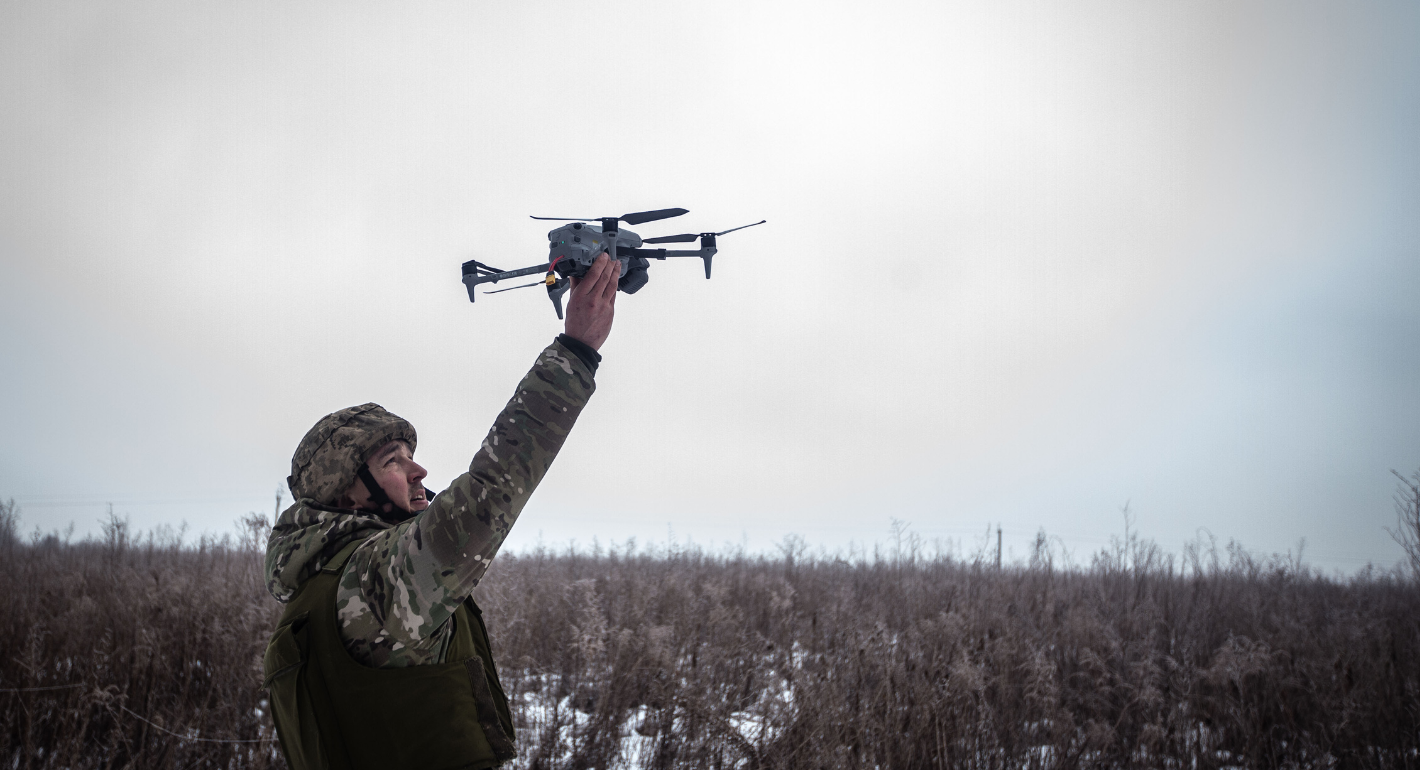
In Ukraine, Gaza, and Iran, AI warfare has come to dominate, with barely any oversight or accountability. Europe must lead the charge on the responsible use of new military technologies.

Raluca Csernatoni
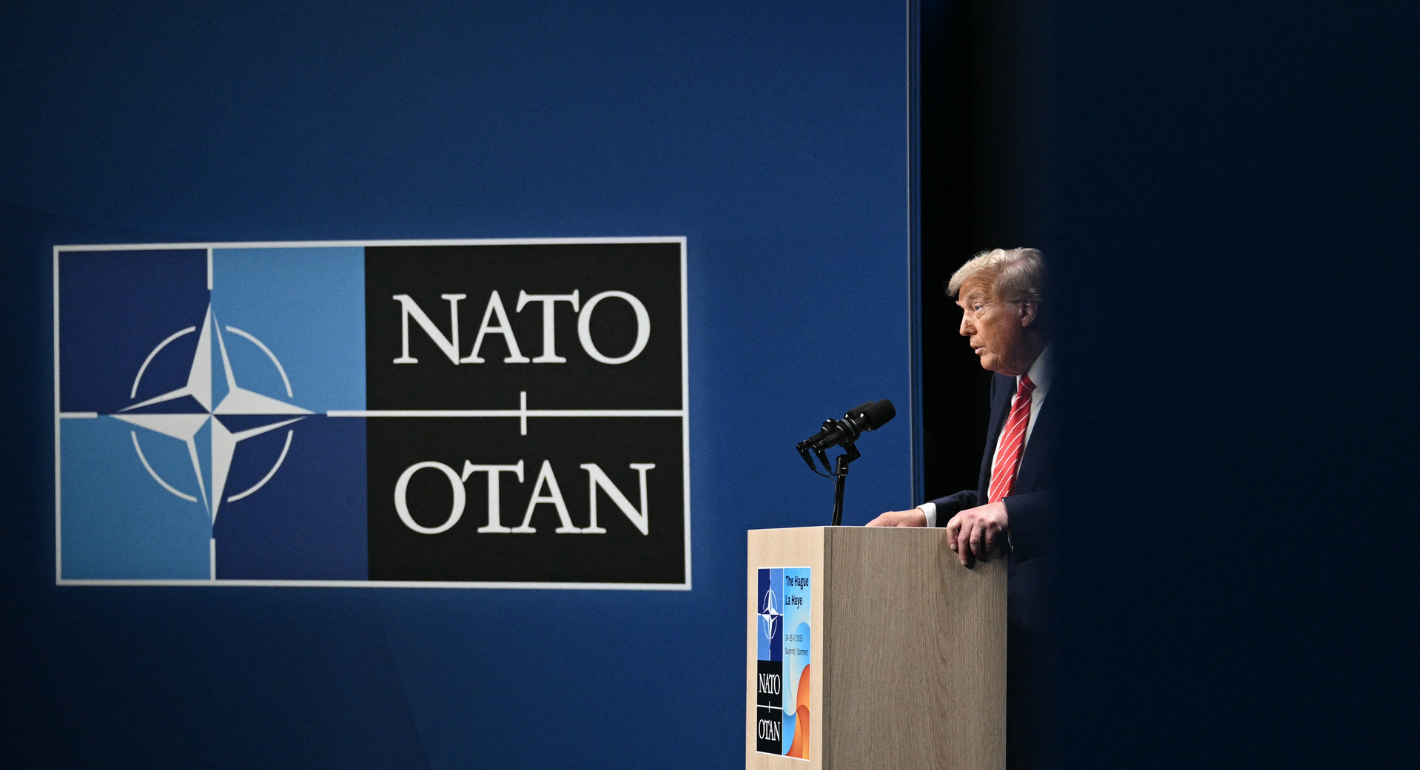
Donald Trump has repeatedly bashed NATO and European allies, threatening to annex Canada and Greenland and deploring their lack of enthusiasm for his war of choice in Iran. Is this latest round of abuse the final straw?
Rym Momtaz, ed.