

Commentary
The European Commissioner for Trade is headed to China. But after President Xi’s bridge-building visit to Washington, can a more isolated EU overcome Beijing’s stranglehold on critical raw materials? Who will blink first?
Rym Momtaz, ed.
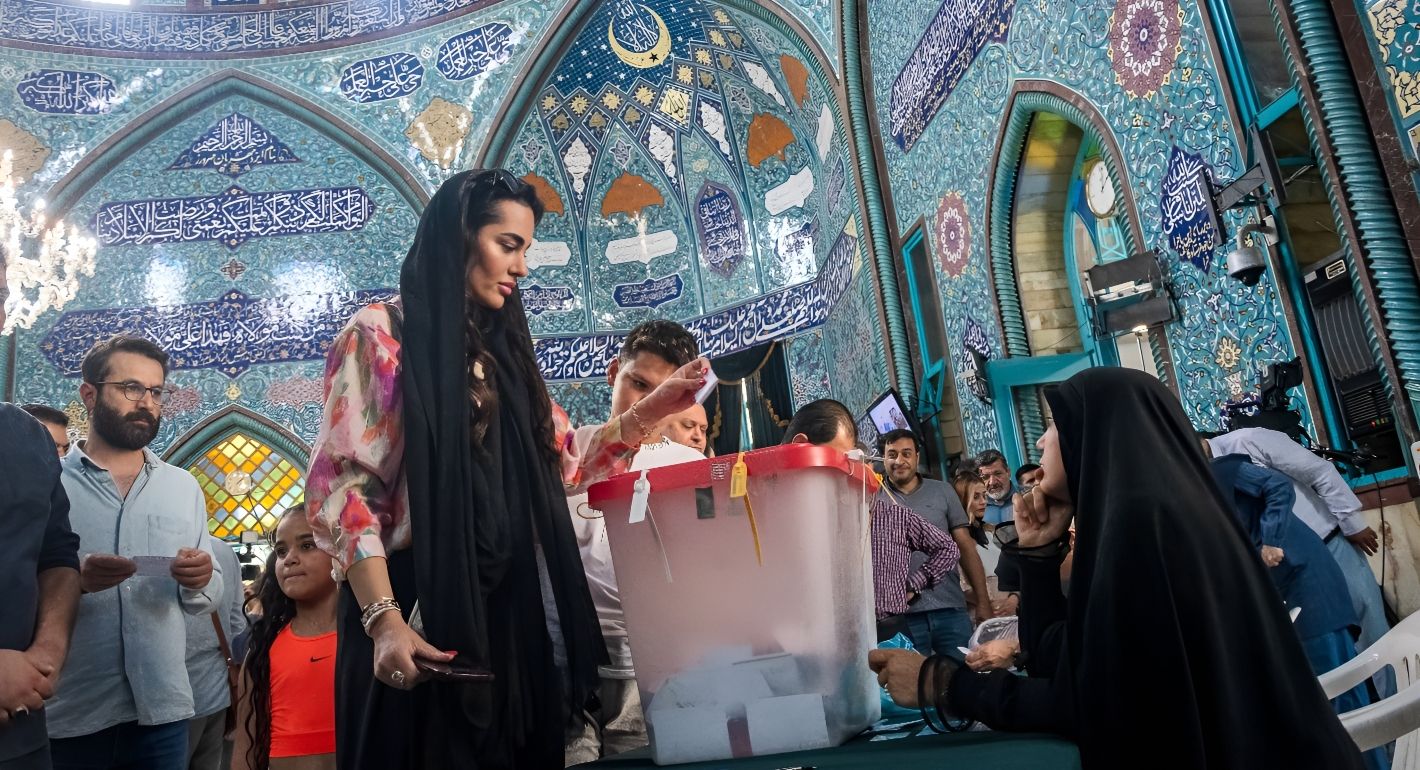
The new EU leadership faces the crucial task of advancing a more comprehensive agenda with Iran. To achieve this, the union must develop a long-term, inclusive strategy that prioritizes human rights, supports civil society, and regionalizes policies.
The momentum created by the incoming EU leadership offers an opportunity for Europe to see the bigger picture on Iran amid rising geopolitical tensions and regional escalation. The Islamic Republic has consolidated its hardline stance, and despite the recent election of an ostensibly reformist president, no systemic changes are imminent. Actors like China and Russia align with Tehran against the West, even as the United States has given up on formulating a policy that goes beyond a reflexive posture of “being tough on Iran.” The EU’s approach toward Iran has neither brought progress on the nuclear file nor reined in a further deterioration of Iranians’ human rights and security.
In recent years, the Iranian regime’s popular crackdown and aggression throughout the region have again underlined how strongly interconnected the EU’s values and interests are. Without a strategic and long-term approach, the union’s political instruments will remain at the level of muddling through without improving the situation in the country or the region. The EU should therefore develop an Iran strategy that puts human security, civil society support, and regional collaboration at its center.
1. Define the EU’s strategic priorities based on its values and interests. The central question of which policies can add as much to the EU’s own security as to that of the people of Iran and the region requires an earnest assessment of what has worked in the past and what has not. On this basis, the EU should outline the priorities, values, and interests that will guide a new strategic and comprehensive approach to Iran. Moreover, the union should mainstream human and women’s rights, gender dynamics, and marginalized perspectives into all EU policies and programs toward Iran, or they will continue to fall short in effectively addressing Iran’s continuum of violence at the domestic, regional, and international levels. Systematically consulting with civil society representatives in this process, particularly those who have intimate knowledge of the situation in the country, would help EU policymakers to better understand a context in which the EU does not have a delegation and member states’ embassies have little room for maneuver.
2. Establish an EU consultation and collaboration mechanism with Iranian civil society. Based on its new strategy, the EU should establish a regular mechanism to consult and collaborate with civil society across policy areas. On the one hand, the vast expertise of those with long-standing civic ties to Iran enables the EU to formulate specific policies toward the country. On the other hand, inclusive processes are more effective and sustainable than a piecemeal, reactive approach that focuses on the individual issues that are assigned priority at a given moment. A consultative mechanism should provide a safe space for policymakers and civil society experts and activists to work collaboratively on solutions to structural policy challenges. Such a platform should have a clear strategy, mandate, and goals to coordinate human rights interventions and inform decisions at the national and EU levels. Any such mechanism would require ongoing support from EU institutions and key member states, including financial backing, to work as a coordination platform for Iranian civil society, especially outside Iran.
3. Regionalize the EU’s existing policies and institutional arrangements. Both the Arab-Iranian rapprochement since 2019 and Iran’s role in the violent escalation since the Hamas terrorist attacks on October 7, 2023, have underscored that regional security can be addressed only in a comprehensive way. The European External Action Service (EEAS), however, maintains an Iran division that is separate from the Middle East and North Africa department. Based on a regional understanding of its security interests, the EU should expand its existing policies toward the region to include Iran in cooperative formats with neighboring countries. This cooperation should cover nuclear nonproliferation and safety, climate action, water scarcity, regional stability, and regional confidence-building measures. In line with a comprehensive approach, regional arrangements should not stop at the national level but should also address the isolation of Iranian civil society actors from their peers in the region. Thus, the EU should include experts who work on Iran in its programs aimed at addressing shrinking civic space. The union should also set up specific peer-exchange and regional exchange mechanisms as well as corresponding funding schemes.
4. Revise the EU’s sanctions mechanisms and strengthen human rights accountability. Sanctions have a fixed place in the EU’s foreign policy toolbox. Yet, the lack of a clear-cut purpose to these measures, their overuse without steps to mitigate the harms they cause, and the absence of a mechanism to monitor their impact are detrimental. Therefore, the EU should integrate its existing and new sanctions on Iran into a broader strategic framework that clearly defines the goals of sanctions, refines their design, ensures their better implementation, and mitigates potentially harmful outcomes. EU member states should collaborate with the EEAS to establish mechanisms to include civil society expertise in ex ante harm assessments of sanctions as well as their continuous and consistent monitoring. At the same time, the EU should continue to apply targeted human rights sanctions as means of enabling the Iranian regime’s accountability for its abuses.
5. Strengthen civil society in Iran. Importantly, the EU should strive to nurture the active, if repressed, parts of Iranian civil society. This should begin with gaining a better understanding of the actors and dynamics involved, both in the country and in the diaspora, as well as their diverse asks, needs, and priorities. To enable civic actors to represent this diversity themselves, the EU should aim to dismantle the barriers to their participation in consultative processes and, in particular, make an effort to involve underrepresented and marginalized groups in such forums. This should include addressing structural challenges, such as the lack of funding for travel costs or the absence of interpretation. To strengthen civil society’s agency, the EU should also allocate both emergency funding for urgent priorities and long-term resources. Finally, the EU needs to evaluate the impact its actions have on civil society organizations’ ability to keep up their work.
Implementing these priority actions would allow the EU to expand its policy options toward Iran and move from a somewhat limited, reactive approach to more proactive agenda setting. These measures would also enable EU policymakers to design more sustainable solutions to the geopolitical security threats in the region, which the union is currently dealing with by numbing the symptoms instead of treating the underlying condition. These first steps toward an inclusive approach could bridge the gap that has emerged from the way the EU has kept its security interests and values separate. In combining the two in operational terms, the EU’s Iran policy could become an emblematic case of how to deal with a repressive regime in a volatile environment.
Barbara Mittelhammer is an independent political analyst and consultant. Her research focuses on human security, gender in peace and security, feminist foreign policy, and the role of civil society in foreign policy making.

Former Nonresident Fellow, Carnegie Europe
Cornelius Adebahr was a nonresident fellow at Carnegie Europe. His research focuses on foreign and security policy, in particular regarding Iran and the Persian Gulf, on European and transatlantic affairs, and on citizens’ engagement.

Barbara Mittelhammer
Independent Political Analyst
Barbara Mittelhammer is an independent political analyst and consultant. Her research focuses on human security, gender in peace and security, feminist foreign policy, and the role of civil society in foreign policy making.
Carnegie does not take institutional positions on public policy issues; the views represented herein are those of the author(s) and do not necessarily reflect the views of Carnegie, its staff, or its trustees.

The European Commissioner for Trade is headed to China. But after President Xi’s bridge-building visit to Washington, can a more isolated EU overcome Beijing’s stranglehold on critical raw materials? Who will blink first?

Rym Momtaz, ed.
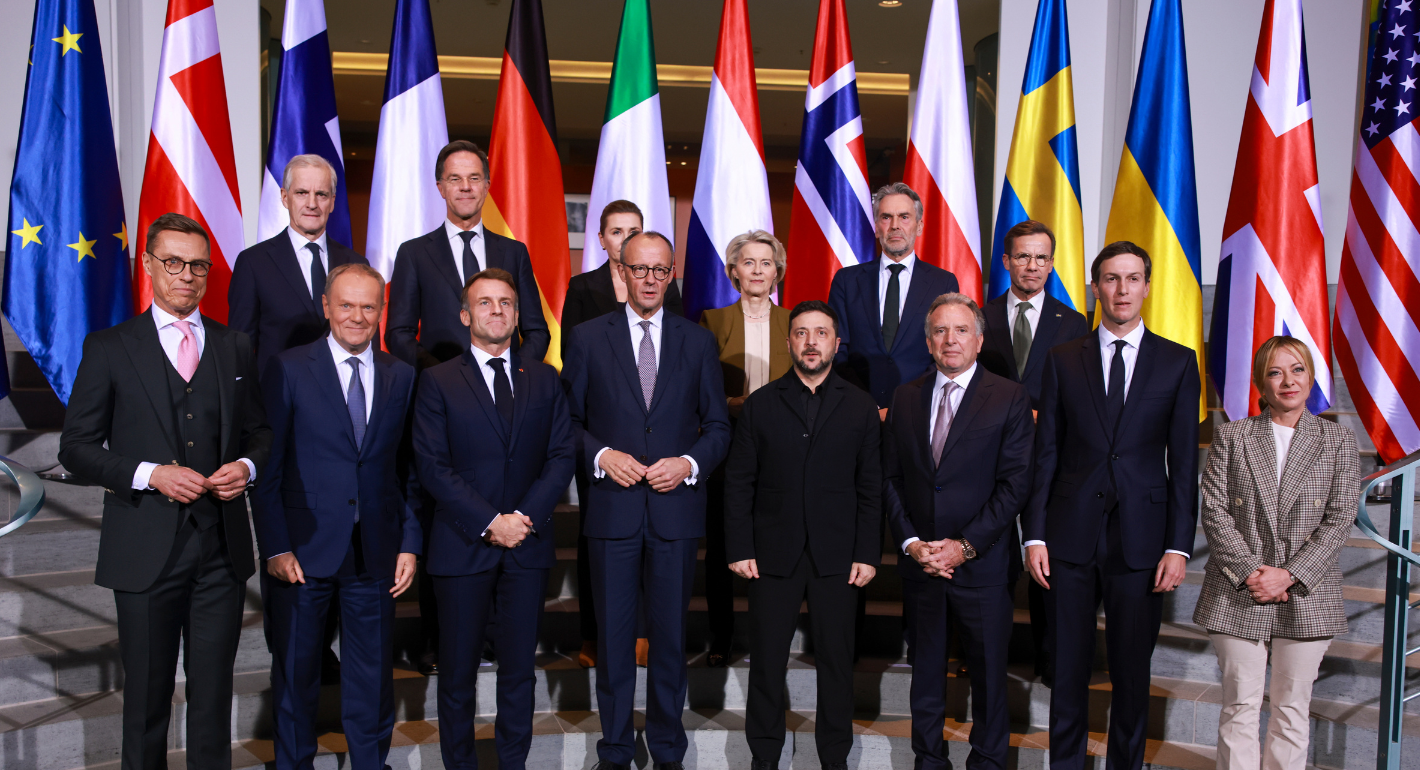
European NATO countries are wrestling with the possibility of U.S. disengagement from the alliance. With the continent’s security increasingly uncertain, governments must restore the credibility of their collective defense.



Hans-Dieter Lucas, Adam Thomson, Pierre Vimont

The domestic impacts of how long it is taking to end the war in Ukraine have pushed the French electorate to the political extremes and compromised the country’s diplomatic capacity.
Rym Momtaz

Before the next wave of EU enlargement takes place, the union needs to grapple with thorny questions of how power is distributed among its members.


Emil Sondaj Hansen, Ditte Brasso Sørensen

The new U.S.–Denmark–Greenland agreement will help Washington exert political, economic, and financial dominance under the guise of security. Yet, it acknowledged Copenhagen’s and Nuuk’s sovereignty on the island.

Marc Pierini