

Commentary
Richard Youngs
{
  "authors": [
    "Richard Youngs"
  ],
  "type": "legacyinthemedia",
  "centerAffiliationAll": "dc",
  "centers": [
    "Carnegie Endowment for International Peace",
    "Carnegie Europe"
  ],
  "collections": [
    "Democracy and Governance"
  ],
  "englishNewsletterAll": "democracy",
  "nonEnglishNewsletterAll": "",
  "primaryCenter": "Carnegie Europe",
  "programAffiliation": "DCG",
  "programs": [
    "Democracy, Conflict, and Governance",
    "Europe"
  ],
  "projects": [],
  "regions": [
    "Middle East",
    "North Africa",
    "Iran"
  ],
  "topics": [
    "Foreign Policy",
    "Democracy"
  ]
}
Source: Getty
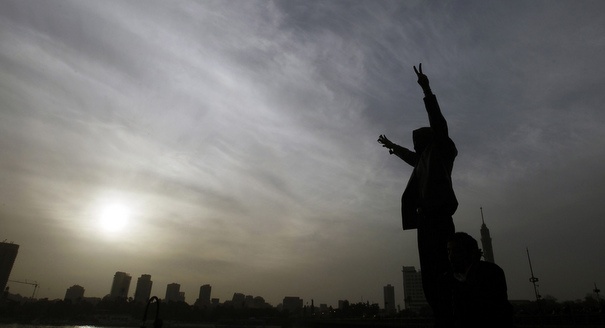
Experts argue in favor of non-Western models of democracy. The challenge is to understand what such models should look like and what democracy means in practice.
Source: Westminster Foundation for Democracy
It is understood. In a way this is why the book relates to a very live policy debate, because all western governments and their leaders recognise that in trying to support democratic reform abroad, it's not about supporting one particular model. It's about understanding what citizens want in different regions of the world, what their understandings of democracy are. But, that's easier said than done. We do also have to be a little bit cautious in thinking that there is a single non-western model of democracy that is completely different to what exists currently in other countries. We should be able to support forms of democracy that are right for local contexts without undermining core norms of liberal democracy.
RY: It's not easy, and it's about striking the right, delicate balance between supporting different models of democracy without ending up unwittingly supporting forms of democracy that verge on being almost soft forms of authoritarianism. We need to explore different understandings of rights, what we mean by liberal rights, in different countries around the world. People tend to want a more communitarian form of identity. They believe in democracy but they want to feel democracy is respecting their local understanding of morality and religion, of communal identity. With that, agencies and donors need to do more to change the narrative, in a sense – to convince people and show people that the core standards of liberal democracy don't need to threaten local, traditional identities.
One thing that surprised me is how vibrant the debates are in countries around the world about this question, and just how sharp the differences are within different developing countries and rising powers. Some people in these countries feel they do want something that is radically different from western style liberal democracy. Other people find it quite condescending, where people argue their countries should have a different form of democracy. They insist they want the same basic rights as those that exist in established democracies. There's a great deal of divergent opinion over this. It's very difficult for agencies working in the field to get the balance right between understanding local contexts, supporting different varieties of democracy, but at the same time realising there are core democratic standards and institutions that do have universal applicability.
The UK, as with other countries interested in doing what they can to foster democratic reform, needs to be a little bit more open to experimentation, to realising that a lot of the interesting innovations in democratic representation are today coming from other places in the world like Brazil and India. They need to be open to learning about those innovations and taking them on board. That doesn't mean reversing everything the Westminster Foundation does; its traditional approach is to parliamentary strengthening and political party strengthening has a lot of validity, but somehow they need to be linked in with very interesting new forms of representation and protest and social movements that are emerging around the world.
This interview was originally published by the Westminster Foundation For Democracy.

Senior Fellow, Democracy, Conflict, and Governance Program
Richard Youngs is a senior fellow in the Democracy, Conflict, and Governance Program, based at Carnegie Europe. He works on EU foreign policy and on issues of international democracy.
Recent Work
Richard Youngs
Richard Youngs, Erik Jones, Dan Baer, …
Carnegie does not take institutional positions on public policy issues; the views represented herein are those of the author(s) and do not necessarily reflect the views of Carnegie, its staff, or its trustees.

Are Germany’s economic, industrial, and political struggles becoming a liability for the EU’s ability to rise to the geopolitical moment?

Rym Momtaz, ed.

European Commission President Ursula von der Leyen is about to give her annual address on the state of the EU. Here’s what she won’t—but should—say.
Rym Momtaz

Radical-right parties are expected to do well in upcoming elections in four of the EU's biggest member states. If successful, they could prevent the union from addressing key challenges ahead.

Stefan Lehne

The aftermath of the Ceuta crisis shows Europe has drawn the wrong lessons. Rather than doubling down on failed migration policies, the EU needs to address the underlying roots of such episodes.
Richard Youngs

An overwhelming victory by a far-right-wing party in a small state in eastern Germany will have major repercussions for Chancellor Friedrich Merz’s coalition.

Judy Dempsey