

Paper
Yezid Sayigh
{
  "authors": [
    "Yezid Sayigh"
  ],
  "type": "legacyinthemedia",
  "centerAffiliationAll": "dc",
  "centers": [
    "Carnegie Endowment for International Peace",
    "Malcolm H. Kerr Carnegie Middle East Center"
  ],
  "collections": [],
  "englishNewsletterAll": "menaTransitions",
  "nonEnglishNewsletterAll": "",
  "primaryCenter": "Malcolm H. Kerr Carnegie Middle East Center",
  "programAffiliation": "MEP",
  "programs": [
    "Middle East"
  ],
  "projects": [],
  "regions": [
    "Egypt",
    "Levant",
    "Maghreb",
    "Tunisia",
    "Middle East",
    "North Africa"
  ],
  "topics": [
    "Political Reform",
    "Security"
  ]
}
Source: Getty
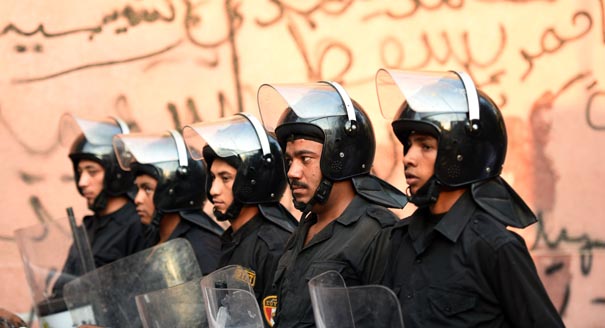
Counterterrorism can be truly effective only through accountable, legitimate and professional policing.
Source: Al Jazeera
On September 12, 2001, I took a flight to Geneva to attend the annual conference of the International Institute for Strategic Studies. As head of its Middle East program, I was asked on arrival to speak on a panel that was being hastily assembled to address the 9/11 attacks that had taken place in the United States the day before.
While my fellow panellists discussed possible Western responses to Al-Qaeda, I focused on what had to be done in Arab countries in order to forestall future threats. While it was absolutely necessary to address root causes in the protracted economic and political marginalization and social alienation experienced by millions of Arab citizens, a principal challenge was to identify the much smaller number who were driven by these conditions to commit indiscriminate and horrific acts of violence, whether against foreigners or their own societies.
Confronting an amorphous and anonymous threat on such a scale would, I argued, require the active and willing engagement of police forces and internal security agencies, local municipal authorities, and social associations in Arab countries. They alone had the kind of intimate knowledge of their own communities and detailed intelligence that are crucial to identifying and preventing potential threats. This made the police an essential element for the success of any counter-terrorism strategy, but to be fully effective they needed to gain genuine legitimacy and acceptance within their own societies.
Furthermore, in order for Arab security sectors—the police forces, internal security agencies, and paramilitary forces managed by national ministries of interior—to be viewed as legitimate, they would have to undertake reforms designed to achieve critical improvements in their professionalism, basic technical skills and competence, and operational performance. Western governments, I concluded, should not make the mistake of embracing unreformed security sectors in the name of countering terrorism, overlooking their crude tactics and fundamental failings for reasons of political expediency.
Fourteen years later, these two conditions for police effectiveness have not been met in the Arab countries most affected by the threat of Al-Qaeda, the Islamic State, or other jihadist organizations. In both Egypt and Tunisia, for example, the security sectors have successfully resisted attempts since the 2011 transitions to make them accountable for their actions. Their renewed culture of impunity is reflected in continued human rights abuses. Most recently, the El Nadeem Centre for Rehabilitation of Victims of Violence documented the death of 13 citizens and 42 cases of torture while in police custody and the forced disappearance of 40 persons in Egypt in November 2015 alone, while Human Rights Watch renewed the call for an end to the use of torture in Tunisian detention centers in August.
As worrying, resistance to accountability has also blocked acquisition of the capability and skills most needed in order to conduct “smart,” intelligence-led police work against the growing threat of home-grown terrorism. Reliance on confessions extracted by brute force instead of forensic skills remains the norm, leading to poor intelligence. Law enforcement is conducted by poorly paid and poorly motivated personnel, who work long hours on constantly varying tasks for which they are not trained, while being inculcated with an adversarial ethos towards citizens and elected officials alike, who are routinely denigrated as incompetent, dishonest, and unpatriotic.
The ministries of interior in these two Arab countries (and others) have moreover remained “black boxes”—immune to scrutiny by their own governments—leaving them rife with factional rivalries and vulnerable to endemic corruption. This has led to confusion and duplication of tasks between principal security agencies, preventing the kind of information sharing and tactical coordination that, again, is critical to successful counter-terrorism. All this is inefficient in terms of the use of personnel and budgets and, worse, costly in terms of the increased human and material losses resulting from an ineffective approach.
The tragically slow response of the police to the lone Islamic State terrorist who killed 38 people on a beach in Tunisia in June 2015 graphically illustrated the consequences. So did the lethal security breach that allowed other Islamic State terrorists to penetrate the much vaunted security measures long in place at the Egyptian resort of Sharm al-Sheikh in order to plant a bomb on the Russian Metrojet airliner that came down with the loss of 224 lives at the end of October.
Reducing counter-terrorism strategies to “kinetic” means—drone and air strikes—and relying overwhelmingly on IT to acquire intelligence, as the United States has opted to do since 2001, has done nothing to counter the drivers of radicalization. Quite the reverse, it has only further damaged societies already wracked by massive dislocation and physical attrition. It is also failing in its primary goal of identifying, containing, and rolling back the threat of terrorism, especially in Arab countries that have suffered far higher levels of death and destruction than their Western counterparts. Only through a determined and sustained effort to bring about accountable, legitimate, and professional policing can counter-terrorism be truly effective, rather than counter-productive.

Senior Fellow, Malcolm H. Kerr Carnegie Middle East Center
Yezid Sayigh is a senior fellow at the Malcolm H. Kerr Carnegie Middle East Center in Beirut, where he leads the program on Civil-Military Relations in Arab States (CMRAS). His work focuses on the comparative political and economic roles of Arab armed forces, the impact of war on states and societies, the politics of postconflict reconstruction and security sector transformation in Arab transitions, and authoritarian resurgence.
Recent Work
Yezid Sayigh
Yezid Sayigh
Carnegie does not take institutional positions on public policy issues; the views represented herein are those of the author(s) and do not necessarily reflect the views of Carnegie, its staff, or its trustees.

Mounting economic strain and battlefield losses will not necessarily make the Kremlin less dangerous. They could instead push Moscow toward a more aggressive hybrid campaign designed to test NATO’s Eastern flank, exploit allied hesitation, and fracture European resolve.

Maksym Beznosiuk

Over the past ten years, NATO has held almost as many summits as it did during the entirety of the Cold War. Are they still useful, or is it time to stop holding annual meetings?

Rym Momtaz, ed.

As the EU confronts profound challenges, several leaders have called for fundamental reform to the union’s model—but only modest, superficial changes have resulted. What if Europe really could be reimagined from zero today: What should such a redesigned European order look like?

Richard Youngs, ed.
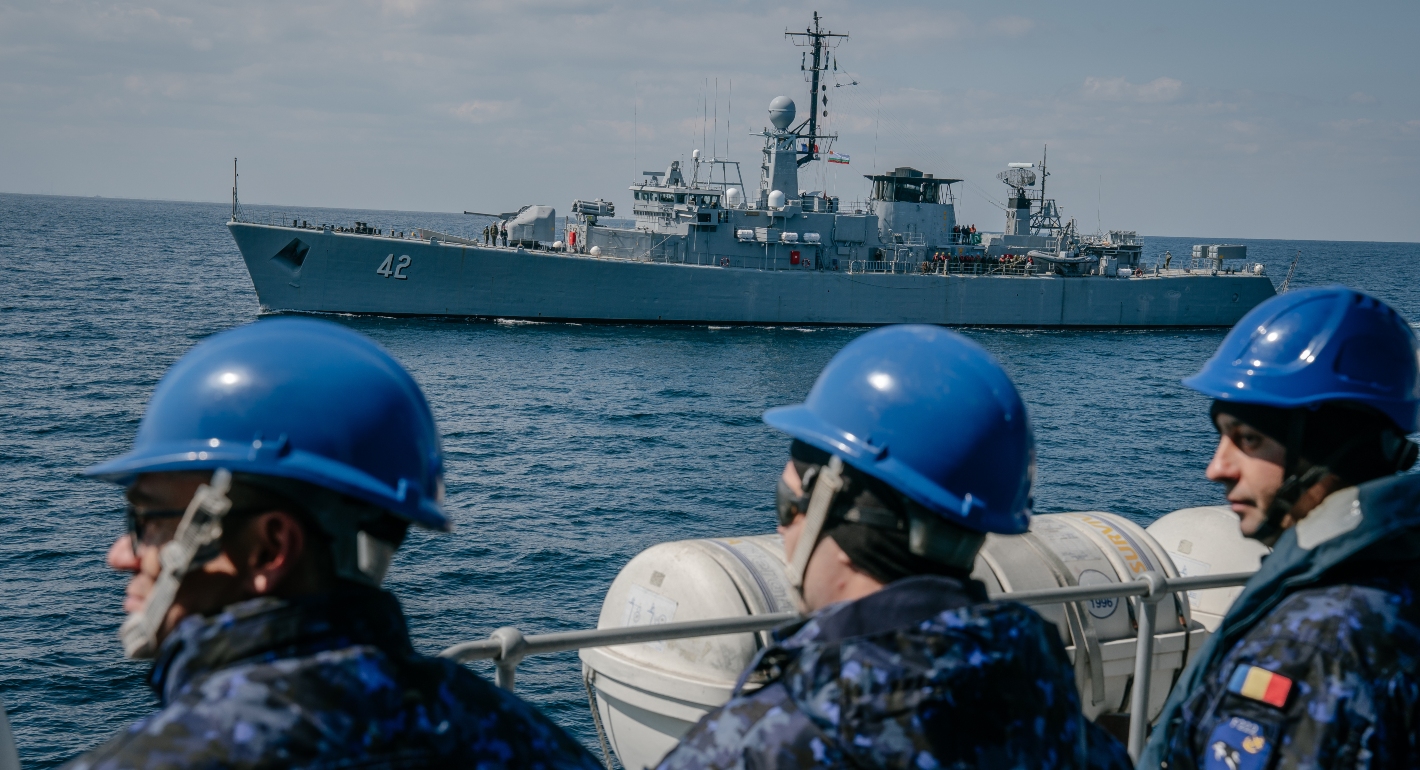
As Russia's war on Ukraine drags on, NATO is expanding its footprint in the Black Sea. Turkey, Romania, and Bulgaria are upgrading their fleets and deepening trilateral cooperation.

Dimitar Bechev
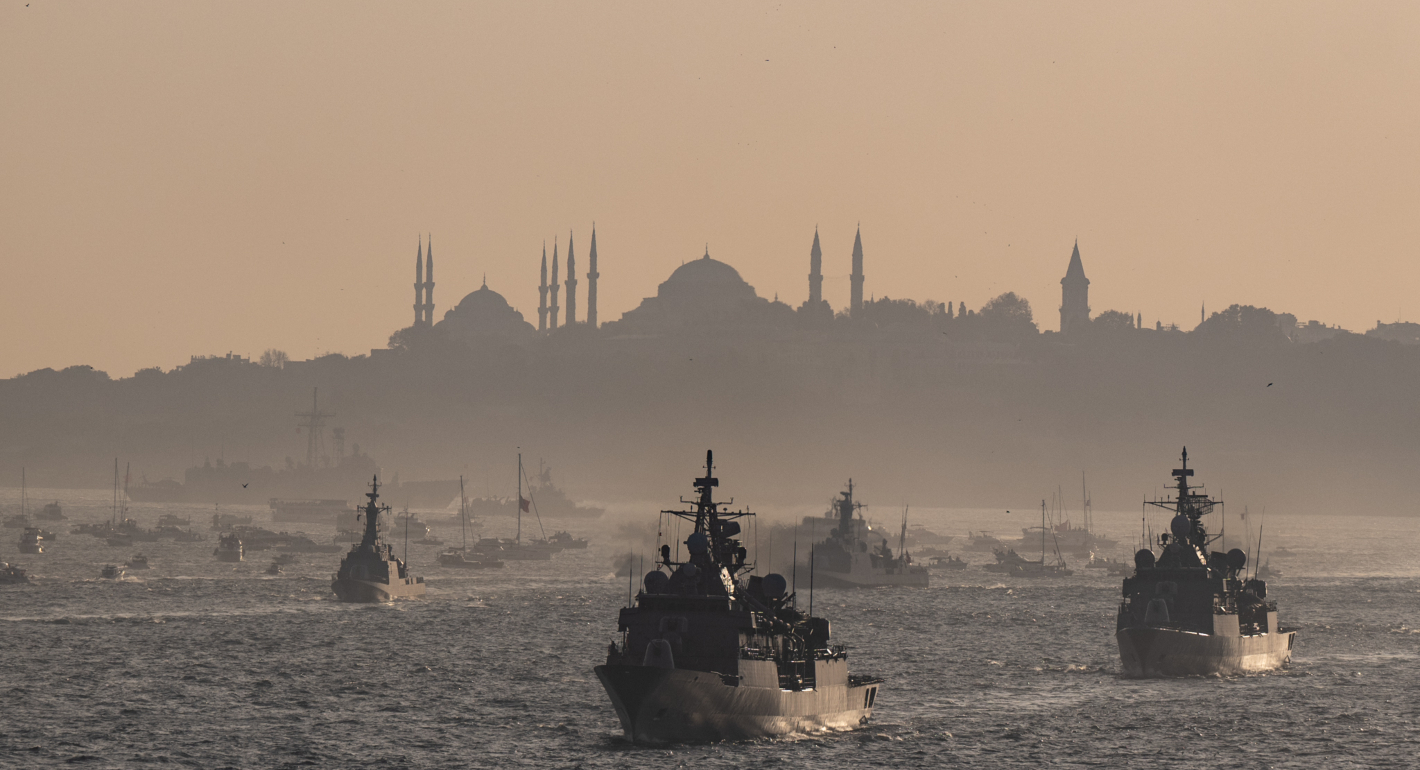
For ninety years, Turkey has been positioned as the principal gatekeeper of Black Sea security. As a result, European and NATO efforts to support Ukraine will require closer engagement with Ankara.

Thomas de Waal