

Commentary
Russia is testing the waters of NATO’s mutual defense clause. What do strikes in Romanian territorial waters mean for the alliance’s posture toward Moscow?
Dimitar Bechev
{
  "authors": [
    "Marc Lynch",
    "Stacey Philbrick Yadav"
  ],
  "type": "legacyinthemedia",
  "centerAffiliationAll": "dc",
  "centers": [
    "Carnegie Endowment for International Peace",
    "Malcolm H. Kerr Carnegie Middle East Center"
  ],
  "collections": [
    "Arab Awakening"
  ],
  "englishNewsletterAll": "menaTransitions",
  "nonEnglishNewsletterAll": "",
  "primaryCenter": "Carnegie Endowment for International Peace",
  "programAffiliation": "MEP",
  "programs": [
    "Middle East"
  ],
  "projects": [],
  "regions": [
    "Middle East",
    "Saudi Arabia",
    "Yemen",
    "Gulf"
  ],
  "topics": [
    "Political Reform",
    "Security",
    "Military"
  ]
}
Source: Getty
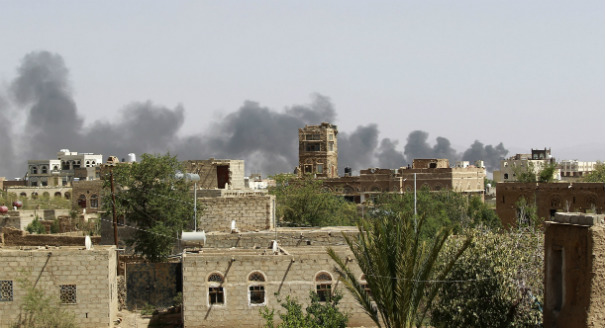
The conflict in Yemen has produced a humanitarian disaster, but possibilities remain for bilateral negotiations between warring parties.
Source: Project on Middle East Political Science
Yemen’s highly polarized political sphere makes it difficult to envision what a victory would look like for any side or what a future Yemeni state would like look. Speaking with Carnegie’s Marc Lynch, Stacey Philbrick Yadav discusses the current situation in Yemen and the humanitarian effects of the ongoing conflict.
This interview originally appeared at the Project on Middle East Political Science.

Former Nonresident Senior Fellow, Middle East Program
Marc Lynch was a nonresident senior fellow in Carnegie’s Middle East Program where his work focuses on the politics of the Arab world.
Stacey Philbrick Yadav
Carnegie does not take institutional positions on public policy issues; the views represented herein are those of the author(s) and do not necessarily reflect the views of Carnegie, its staff, or its trustees.

Russia is testing the waters of NATO’s mutual defense clause. What do strikes in Romanian territorial waters mean for the alliance’s posture toward Moscow?

Dimitar Bechev

With its public finances in shambles, the far right polling at 35 percent ahead of the 2027 presidential election, and a growing protest movement, is France’s crisis a threat to the EU’s geopolitical awakening?

Rym Momtaz, ed.

Ahead of a tough winter for Ukraine, Donald Trump’s swing back toward Russia bodes ill. But instead of panicking, Kyiv’s European allies are focusing on action.
Rym Momtaz

Europe is facing rising populism internally as well as external pressures from Russia, China, Turkey, and the United States.
Dimitar Bechev

A notable degree of participative democracy has firmly arrived in Europe. But to have more far-reaching impact, democratic deliberation needs to move into a radically new phase.

Richard Youngs