

Paper
Ashley J. Tellis
{
  "authors": [
    "Ashley J. Tellis"
  ],
  "type": "other",
  "centerAffiliationAll": "dc",
  "centers": [
    "Carnegie Endowment for International Peace"
  ],
  "collections": [],
  "englishNewsletterAll": "ctw",
  "nonEnglishNewsletterAll": "",
  "primaryCenter": "Carnegie Endowment for International Peace",
  "programAffiliation": "SAP",
  "programs": [
    "South Asia"
  ],
  "projects": [],
  "regions": [
    "South Asia",
    "India",
    "Pakistan"
  ],
  "topics": [
    "Security",
    "Nuclear Policy"
  ]
}
Source: Getty
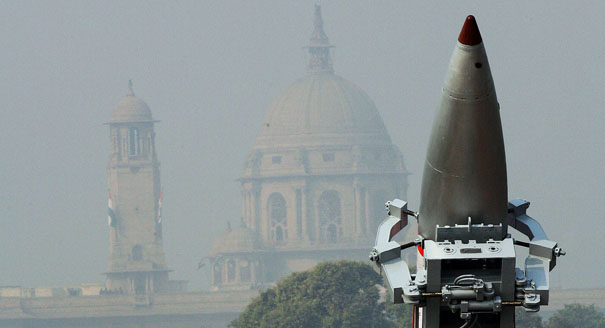
It has become more important than ever before to bring both India and Pakistan into agreement with international arms control norms.
Source: Cipher Brief
The adversarial history between India and Pakistan is compounded by each nation’s firm stance on the possession of nuclear weapons. As each country moves to expand its capabilities, it has become more important than ever before to bring both countries into agreement with international arms control norms. The Cipher Brief interviewed Ashley J. Tellis, a senior associate at the Carnegie Endowment for International Peace, to learn more about how each country views nuclear deterrence and nonproliferation.
In contrast, Pakistan’s requirements are more complex. In the first instance, Pakistan too views nuclear weapons are deterrents against nuclear attacks emanating from India. But this contingency is highly improbable, because there is no conceivable political reason for India to launch unprovoked nuclear attacks on Pakistan. India’s conventional superiority, however, unnerves Pakistan, and as the Pakistani state continues to weaken, its fears of Indian conventional force superiority only increase. Pakistan’s nuclear weapons then acquire an additional—in fact, their principal—role: to deter Indian conventional attack.
If these were all the missions Pakistan’s nuclear weapons were intended to underwrite, nuclear stability in South Asia would be fairly robust. After all, India has few incentives to attack Pakistan by nuclear or conventional means, so Pakistan’s nuclear weaponry would be useful mainly to provide it with reassurance in case India were to behave maliciously. Unfortunately, however, nuclear weapons in Pakistani hands have had larger and more corrosively destabilizing effects: they have enabled Pakistan to pursue its revanchist aims of recovering the disputed state of Jammu and Kashmir by force, or more specifically, by unleashing state-supported terrorism against India in the hope of weakening Indian control over the contested territories. This stratagem is based on the assumption that India will be unable to retaliate against Pakistan conventionally for fear of sparking a nuclear holocaust. Pakistan’s nuclear weapons, then, are intended not merely to provide deterrence against Indian attacks, but more ambitiously, a license for Pakistan’s sub-conventional wars against India. This behavior, flowing from Pakistan’s possession of nuclear weapons, is what makes deterrence in South Asia more unstable than it would otherwise be—if Pakistan’s strategic objectives were as conservative as India’s.
This dynamic, in its totality, suggests that India’s approach to nuclear deterrence is closer to that of the United States: both nations view their nuclear weapons primarily as deterrents against nuclear attacks by others. Pakistan’s behavior, however, exemplifies nuclear coercion rather than simply deterrence: to that degree, it mimics Russian behavior more than it does the U.S. practice of deterrence.
AJT: India and Pakistan have highly divergent views about tactical nuclear weapons. India, rejecting nuclear warfighting, has no use for tactical nuclear weapons. Pakistan, citing its conventional military inferiority and fearful of Indian conventional retaliation in the event of a major terrorist attack inside India, is feverishly involved in developing a substantial arsenal of tactical nuclear weapons as an antidote to such a contingency.
AJT: Unfortunately, little to nothing. Nuclear arms control will become possible only when both India and Pakistan believe that their political interests are served by having fewer nuclear weapons rather than more. India may be easier to convince on this score than Pakistan. At the moment, however, Pakistan believes that “more is enough” for deterrence, and so long as this perception dominates nuclear decision-making in Islamabad, arms control is a chimera. There is virtually nothing that the United States can do to change this brute fact. It has in fact tried everything from bribery to coercion of Islamabad with no success thus far.
AJT: The most likely outcome over the next decade is the prospect of Pakistan racing against its own obsessions and fears. Pakistan is on a quest to build the largest and most diverse nuclear arsenal it possibly can, taking its bearings from exaggerated assessments of Indian nuclear capabilities and geopolitical objectives. In contrast, India’s nuclear program will plod along, so long as the Chinese nuclear arsenal is not judged to be expanding dramatically. The South Asian region, therefore, will witness a bizarre and frantic one-legged nuclear race for a long time to come.
Former Senior Fellow
Ashley J. Tellis was a senior fellow at the Carnegie Endowment for International Peace.
Recent Work
Ashley J. Tellis
Ashley J. Tellis
Carnegie does not take institutional positions on public policy issues; the views represented herein are those of the author(s) and do not necessarily reflect the views of Carnegie, its staff, or its trustees.

European states control several Overseas Countries and Territories around the world that carry strategic, economic, and environmental weight. As great powers challenge the rules-based order, defending them is a geopolitical imperative for Europe.

Marc Pierini

Mounting economic strain and battlefield losses will not necessarily make the Kremlin less dangerous. They could instead push Moscow toward a more aggressive hybrid campaign designed to test NATO’s Eastern flank, exploit allied hesitation, and fracture European resolve.

Maksym Beznosiuk

Over the past ten years, NATO has held almost as many summits as it did during the entirety of the Cold War. Are they still useful, or is it time to stop holding annual meetings?

Rym Momtaz, ed.
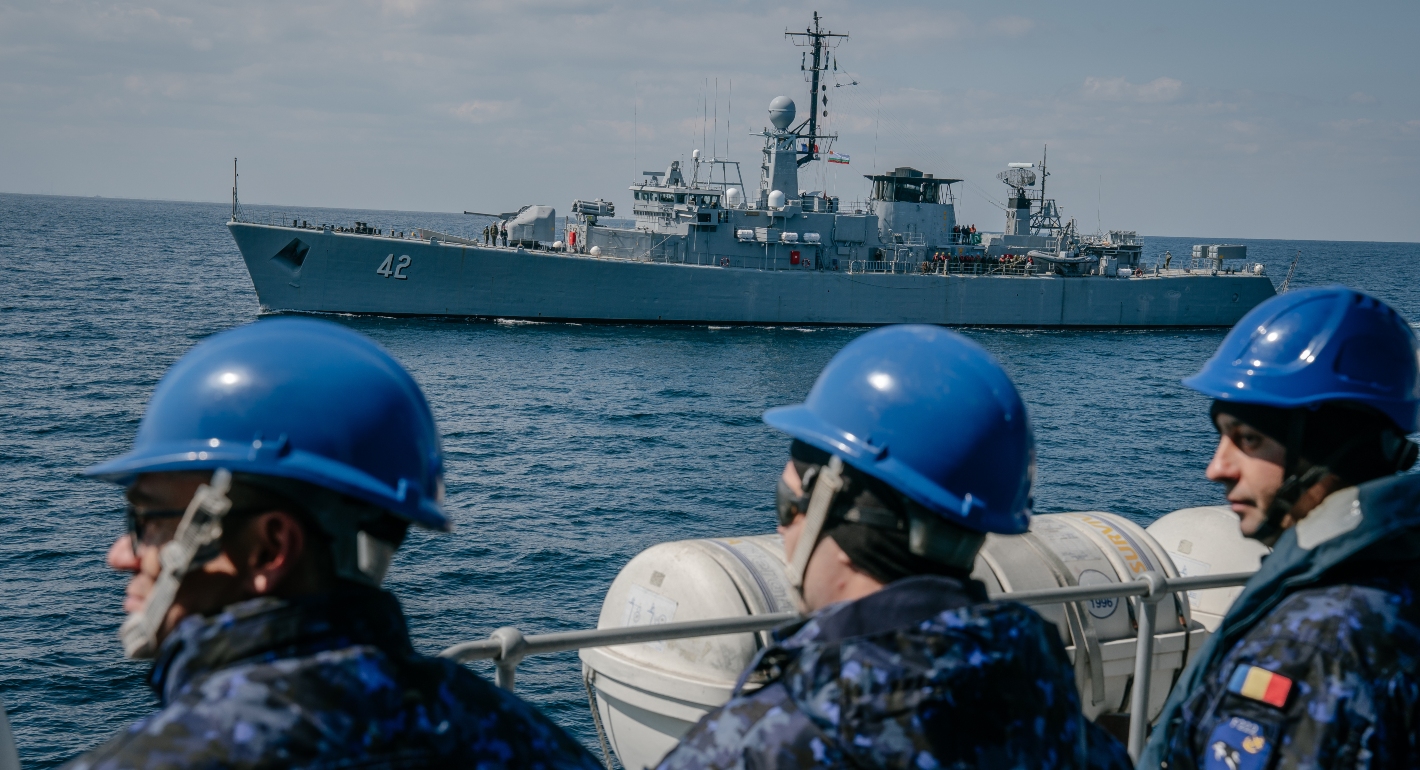
As Russia's war on Ukraine drags on, NATO is expanding its footprint in the Black Sea. Turkey, Romania, and Bulgaria are upgrading their fleets and deepening trilateral cooperation.

Dimitar Bechev
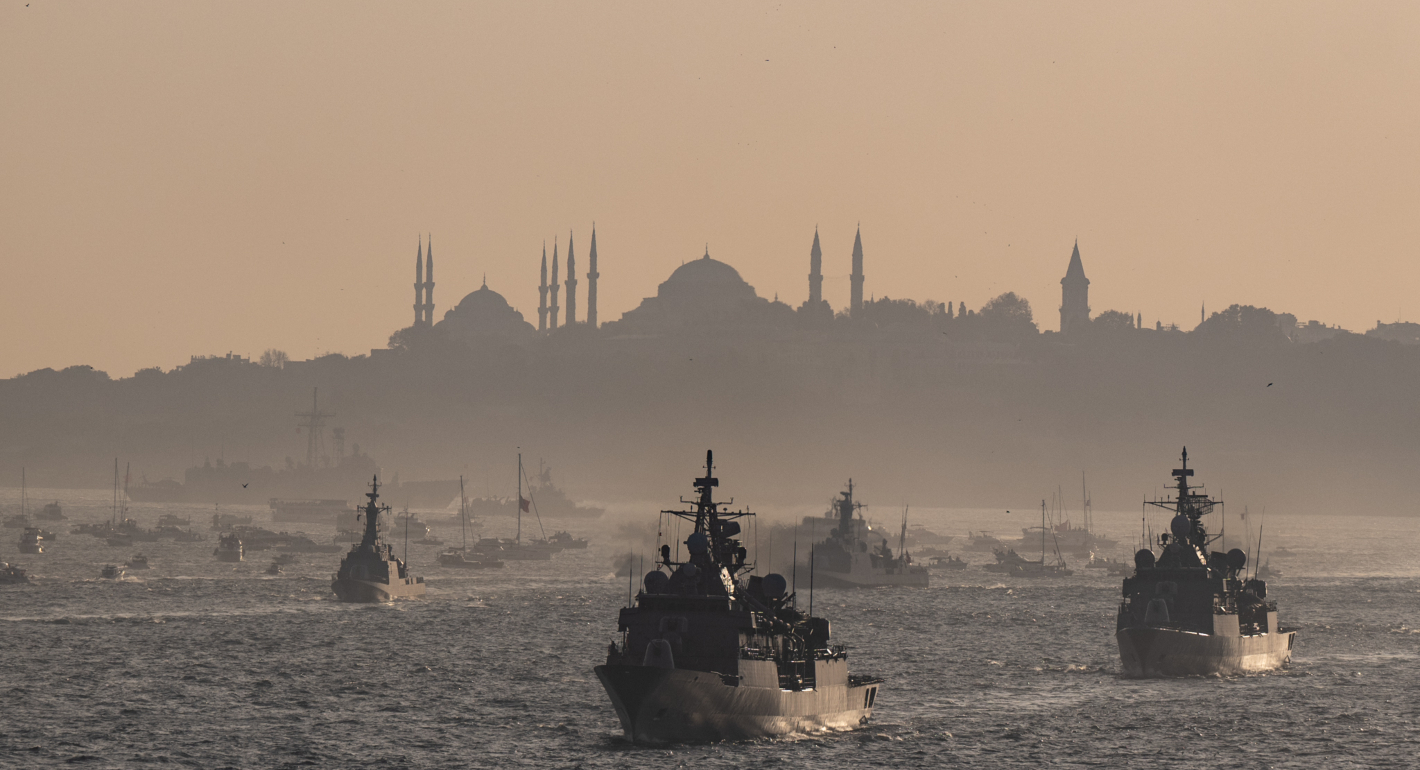
For ninety years, Turkey has been positioned as the principal gatekeeper of Black Sea security. As a result, European and NATO efforts to support Ukraine will require closer engagement with Ankara.

Thomas de Waal