

Commentary
Thomas de Waal
{
  "authors": [
    "Thomas de Waal"
  ],
  "type": "legacyinthemedia",
  "centerAffiliationAll": "dc",
  "centers": [
    "Carnegie Endowment for International Peace",
    "Carnegie Europe"
  ],
  "collections": [
    "Europe’s Eastern Neighborhood"
  ],
  "englishNewsletterAll": "ctw",
  "nonEnglishNewsletterAll": "",
  "primaryCenter": "Carnegie Europe",
  "programAffiliation": "EP",
  "programs": [
    "Europe"
  ],
  "projects": [],
  "regions": [
    "Russia",
    "Caucasus",
    "Iran"
  ],
  "topics": [
    "Security"
  ]
}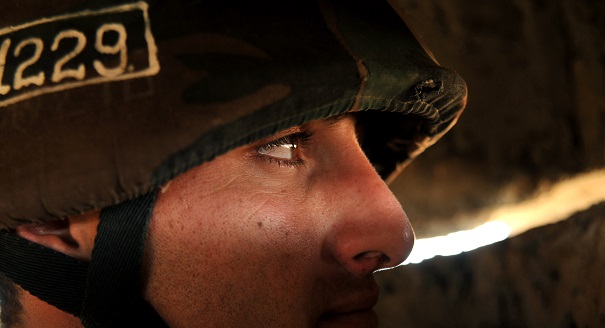
Source: Getty
Armenia and Azerbaijan are two or three steps away from a Bosnia-style conflict that could be deleterious for the wider region. What can be done to stop that from happening?
Source: POLITICO Europe
Four days of violence in April unfroze the generation-old Nagorno-Karabakh conflict.
A new truce was signed to halt the recent outbreak of violence in the Caucasus between Armenians and Azerbaijanis. But it is fragile and has already been broken. As Armenian President Serzh Sargsyan acknowledged, there could be more fighting “at any moment.”
It is no exaggeration to say that Armenia and Azerbaijan are two or three steps away from a Bosnia-style conflict that could be deleterious for the wider region. What can be done to stop that happening?The Karabakh conflict is as old as it is intractable. From 1991-94 Armenians and Azerbaijanis fought a hot war over the disputed Nagorno-Karabakh region. The territory was part of Soviet Azerbaijan but its population was three-quarters Armenian. The Armenian side prevailed, leaving 20,000 dead and displacing more than 1 million.
A ceasefire was signed in 1994. Armenians were given de facto possession not just of Nagorno-Karabakh itself, but (in whole, or in part) of seven Azerbaijani regions unrelated to the original dispute. The Armenians called the territory a protective buffer zone.
The 1994 ceasefire was supposed to be a prelude to the peace agreement that never came. The international community’s eyes and ears in the region consist of just six monitors from the Organization for Security and Cooperation in Europe.
The ceasefire has been under heavy strain for a couple of years now. Azerbaijan has been building up its store of heavy weapons and both sides have engaged in rhetoric more extreme than at the height of the conflict in the 1990s.
The ceasefire finally cracked on April 2. The most likely cause was an Azerbaijani attempt to test the Armenians’ defenses and force them to negotiate from a weaker position. The Azerbaijani military regained some slivers of lost territory — and an awful lot of lost pride. But the human price was high. Officially, several dozen people were killed. Experts put the death toll nearer to 200, including many civilians.
The four-day war stirred up long-seated anger and sharpened mutual insecurities. Azerbaijanis still feel humiliated by defeats suffered more than 20 years ago. There was a patriotic upsurge of euphoria through-out the country, a useful distraction from the socioeconomic crisis that has seen its currency, the manat, devalued twice in the last year. The temptation — and, worryingly, the public pressure — to try this kind offensive again is enormous.
Armenia saw a similar surge of nationalist emotion. Caught flat-footed by fighting, the country witnessed a sobering few days. Young Armenians volunteered to join the front line.
Given the massive arsenals of weaponry both sides now possess, new fighting could easily escalate into an all-out conflict far more destructive than the 1991-94 war. Baku and Yerevan could invoke their military assistance treaties with Turkey and Russia respectively. Neither wants to get involved, but would be under big pressure to honor their commitments in the region.
Other regional neighbors are also alarmed. Georgia, in particular, could become caught in the cross-hairs. Armenians and Azerbaijanis constitute Georgia’s two biggest minorities. The BP-run Baku-Tbilisi-Ceyhan oil pipeline that runs through the country could also become a target.
A security vacuum has opened up around Karabakh. It will only be filled by serious peace talks — or by more fighting.
The formal peace process has been close to moribund for five years. Neither President Ilham Aliyev nor President Sargsyan has said anything constructive or conciliatory. The conflict’s three mediators and co-chairs of the OSCE’s “Minsk Group” — France, Russia and the United States — have had to limit themselves to shuttle diplomacy. Their modest ideas are routinely rejected.
The three co-chairs have said they want to launch “comprehensive negotiations.” These could take the form of a peace conference chaired by the three foreign ministers.
It’s an important step, but the two presidents want very different things. The Azerbaijani side wants new negotiations and to use its military force as leverage. The Armenian side is digging in harder — they are reluctant to agree to anything that might look like submission to Azerbaijani military pressure and have demanded “security guarantees.”
Can this crisis be contained before it escalates? We first need to challenge one common preconception: the idea that Russia can fill that security vacuum and manage the conflict.
Russia’s top officials did swing into action and negotiate a verbal ceasefire on April 5. But Russia has done little since then. Its problem is that it has simultaneously mediated and destabilized the conflict.
The Russians have been selling arms to both sides. An estimated 85 percent of Azerbaijan’s weaponry comes from Russia, while Russia has a military alliance with Armenia, sealed by a new treaty signed in 2010.
This balancing game means that Russia is unable to set the agenda in Karabakh. Both Baku and Yerevan are skeptical of Russia’s intentions.
In Armenia especially, the new backlash against Russia is significant. Because Russia has no military presence on the ground and no monopoly on the peace process, both countries can block plans for a Russian peace-keeping force that would reassert its influence in the region.
So the common belief that, if things get worse “Russia can handle it,” is misplaced. This poses a challenge to the United States and France. Neither has done enough to offer a balanced international plan.
Unless progress is made now, more fighting is likely to break out after the international spectacle of Azerbaijan’s much-coveted Formula 1 race in Baku ends in late June. We can only hope that the prospect of more intense fighting in the Caucasus, and its dangerous implications for the region, will concentrate minds on solving a conflict that has been ignored for too long.
This article was originally published in the print edition of POLITICO Europe.

Senior Fellow, Carnegie Europe
Thomas de Waal is a senior fellow at Carnegie Europe, specializing in Eastern Europe and the Caucasus.
Recent Work
Thomas de Waal
Thomas de Waal
A trilateral summit in China was advertised as the new Yalta but yielded little more than a photo opportunity for Vladimir Putin. The real work was being done by the Europeans, quietly, in rural Poland.

Rym Momtaz
Russia’s maximalist demands are preventing any serious attempt at ending the war in Ukraine. To make peace a realistic prospect, Putin must recognize that diplomacy is a two-way street.
Kadri Liik
A sizeable funding shortfall looks increasingly likely to hit Ukraine in 2027. Can the Europeans, with their strained budgets and economies, come up with the cash without seizing frozen Russian assets?
Rym Momtaz, ed.
In Germany, competing perceptions of Russia are highlighting a tension between public opinion and government policy. In the country’s east, where division is widespread, populist parties are taking advantage.

Gwendolyn Sasse
Between stalled economic ties and a push for greater security cooperation, EU-Turkey relations remain uncertain. Ankara’s continued slide toward autocracy is the likeliest common denominator in these competing dynamics.

Marc Pierini