

Article
Bruno Maçães
{
  "authors": [
    "Bruno Maçães"
  ],
  "type": "legacyinthemedia",
  "centerAffiliationAll": "dc",
  "centers": [
    "Carnegie Endowment for International Peace",
    "Carnegie Europe"
  ],
  "collections": [
    "Brexit and UK Politics"
  ],
  "englishNewsletterAll": "ctw",
  "nonEnglishNewsletterAll": "",
  "primaryCenter": "Carnegie Europe",
  "programAffiliation": "EP",
  "programs": [
    "Europe"
  ],
  "projects": [],
  "regions": [
    "Europe",
    "Western Europe",
    "United Kingdom",
    "Iran"
  ],
  "topics": [
    "EU",
    "Political Reform"
  ]
}
Source: Getty
The EU has been faced with a seemingly never-ending succession of crises, all of which demand difficult choices to be made.
Source: Europe's World
In September 2015, the ambassadors to the European Union of all 28 member states had one of their many meetings on the refugee crisis, at that point going through one of its most acute moments. The main question was how to deal with the relocation mechanism between member states in the face of such strong opposition to a quota system – from Central and Eastern Europe in particular.
The idea was voiced that countries be allowed to make a financial contribution instead of receiving refugees from strained border states like Italy or Greece. This proposal met with natural opposition, so an alternative was suggested: why not allow a country to postpone its quota obligation for six months? A good compromise came when one ambassador suggested a further tweak: an upper limit to the number of refugees whose relocation could be postponed of 30% of the total allocated through the original algorithm.
At this point it hit me. The European Union is not really about making political decisions. Rather, it tries to develop a system of rules meant to be applied more or less autonomously to a highly complex political and social reality. Of course, the system needs regular and periodic maintenance, much like a ship needs repair, but the point is always to create a system of rules to govern events rather than doing so directly. For the past few years, this has become rather difficult to defend. The EU has been faced with a seemingly never-ending succession of crises, all demanding a difficult choice between alternatives.
In the EU, political questions are often addressed less with the intent of reaching a solution than in order to limit their impact on the existing rules or, ideally, adapt the system so it can deal more or less routinely with the new question. That’s why when the Greek debt crisis started, there was little disposition to make any fundamental choices that might have settled the problem once and for all. The crisis itself was incorporated as a permanent fixture of the normal political process, and it looks like it will remain there indefinitely.
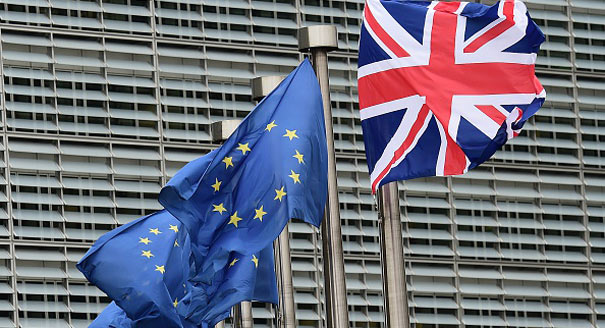
During the UK’s referendum on EU membership, the ‘Leave’ camp insisted on one idea, which it turned into an incessant slogan: ‘Take Back Control’. It was as if some of the passengers in our shared automated vehicle had decided to assume the steering wheel. The reaction was a mixture of horror and exhilaration. For some, it seems the very definition of political madness. We had in place an automated system for providing high levels of security and well-being, which had been developed over generations to the point that it worked smoothly and practically without human intervention. Dangerously, though, the system was now automated to such a degree that almost everyone had lost the knowledge and ability to actually direct political events. How, then, can we make sense of a group of people who suddenly grab the wheel and threaten to deactivate the EU’s whole software and machinery? It was sheer madness. It could take us anywhere. Rather than riding with the humane and rational system we had perfected, the United Kingdom could now be heading straight into a brick wall.
The ‘Remain’ side, meanwhile, cannot hide its frustration that economic arguments had so little traction with the voters, who were clearly swayed by the case against EU rules on free movement. But doubts that the EU offers the best economic solutions have kept growing of late. There has been a growing sense that a change of direction is needed and that the EU is simply not flexible or opportunistic enough to look for the best chance, be it on global trade or on smart regulation, especially in what concerns the digital economy. In the end, taking back control might also make sense on economic policy. Was anyone actually testing and evaluating the EU’s economic policy? If so, could we trust them to do the right thing? These were legitimate concerns.
On immigration, there were very few doubts. Over the last few years, it has become easier and easier to argue that no one is in charge of immigration. The British public was not so much complaining that control over immigration policy had been moved to Brussels as that no one was ultimately responsible. There was a rule operating automatically, without human intervention: free movement. What immigration numbers the principle produces every year is impossible to know or control because any consideration of that kind is by definition a violation of the principle. In an extreme case, one could see millions arrive in the UK in a single year. Taking back control meant placing someone in charge as well as bringing the numbers down, but in my conversations with voters and officials in the UK it has always seemed that the feeling of control was more important than actual policy to be implemented.
This brings me to my last point. If Brexit can be interpreted as a moment of liberation from the “rule of autonomous rules”, we need to remind ourselves of all the dangers that a human-directed future offers. Small errors of judgement can have tragic results. At the moment of writing, the UK is fraught with political division and fragmentation and a public debate inflamed by recrimination and bursts of anger, including against foreigners. Meanwhile, financial markets – while under control – are settling on a consensus that money can only be made by betting against British success. As the UK enters an age of unprecedented risk and uncertainty, the lessons of a conservative disposition have never been so important: deliberation, measure, prudence. And there is something to regret: that this experiment in charting new waters has not been taken up by the European Union as a whole. In that case, all of us in Europe would be in it together.
Former Nonresident Associate, Carnegie Europe
Maçães was a nonresident associate at Carnegie Europe. His research focuses on EU integration and foreign policy, trade policy, and broader globalization trends.
Recent Work
Bruno Maçães
Bruno Maçães
Carnegie does not take institutional positions on public policy issues; the views represented herein are those of the author(s) and do not necessarily reflect the views of Carnegie, its staff, or its trustees.

Radical-right parties are expected to do well in upcoming elections in four of the EU's biggest member states. If successful, they could prevent the union from addressing key challenges ahead.

Stefan Lehne

The aftermath of the Ceuta crisis shows Europe has drawn the wrong lessons. Rather than doubling down on failed migration policies, the EU needs to address the underlying roots of such episodes.

Richard Youngs

An overwhelming victory by a far-right-wing party in a small state in eastern Germany will have major repercussions for Chancellor Friedrich Merz’s coalition.

Judy Dempsey

Canadian Prime Minister Mark Carney has twice inspired praise for standing up to U.S. President Donald Trump: at the 2026 World Economic Forum in Davos and on Canada-U.S. trade negotiations. Is Carney showing a third way better than the EU has in dealing with the Trump administration?

Rym Momtaz, ed.

The EU’s responses to two recent incidents expose the gulf between European perceptions and capabilities. Unless the union can bridge that gap, it will never become a real geostrategic power.
Rym Momtaz