

In The Media
David Rothkopf
{
  "authors": [
    "David Rothkopf"
  ],
  "type": "legacyinthemedia",
  "centerAffiliationAll": "",
  "centers": [
    "Carnegie Endowment for International Peace"
  ],
  "collections": [],
  "englishNewsletterAll": "",
  "nonEnglishNewsletterAll": "",
  "primaryCenter": "Carnegie Endowment for International Peace",
  "programAffiliation": "",
  "programs": [],
  "projects": [],
  "regions": [
    "United States"
  ],
  "topics": [
    "Political Reform",
    "Economy",
    "Security",
    "Foreign Policy",
    "Global Governance",
    "Technology"
  ]
}
Source: Getty
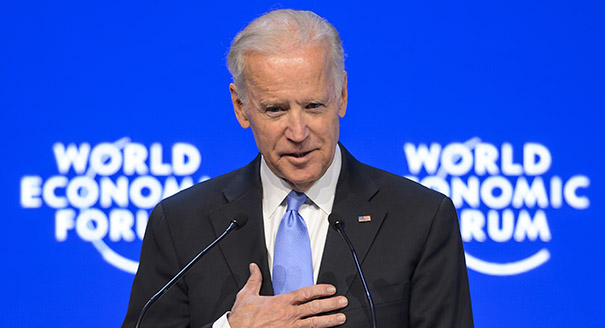
Vice President Joe Biden’s speech was an evisceration of a man whose name was never mentioned, a man who will be the next president of the United States.
Source: Foreign Policy
Last year, when Joe Biden spoke at Davos, he gave an incisive and passionate address reminding the CEOs and leaders in the audience of their responsibilities to the have-nots of the world. It was powerful stuff, and at the conclusion of his remarks, my dear partner, Carla, leapt to her feet to give him a standing ovation. I stood beside her and then, scanning the room, realized we were the only ones standing.
This year, when Biden was introduced for his valedictory speech as vice president of the United States, half the audience stood. The applause was resounding. It was clear that the packed plenary audience would miss the plainspoken, passionate son of Scranton, Pennsylvania. Watching him deliver the speech, it was also clear that Biden would miss audiences like this one.His remarks were thoughtful and important. But behind his eyes was an undeniable wistfulness. This man has been on the world stage for 44 years. He is a born politician. But he is much more than that. For decades, this dedicated public servant — from his youthful Senate days to the highest levels of government — has fought not just for social justice, nor just for his “base” at home as many politicians might, but for the entire international community.
Of course, something else about his remarks will make the nightly news headlines. His speech was an evisceration of a man whose name was never mentioned, a man who will be the next president of the United States. One by one, Biden enumerated issues that were vital to the international order and to global security. He argued why the liberal international order that emerged in the wake of World War II was the right response and had served the world well. He spoke up for the merits of trade — even as he acknowledged that work needed to be done urgently to aid those dislocated by globalization and technological progress. He underscored how vital the Atlantic alliance was to the United States and to the world. He expressed his views about the importance of Europe and the multilateral system. He made the case for NATO and with real passion described the principle that an attack on one was an attack on all as a “sacred obligation.”
Then he turned to threats and touched upon terrorism, enemies of democracy, and the international order. But he saved his strongest words for Russia, calling it out as the leading power seeking to undercut democracy and international law. He made it clear that Russian meddling in the U.S. elections was real — he defended the intelligence community — and that it was intolerable.
In other words, while the name “Donald Trump” never arose in his remarks and Biden was deeply respectful of the peaceful transition of power that has been a hallmark of U.S. democracy for more than two centuries, the force and weight of Biden’s valedictory was aimed directly at the next president of the United States. It was clear that Biden sees him as a deep threat to all he has held dear throughout his career. And there is good reason for that: Trump is just such a threat.
Biden, however, was not the only wistful person in the big Congress Centre auditorium. It was clear from the reception he got that many there were wistful that tragic circumstances — the death of his son — had conspired to keep him from running for president. Given the narrowness of Trump’s victory and the fact that Biden was not burdened with an email scandal or beholden to an establishment political dynasty; given that of all the leaders on the U.S. national stage he was the one with the most legitimate links to the anxious majority of working Americans; and given his own remarkable record and passion, he likely would have won. This address might have been something altogether different. And the outlook for America and the world might have been altogether different.
But there is no time for what might have been in the fast-paced, next quarter’s results-oriented world of Davos. So as Biden left the stage — the legacies of a life’s work at risk — we were left only with his wise words and the hope that somewhere out there are the next Joe Bidens. We need them, and in American politics of late, they seem an endangered species.
Former Visiting Scholar
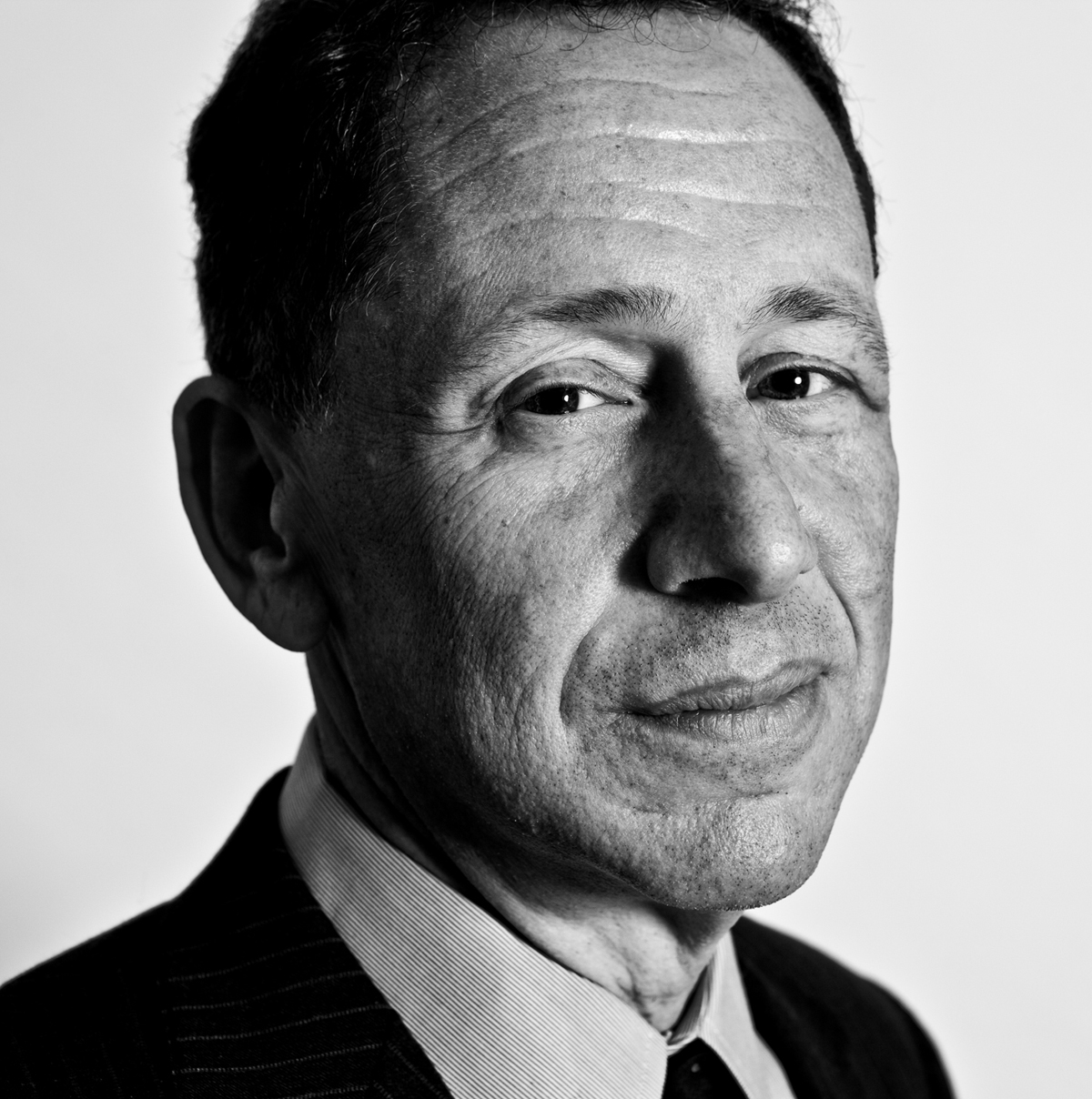
David Rothkopf was a visiting scholar at the Carnegie Endowment as well as the former CEO and editor in chief of the FP Group.
Recent Work
David Rothkopf
David Rothkopf
Carnegie does not take institutional positions on public policy issues; the views represented herein are those of the author(s) and do not necessarily reflect the views of Carnegie, its staff, or its trustees.

Radical-right parties are expected to do well in upcoming elections in four of the EU's biggest member states. If successful, they could prevent the union from addressing key challenges ahead.

Stefan Lehne

The aftermath of the Ceuta crisis shows Europe has drawn the wrong lessons. Rather than doubling down on failed migration policies, the EU needs to address the underlying roots of such episodes.

Richard Youngs

Canadian Prime Minister Mark Carney has twice inspired praise for standing up to U.S. President Donald Trump: at the 2026 World Economic Forum in Davos and on Canada-U.S. trade negotiations. Is Carney showing a third way better than the EU has in dealing with the Trump administration?

Rym Momtaz, ed.

The EU’s responses to two recent incidents expose the gulf between European perceptions and capabilities. Unless the union can bridge that gap, it will never become a real geostrategic power.
Rym Momtaz

European states control several Overseas Countries and Territories around the world that carry strategic, economic, and environmental weight. As great powers challenge the rules-based order, defending them is a geopolitical imperative for Europe.

Marc Pierini