

Research
- +5
Alper Coşkun, Fatih Ceylan, Tacan İldem, …
{
  "authors": [
    "Sinan Ülgen"
  ],
  "type": "legacyinthemedia",
  "centerAffiliationAll": "dc",
  "centers": [
    "Carnegie Endowment for International Peace",
    "Carnegie Europe"
  ],
  "collections": [
    "EU Integration and Enlargement",
    "Brexit and UK Politics"
  ],
  "englishNewsletterAll": "ctw",
  "nonEnglishNewsletterAll": "",
  "primaryCenter": "Carnegie Europe",
  "programAffiliation": "EP",
  "programs": [
    "Europe"
  ],
  "projects": [],
  "regions": [
    "Europe",
    "Western Europe",
    "United Kingdom",
    "Iran"
  ],
  "topics": [
    "EU",
    "Economy"
  ]
}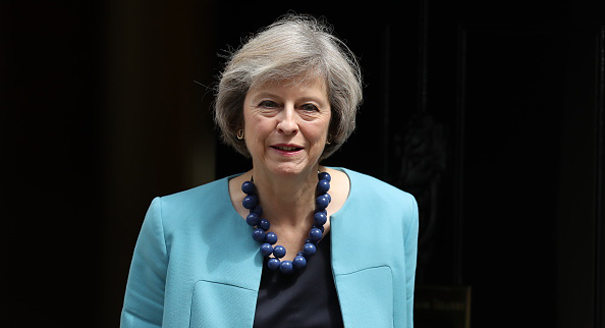
Source: Getty
A customs union like the one negotiated between Turkey and the EU could provide a realistic way forward for the UK after it leaves the bloc.
Source: Politico Europe
In her Brexit speech today, U.K. Prime Minister Theresa May focused on the future of her country’s trade relationship with Europe.
Retaining membership in the European single market is no longer a realistic prospect for the U.K. Instead, the British government will aim to conclude a preferential trade agreement with the EU so as to retain favorable access to the European market.
London will therefore have to choose between a free trade agreement and a customs union. A failure to achieve either will result in a hard Brexit, with EU trade carried out on non-preferential terms on the basis of the rules of the World Trade Organization.
Reflecting on this challenge, Britain’s International Trade Secretary Liam Fox has argued that the U.K. could replicate Turkey’s relationship with the EU, remaining a partial member of Europe’s customs union after Brexit. Turkey’s experience with its own customs union demonstrates that Fox’s proposal could indeed provide a realistic way forward for the U.K.
Turkey is the only non-EU member state — with the exception of the microstates of Andorra and San Marino — that has a customs union with the EU. Established in 1995, the accord only covers manufactured goods and processed agricultural products. Services and basic agricultural products remain beyond the scope of the agreement, but it does include competition rules and the protection of intellectual property rights, helping to maintain a level playing field between Turkish and European economic players.
Over the past two decades, the customs union has improved the competitiveness of the Turkish industry, in particular by guaranteeing tariff-free access to the European Single Market. Recent studies by the World Bank and the European Commission have, for instance, demonstrated that the customs union has helped Turkey to raise its economic performance and income levels. It is thus no big surprise that established manufacturers in the U.K. such as car companies are keen on keeping the country in the customs union.
There is a less emphasized but nonetheless very important dimension of this trading regime, especially from the U.K.’s perspective. Unlike a free trade area, the customs union allows bilateral trade to be conducted without the costs and complexities of a set of a so-called “rules of origin” that can often act as a disincentive to trade and foreign investment. Similarly, Turkey is not directly bound by the jurisprudence of the European Court of Justice. The customs union allows for alternative mechanisms of dispute resolution.
The current version of the Turkey-EU customs union is however not devoid of structural problems. From the U.K.’s perspective, the most important one is the ensuing loss of independence in trade policy. A customs union member is held to follow the EU trade policy and cannot negotiate separate free trade agreements with third countries independently of the EU.
Only if the U.K. were to keep service industries outside the scope of a customs union with the EU, for example, would it be able to conclude free trade agreements on services with third countries. This asymmetry is a political cost that has to be weighed against the aforementioned benefits.
Finally, there is also a political opportunity that should be explored. Turkey and the EU are set to initiate a new round of negotiations in early 2017 to modernize and deepen their existing customs union. If London were to formally join these talks — or alternatively agree to coordinate trade policy with Ankara — both countries would greatly improve their bargaining position in Brussels. Such a move would be an important step toward obtaining a more balanced trade relationship with Europe in the years to come.

Senior Fellow, Carnegie Europe
Sinan Ülgen is a senior fellow at Carnegie Europe in Brussels, where his research focuses on Turkish foreign policy, transatlantic relations, international trade, economic security, and digital policy.
Recent Work

Alper Coşkun, Fatih Ceylan, Tacan İldem, …
Carnegie does not take institutional positions on public policy issues; the views represented herein are those of the author(s) and do not necessarily reflect the views of Carnegie, its staff, or its trustees.

Funding Ukraine remains a priority for European leaders. As Russia’s war of aggression heads into another winter, two feasible options to mobilize support for Kyiv should be fast-tracked.


Vladyslav Rashkovan, Gregory P. Wilson

While the EU and European governments are embracing the much-lauded middle-power moment, this entails three difficult conundrums.

Richard Youngs

Europe is facing rising populism internally as well as external pressures from Russia, China, Turkey, and the United States.

Dimitar Bechev

A notable degree of participative democracy has firmly arrived in Europe. But to have more far-reaching impact, democratic deliberation needs to move into a radically new phase.
Richard Youngs

Much has been said of the changes Brussels is trying to make to the EU enlargement process. Here’s why gradual integration might—or might not—be the answer.
Dimitar Bechev