

Paper
Douglas H. Paal
{
  "authors": [
    "Douglas H. Paal"
  ],
  "type": "legacyinthemedia",
  "centerAffiliationAll": "dc",
  "centers": [
    "Carnegie Endowment for International Peace",
    "Carnegie China"
  ],
  "collections": [],
  "englishNewsletterAll": "asia",
  "nonEnglishNewsletterAll": "",
  "primaryCenter": "Carnegie China",
  "programAffiliation": "AP",
  "programs": [
    "Asia"
  ],
  "projects": [],
  "regions": [
    "East Asia",
    "China",
    "North America",
    "United States"
  ],
  "topics": [
    "Foreign Policy"
  ]
}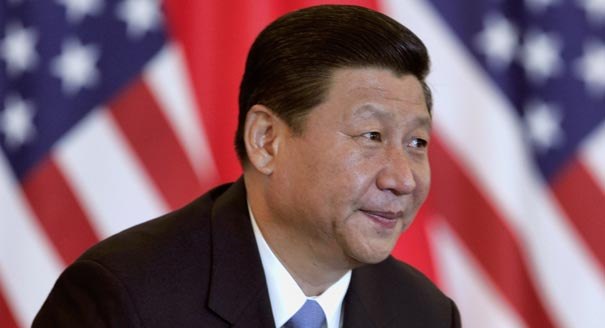
Source: Getty
Xi Jinping and Donald Trump must show flexibility during the Sino-U.S. summit in Palm Beach and work to avert conflict, whatever it takes.
Source: South China Morning Post
When Donald Trump was a boy, his parents apparently concluded he needed discipline. So they sent him to a military school. What he was taught apparently did not stick, however, judging from his chaotic behaviour as an adult and now as president of the United States.
When Xi Jinping ( 習近平 ) was a boy, he experienced the life-threatening chaos of the Cultural Revolution at first hand and learned to subjugate and discipline himself. Now, as China’s Communist Party general secretary and the nation’s president, he is making the rest of China feel his preference for strict discipline.
What can we expect when such different people meet later this week at Mar-a-Lago in Florida? Will it be like oil and water, like yin and yang?
Both men fashion themselves to be strong leaders. But when Trump greets Xi, it will be the US president who walks with a political limp, earned early in his term of office through the mismanagement of the hasty repeal of Obamacare. Xi, by contrast, will stride forward as the “core” leader of the Communist Party, an emerging statesman on his way to his apotheosis at the 19th party congress later this year.
When strong leaders meet, the result is usually one of two possibilities: they develop mutual respect and a way to deal with each other, or they can’t stand each other, show disrespect, and seek to come out on top. Think John F. Kennedy and Nikita Khrushchev, Mao Zedong (毛澤東) and Deng Xiaoping ( 鄧小平 ).
American preparation for the Mar-a-Lago summit has been of a piece with the rest of the post-inauguration administration: hasty and scant by comparison with previous presidencies. Offices are not filled, policies not reviewed, and explanations unmade. Last-minute declarations of intent about trade and deficits appear more to reflect back to campaign rhetoric, and show little strategic thinking about the path ahead. Background briefings betray more bluff than brain.
Chinese preparations appear consistent with the careful promotion of Xi’s status as a statesman and unrivalled leader going into his second term, something I call Xi Jinping 2.0. Xi will be there for the pictures first and foremost, apparently not at all worried about how the contrast between the styles and appearances of the two leaders will look.
This is a bit new. At least since Deng, Chinese diplomats have sweated every detail of how their leaders would be portrayed in advance of meetings like this, lest they “lose face”. Xi gives the impression that, this time, it will be Trump who should have that concern. This may have been reinforced by Trump’s press conference performance with German Chancellor Angela Merkel.
In addition to his plans to adopt a calm and commanding demeanour, the Chinese leader is also preparing a package of economic benefits and international cooperation for the United States to present to Trump. These gifts are said to be intended to establish a positive tone to the relationship and give Trump an opportunity to show the American people that his personal diplomacy is paying practical dividends.
One aspect of this calm and cooperative demeanour is a sense of self-confidence—that if Trump is demanding, China can handle it.
On the US side, there is every incentive to reach for conventional and unconventional policy tools to approach the holy grail of balanced trade between America and China. This is especially so for a wounded White House that wants to demonstrate effectiveness without the hobble of a non-cooperative Republican Congress.
If, for example, Washington demands voluntary restraint agreements on trade in some products, such as the steel, aluminium or chemicals produced by state-owned enterprises, indications are that China will at least think about it. The US economy does not actually import that much of these categories. Moreover, the historical example of Japan accepting voluntary restraint agreements on auto and steel exports to protect US industries in the 1980s led eventually to severe uncompetitiveness of the protected industries.
Xi also appears to be seriously contemplating Secretary of State Rex Tillerson’s request for greater cooperation in pressurising North Korea, which could be cloaked in the name of the UN Security Council resolutions that China previously approved. Magic bullets are scarce with the Korean policy dilemma, but it would be hard to refuse offers of additional help.
Ideally, we should hope and trust that Trump and Xi will in the end act like the leaders they should be. These are the world’s two most consequential countries facing inevitable economic and strategic competition. Protecting their interests while preventing that from turning into disastrous conflict needs to be the prime objective of both leaders, not short-term policy advantage.
This piece was originally published in the South China Morning Post.

Distinguished Fellow, Asia Program
Paal previously served as vice chairman of JPMorgan Chase International and as unofficial U.S. representative to Taiwan as director of the American Institute in Taiwan.
Recent Work
Douglas H. Paal


Douglas H. Paal, Tong Zhao, Chen Qi, …
Carnegie does not take institutional positions on public policy issues; the views represented herein are those of the author(s) and do not necessarily reflect the views of Carnegie, its staff, or its trustees.

Are Germany’s economic, industrial, and political struggles becoming a liability for the EU’s ability to rise to the geopolitical moment?

Rym Momtaz, ed.

European Commission President Ursula von der Leyen is about to give her annual address on the state of the EU. Here’s what she won’t—but should—say.
Rym Momtaz

Radical-right parties are expected to do well in upcoming elections in four of the EU's biggest member states. If successful, they could prevent the union from addressing key challenges ahead.

Stefan Lehne

The aftermath of the Ceuta crisis shows Europe has drawn the wrong lessons. Rather than doubling down on failed migration policies, the EU needs to address the underlying roots of such episodes.

Richard Youngs

Canadian Prime Minister Mark Carney has twice inspired praise for standing up to U.S. President Donald Trump: at the 2026 World Economic Forum in Davos and on Canada-U.S. trade negotiations. Is Carney showing a third way better than the EU has in dealing with the Trump administration?
Rym Momtaz, ed.