

Commentary
The European Commissioner for Trade is headed to China. But after President Xi’s bridge-building visit to Washington, can a more isolated EU overcome Beijing’s stranglehold on critical raw materials? Who will blink first?
Rym Momtaz, ed.
{
  "authors": [
    "Konstantin Kazenin"
  ],
  "type": "commentary",
  "centerAffiliationAll": "",
  "centers": [
    "Carnegie Endowment for International Peace",
    "Carnegie Russia Eurasia Center"
  ],
  "collections": [
    "Inside Russia"
  ],
  "englishNewsletterAll": "",
  "nonEnglishNewsletterAll": "",
  "primaryCenter": "Carnegie Russia Eurasia Center",
  "programAffiliation": "",
  "programs": [],
  "projects": [],
  "regions": [],
  "topics": [
    "Economy"
  ]
}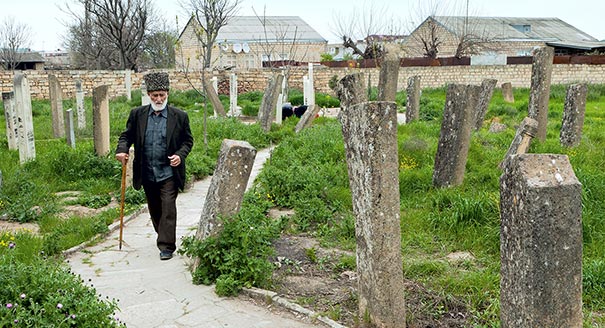
Source: Getty
Recent speculation that Russia wants to topple the “traditional” clan system in the North Caucasus misses the point: the clan system is in no way traditional, and it is collapsing on its own. The real question is whether the federal center will find other allies in the region when it falls.
On October 3, 2017, the Kremlin named Interior Ministry veteran Vladimir Vasilyev as acting head of the Republic of Dagestan. A former leader of the State Duma’s United Russia faction, Vasilyev has virtually no personal or professional ties to Dagestan, a complicated region where connections and balancing ethnic groups have previously proved critical.
Vasilyev’s appointment has reignited speculation that the federal authorities are aiming to bring down the North Caucasus’s entrenched clan system. But all these discussions overlook one key fact: the clan system today is imploding regardless of the Kremlin’s intentions.
The real question is whether federal officials are willing to accept this reality and cooperate with forces previously not included in the regional ruling elite.
Contrary to popular belief, a clan in the North Caucasus is neither a lineage nor an alliance of familial organizations. With few exceptions, modern clans have almost nothing to do with ancient traditions. Rather, they emerged after the Soviet collapse, when the federal government’s ability to regulate local affairs declined sharply.
In Dagestan and some other parts of the North Caucasus, the scale and speed of state collapse in the early 1990s far outpaced other Russian regions. This left a power vacuum that needed to be filled to prevent political chaos.
Politicians, crime bosses, and government officials quickly formed alliances and adopted this role. Although these groups’ informal leadership often included close relatives, they were in no way an incarnation of ancient traditions. In fact, traditional tribal elders regarded the new clan leaders as brazen upstarts, often from inferior local lineages.
Although some clans were largely mono-ethnic, competition between clan leaders from the same ethnic community was also common. Most importantly, there were numerous multiethnic alliances in the top ranks of the North Caucasus elite.
Today, however, no single clan can claim to be rooted in tradition or to enjoy the support of an entire ethnic group. Likewise, trying to threaten the authorities with a clan’s supposed clout is a risky proposition (and it is debatable whether clan leaders still have such clout). So why is power in the North Caucasus still effectively divided between local security service branches and representatives of entrenched clans?
In some regions, clan groups established rigid control and became the unofficial system of power. For example, certain ethnic Cherkess-majority municipalities of Karachayevo-Cherkessia remain the fiefdom of one powerful Cherkess family. But cases like this are the exception, not the rule.
More commonly, today’s influential clans have the ability to mobilize support from relatively large groups of the population: those who depend personally upon them. These are not only low-level officials and junior business partners. They also include employees of enterprises controlled by clan leaders, individuals who depend on the leaders for access to revenue sources, and locals who need the leaders’ backing in particular conflicts, such as land disputes.
Such patronage dynamics are common across Russia. What distinguishes the North Caucasus, however, is the greater density of local social connections. This creates mechanisms of solidarity across wide swaths of the population and can draw residents into public activism. That can work in favor of citizens, but it can also benefit clan leaders.
At the same time, these leaders hardly find themselves in a stable position. The current relative prosperity in the North Caucasus is not guaranteed to last, particularly as more and more Russian regions face budget shortfalls. If financing begins to dwindle, bankrolling support will grow increasingly difficult. Regions that are already less stable will be the first to encounter problems.
Maintaining the status quo will prove easiest in Karachayevo-Cherkessia, where the population is smaller and there are fewer young people. Dagestan, by contrast, has six times as many residents and a much higher share of young people. It will be extremely difficult to sustain the existing base and integrate young adults into this system.
Irrespective of the Kremlin’s actions, the power systems in most North Caucasus republics are unlikely to remain in place. The key question is not whether the federal center will overpower the clan system but whether it will find other allies in the region as the clans weaken.
This is undoubtedly possible—if the Kremlin is willing. The active segment of North Caucasian society is in no way limited to clan structures. Many businesspeople in the region succeed without the support or protection of the authorities—particularly, in Dagestan. Increasingly, they pursue self-organization, from establishing industry-specific guilds with internal conflict resolution systems to founding modern business associations.
Additionally, local self-government still exists in the North Caucasus, although it has frequently come under attack. In Karachayevo-Cherkessia, for example, the mayor’s office of Karachayevsk was independent of the regional government until very recently. Elsewhere, teams of local deputies can still stand up to regional governments—for example, in the Dagestani city of Buynaksk, where the municipal assembly has long opposed the appointment of a new mayor. At the rural level, some municipal chiefs remain independent. Initially elected by popular vote, they are not bound by vassalage to the regional authorities.
Local Islam is also a factor to be reckoned with. In Dagestan and Ingushetia, the Islamic community includes both groups close to the authorities and those that demonstratively distance themselves from the powers that be. These groups crystallize around religious leaders. Some are nearly mono-ethnic, while others are united by anti-government or anti-corruption sentiments. These communities’ main draw for young people is that they exist outside the system: individuals can join regardless of their standing in the local hierarchy.
Finally, ethnic “national movements” retain influence. After years of bending to their clan patrons’ shifting business interests, some national movement leaders have little clout left. But others maintain their reputation as protectors of the people—particularly in rural communities that want the authorities to respect their local interests. These leaders care the most about being heard by Moscow.
As the local elite weakens, the Kremlin risks losing support in the North Caucasus. To prevent this, the federal center must foster communication with all law-abiding forces that are prepared for dialogue but are currently not part of the region’s closed system of governance and resource consumption. The Kremlin’s immediate objective should be to simply establish contact with those who will keep dialogue going when it becomes impossible to govern the region by relying wholly on the current elite.
But if the Kremlin cannot look beyond the nearest elections to plan its North Caucasus strategy, there is little hope it can accomplish this.
Konstantin Kazenin
Carnegie does not take institutional positions on public policy issues; the views represented herein are those of the author(s) and do not necessarily reflect the views of Carnegie, its staff, or its trustees.

The European Commissioner for Trade is headed to China. But after President Xi’s bridge-building visit to Washington, can a more isolated EU overcome Beijing’s stranglehold on critical raw materials? Who will blink first?

Rym Momtaz, ed.

The domestic impacts of how long it is taking to end the war in Ukraine have pushed the French electorate to the political extremes and compromised the country’s diplomatic capacity.
Rym Momtaz

A summer of escalation in the Black Sea has hurt Ukraine economically and is exacerbating world food security. A truce is needed—as is a broader reframing of Europe’s Ukraine strategy.

Thomas de Waal
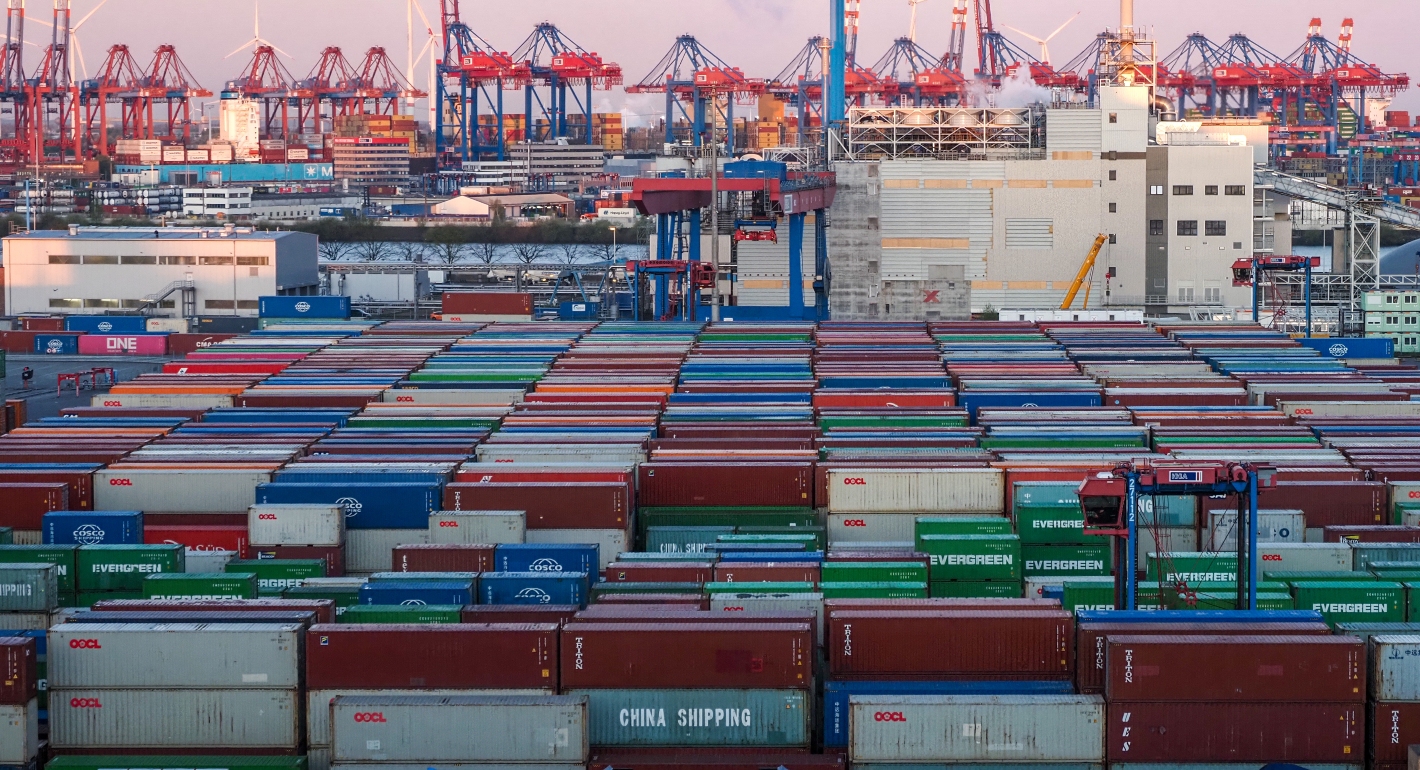
As geopolitical rivalry weaponizes global supply chains, the EU’s true vulnerability lies in emerging-risk imports. For these goods, suppliers are growing more concentrated, substitution more difficult, and political risk is looming.

Sinan Ülgen

The EU is putting together a new security strategy to meet today’s myriad challenges. But for any proposal to be effective, the union needs to grapple with its identity and ambitions.

Pierre Vimont