

Article
Frederic Grare
{
  "authors": [
    "Frederic Grare"
  ],
  "type": "other",
  "centerAffiliationAll": "dc",
  "centers": [
    "Carnegie Endowment for International Peace"
  ],
  "collections": [],
  "englishNewsletterAll": "ctw",
  "nonEnglishNewsletterAll": "",
  "primaryCenter": "Carnegie Endowment for International Peace",
  "programAffiliation": "SAP",
  "programs": [
    "South Asia"
  ],
  "projects": [],
  "regions": [
    "South Asia",
    "Afghanistan",
    "Pakistan"
  ],
  "topics": [
    "Security",
    "Military",
    "Foreign Policy"
  ]
}
Source: Getty
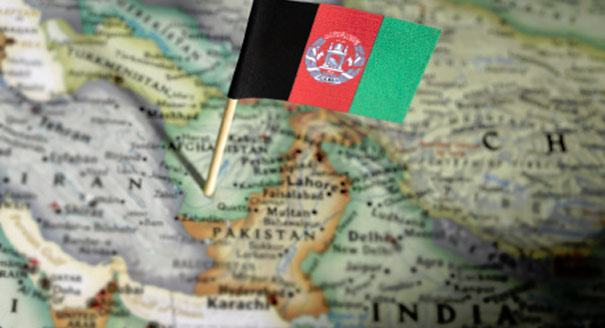
The search for a political compromise between the actors of the conflict must be central to U.S. efforts to withdraw from Afghanistan.
Source: Routledge
Mapping the future of US-Pakistan relations vis-à-vis Afghanistan is indeed a complex exercise. Absent a relatively functional regime in Kabul, the USA will be tempted to establish a quid pro quo relationship with Pakistan under which it would delegate part or all the responsibility of the stability of Afghanistan to Islamabad, even though such a move would inevitably create tensions with New Delhi.
The strategic interests and perception of the other by Afghanistan and Pakistan are known and quite stable. Relations between the two countries, although not static, are relatively stable, as are the interests of each country vis-à-vis one another. The US posture, however – the most important variable – is more difficult to analyze. The American hierarchy of priorities is constantly changing as Washington balances contradictory imperatives whose respective importance is constantly redefined according to the domestic political needs of the moment. The real novelty is the triangular dynamic is the unprecedented importance (except in Afghanistan) of the domestic situation of each of the three actors. Islamabad concerns about Pashtun nationalism are not new but the presence of Pakistani Taliban (TTP) sanctuaries in Afghanistan gives a new dimension to the problem. While it remains essentially a domestic Pakistani issue - temporarily exported to Afghanistan – but with Pakistani sources and objectives – it is nevertheless an additional front of tension between Islamabad and Kabul, with the potential to trap the USA in a zero-sum game between Afghanistan and Pakistan.
Similarly, the US administration has insistently defined the weakening of al Qaeda as the only real US war objective; since neither the Obama, nor previous administrations, have achieved any of their objectives in the country, such a redefinition allows Washington to justify a withdrawal from Afghanistan as the natural ending to a successful military operation. This redefinition could lead to serious lower order contradictions for overall American policy in the region and therefore prove a source of problems for its relationship with both Afghanistan and Pakistan. Should either Kabul or Islamabad become an obstacle to the US withdrawal, their relationship could suffer accordingly.
No matter how important these factors however, post-withdrawal relations between the USA and Pakistan vis-à-vis Afghanistan will also depend on larger strategic considerations: Afghanistan-Pakistan relations matter to the USA only to the extent that they have the potential to affect US territory or national interests, or threaten regional stability. But other considerations will inevitably also come into play. The fact that Pakistan is a nuclear state will, for example, be sufficient to persuade American decision makers to maintain a working relationship with Islamabad, irrespective of their actual capacity to influence Pakistan’s nuclear policy. The defining factor for the closeness of the USA’s relationship with either Afghanistan or Pakistan will be less the convergence between the foreign policies of the three actors than the potential nuisance that Afghanistan or Pakistan may constitute to US interests, which will in turn be shaped by Washington’s perceptions about its capacity to mitigate such irritants. From this perspective, Pakistan is likely to receive much greater attention from the USA in the future irrespective of other factors, including either state’s relationship with Afghanistan.
The dynamic that led to the creation of the Taliban in the 1990s and (before and later) to the turning of Afghanistan into a terrorist sanctuary will, however, be left intact. So will the temptation for Pakistan to see Afghanistan exclusively through the prism of its relationship with India. As it will, moreover, prove unable to guarantee Afghanistan’s stability, the risk is real that the US withdrawal may set the entire region back some years, although not necessarily to a pre-9/11 milieu, as some forces are likely to stay in Afghanistan and exercise some influence in the evolution of the country.
The political reconstruction of Afghanistan will remain the only way to avoid such a setback. Priority should therefore be given to the search for a political compromise in Afghanistan. This would offer a minimum guarantee for the preservation of the short and medium term interests of all the actors, ensure a smooth withdrawal, and minimize the risk of conflict among them. Such a quid pro quo can only be evolved through a truly inclusive political dialogue involving all Afghan actors.

Former Nonresident Senior Fellow, South Asia Program
Frédéric Grare was a nonresident senior fellow at the Carnegie Endowment for International Peace, where his research focuses on Indo-Pacific dynamics, the search for a security architecture, and South Asia Security issues.
Recent Work
Frederic Grare
Frederic Grare
Carnegie does not take institutional positions on public policy issues; the views represented herein are those of the author(s) and do not necessarily reflect the views of Carnegie, its staff, or its trustees.

When the U.S.-Iran memorandum of understanding was announced, the UK, France, Germany, and Italy declared their readiness to help demine the Strait of Hormuz and lift nuclear sanctions on Tehran. But does Europe need new tools to recover a diplomatic role?

Rym Momtaz, ed.
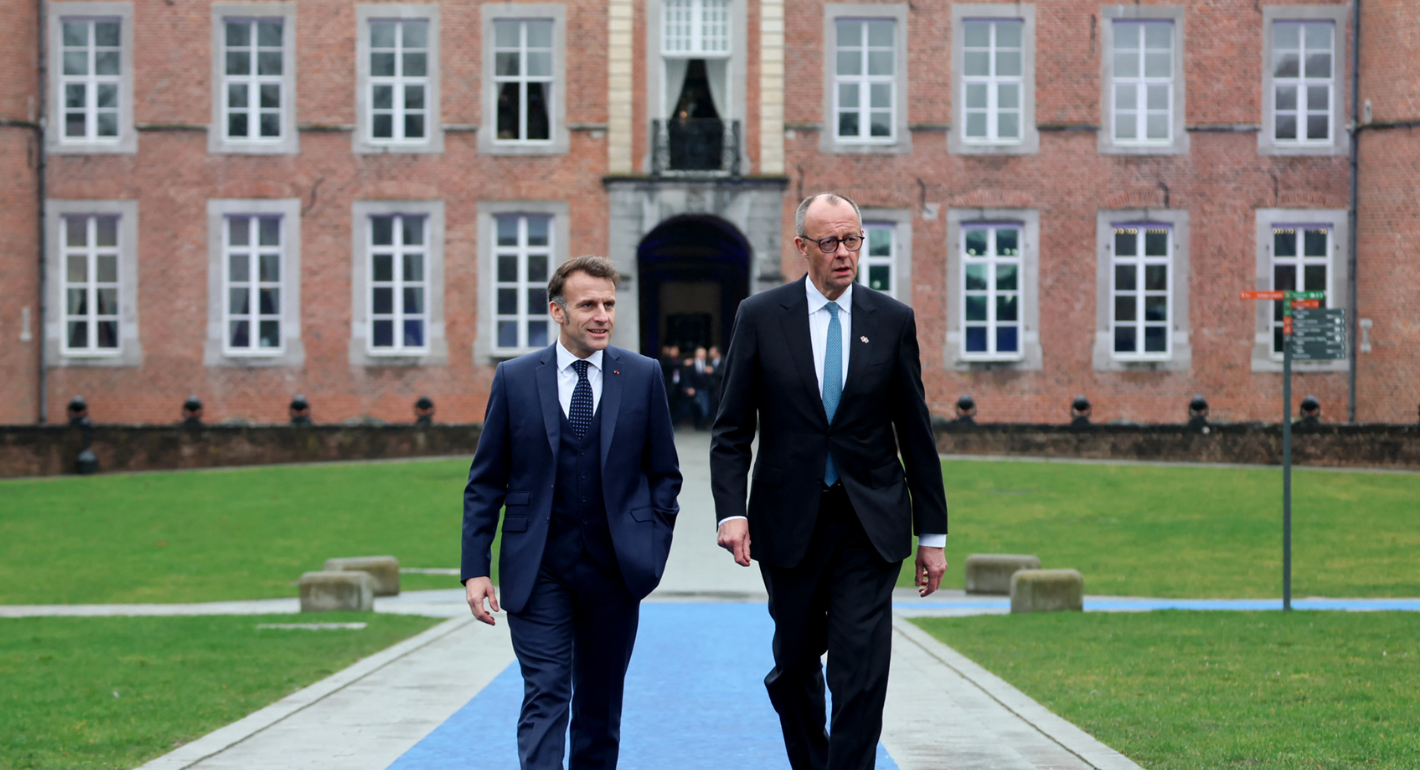
The Franco-German relationship is on the rocks again. But unlike previous moments of tension, the epochal changes on the world stage require that both step up investment in their bilateral ties.
Rym Momtaz

As geopolitical rivalry weaponizes global supply chains, the EU’s true vulnerability lies in emerging-risk imports. For these goods, suppliers are growing more concentrated, substitution more difficult, and political risk is looming.

Sinan Ülgen
The EU is putting together a new security strategy to meet today’s myriad challenges. But for any proposal to be effective, the union needs to grapple with its identity and ambitions.

Pierre Vimont
Three years after the Ohrid Agreement, Kosovo and Serbia remain far from normalization. To revive implementation, the EU should abandon its ambiguity and act as an even-handed arbitrator.


Miloš Pavković, Fitim Gashi, Iliriana Gjoni, …