

Commentary
Cornelius Adebahr
{
  "authors": [
    "Cornelius Adebahr"
  ],
  "type": "legacyinthemedia",
  "centerAffiliationAll": "dc",
  "centers": [
    "Carnegie Endowment for International Peace",
    "Carnegie Europe",
    "Malcolm H. Kerr Carnegie Middle East Center"
  ],
  "collections": [
    "Europe’s Southern Neighborhood",
    "Arab Awakening"
  ],
  "englishNewsletterAll": "ctw",
  "nonEnglishNewsletterAll": "",
  "primaryCenter": "Carnegie Europe",
  "programAffiliation": "EP",
  "programs": [
    "Europe"
  ],
  "projects": [],
  "regions": [
    "Middle East",
    "Iran"
  ],
  "topics": [
    "Political Reform"
  ]
}
Source: Getty
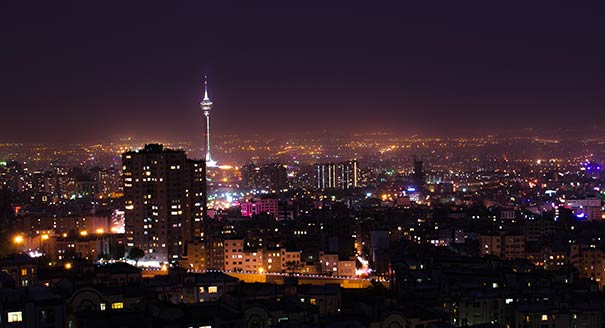
An economy in tatters, rampant corruption, and rising food prices are prompting ordinary Iranians to take to the streets.
Source: International Politics and Society
Violent demonstrations are taking place in cities across Iran, in the largest display of public discontent since 2009’s Green Movement demonstrations. But this time it’s ordinary people, rather than a middle-class elite, that are taking to the street. Hannes Alpen asked political scientist Cornelius Adebahr what makes the current protests different.
The protests in Iran came as a surprise to many observers. What are they about?
It’s difficult to work out what the central message of the protests actually is. They’re sporadic, badly organised, and there isn’t a central team of organisers behind them.
But a couple of themes stand out. Economic problems like price rises and unemployment are central. People are chanting anti-government slogans. They’ve been ripping down pictures of the Supreme Leader, Ali Khamenei, and some protestors have attacked police stations.
The protestors aren’t really distinguishing between the government of President Hassan Rouhani, who has acknowledged a number of their complaints, and the hardliners surrounding Khamenei, who has blamed the unrest on meddling from abroad.
The protests are particularly unsettling for Iran’s political class, because they are questioning the very system on which their power is based. Protests in 2009 led by the Iranian ‘Green Movement’ were a different beast. Reformers were campaigning against electoral fraud, but they never expressed a wish to overturn the Islamic Republic altogether.
Both the moderates and the conservatives will be tempted to use the current unrest for their own political ends. That would be a mistake.
US president Donald Trump has tweeted his support for the protestors. Will his messages have an impact on the situation there?
Let’s hope they have no impact on the situation in Iran.
For starters, Trump’s intervention will only lend credence to the regime’s claim that foreign powers are behind the protests. Considering the US’ numerous secret service operations against Iran since the coup of 1953, it’s an easy line for the regime to peddle.
At the same time, the US president is no guarantor of freedom and democracy, neither at home nor in regional politics abroad.
Are Iranians likely to welcome the support of someone who’s banned them from entering his country, and who performed a sword dance with the ruler of [their enemy] Saudi Arabia?
Of course, the Iranians who’ve taken their protest to the streets deserve our sympathy and recognition. But this is no moral basis on which to form a concrete policy.
And Trump has not indicated how he plans to support the protestors concretely. The US certainly hasn’t made any funds available for this purpose.
Can you say what impact the protests will have on Iran itself?
It’s not yet clear how the riots will develop, but I think it’s safe to say they will already have impacted the country to some extent.
The regime has been left shaken. Their main supporter base – ordinary, working-class people – are now turning their backs on the government.
Ordinary people feel detached from the elites. Thanks to social media, they can see how well officials are doing financially, and compare it to their own pitiful situation.
Middle-class Iranians who were behind the Green Movement have stayed away from the protests so far, but even they must appreciate the suffering of their working-class counterparts. This middle class is still putting its hope in President Rouhani’s gradual programme of reform, although there’s been little to show for it. There’s a debate going on in Iran as to whether the lack of progress is down to Rouhani, or to obstruction from hardliners.
The demonstrators are also criticising Tehran’s engagement in countries like Syria, Lebanon and the Palestinian Territories. Even if the regime manages to calm the protests down, it can’t just carry on as it did before. But it will try to keep up its foreign engagements, whilst trying to improve living standards for ordinary Iranians.
This interview was originally published by International Politics and Society.
Former Nonresident Fellow, Carnegie Europe
Cornelius Adebahr was a nonresident fellow at Carnegie Europe. His research focuses on foreign and security policy, in particular regarding Iran and the Persian Gulf, on European and transatlantic affairs, and on citizens’ engagement.
Recent Work
Cornelius Adebahr

Cornelius Adebahr, Barbara Mittelhammer
Carnegie does not take institutional positions on public policy issues; the views represented herein are those of the author(s) and do not necessarily reflect the views of Carnegie, its staff, or its trustees.

A notable degree of participative democracy has firmly arrived in Europe. But to have more far-reaching impact, democratic deliberation needs to move into a radically new phase.

Richard Youngs

Before the next wave of EU enlargement takes place, the union needs to grapple with thorny questions of how power is distributed among its members.


Emil Sondaj Hansen, Ditte Brasso Sørensen

As the EU confronts profound challenges, several leaders have called for fundamental reform to the union’s model—but only modest, superficial changes have resulted. What if Europe really could be reimagined from zero today: What should such a redesigned European order look like?
Richard Youngs, ed.

When the U.S.-Iran memorandum of understanding was announced, the UK, France, Germany, and Italy declared their readiness to help demine the Strait of Hormuz and lift nuclear sanctions on Tehran. But does Europe need new tools to recover a diplomatic role?

Rym Momtaz, ed.
The EU’s new migration policy is not suited to today’s realities. With climate change increasingly becoming a driver of displacement, Europe needs to rethink its deterrence-focused approach.

Shana Tabak