

Commentary
Tatiana Stanovaya
{
  "authors": [
    "Tatiana Stanovaya"
  ],
  "type": "commentary",
  "centerAffiliationAll": "",
  "centers": [
    "Carnegie Endowment for International Peace",
    "Carnegie Russia Eurasia Center"
  ],
  "collections": [
    "Inside Russia"
  ],
  "englishNewsletterAll": "",
  "nonEnglishNewsletterAll": "",
  "primaryCenter": "Carnegie Endowment for International Peace",
  "programAffiliation": "",
  "programs": [],
  "projects": [],
  "regions": [],
  "topics": [
    "Economy"
  ]
}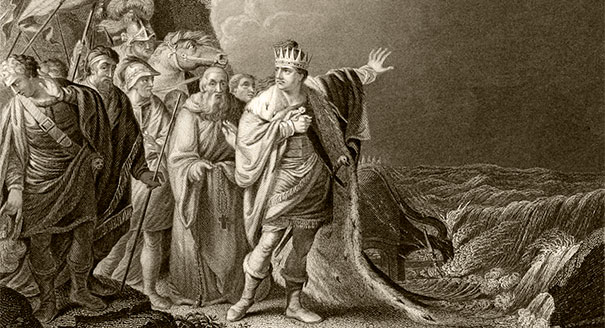
Source: Getty
The events of the last four years in Russia show that its fabled stability and lack of change have stopped being the top political value. Today, the Russian regime is more ready than ever for transformation. Before, any decisions had to be approved by the president and were made at a snail’s pace because Putin had no time. Now, it’s the other way around: decisions are made quickly precisely because Putin has no time.
Russian President Vladimir Putin, recently re-elected for a fourth term, finalised the lineup of his new government and presidential administration in June. Many people expected that Putin would use the start of his new term to significantly refresh his staff, but no personnel revolution took place, and even officials whose fate had seemed sealed kept their jobs.
This lack of change in staffing is often explained as proof that the president has once again opted for stability, fearing radical change in his entourage. Yet falling back on the stability card could turn out to be a false premise that doesn’t explain the logic of the president’s actions and wrongly describes the nature of what is going on. There are reasons to believe that the Putin regime today is, on the contrary, more prepared than ever before for change, including within its staff.
The events of the last four years show that Russia’s fabled stability and lack of change have stopped being the top political value. Proof of this is the staff reshuffles of 2016, which significantly renewed the ruling elite and strengthened the trend of replacing Putin’s old associates with young technocrats who have nothing to do with Putin’s past. That process began after the annexation of Crimea in 2014, when the role of the siloviki in making state decisions increased dramatically, while that of civil institutions fell accordingly. At the same time, conflicts among the elites grew deeper, because Putin was distracted from internal affairs, which gave more autonomy to various factions. All of these were factors in the decision to revamp Putin’s entourage in 2016, and remained relevant in March at the time of his re-election.
A crucial development that demonstrates that the regime is prepared for personnel reshuffles and is generally less attached to stability is the unfreezing of banned topics and the move toward implementing reforms that Putin has been putting off for years. The domestic economic agenda has taken on political significance, and the state has begun slaughtering sacred cows with its proposals to raise the retirement age and reassess tax policy.
Let’s suppose that, despite the importance of carrying out pension reform today, Putin had the political choice not to raise the retirement age. In the media, there is an active discussion over the difference between the president’s current position and his position 13 years ago: in 2005, he dismissed the idea, saying, “I am against increasing the pension age, and while I am president, no such decision will be made.” His spokesman points out that the situation in the country has changed since then. But is that the only issue here?
One of the reasons for pension system reform is the president’s growing political confidence: his dependency on the mood of the electorate is decreasing, his fear of falling ratings is receding, and his feeling of control over the political situation is cementing. In a sense, Putin is being nationalized, and transforming from a political leader into an institution that belongs to the entire state mechanism.
In this situation, the president himself is beginning to reason not as a political leader running the state, but as the embodiment of that state, disregarding passing threats to concentrate on state priorities. This transformation, which has been underway since 2014, makes the regime capable of changes that it would not previously have undertaken.
It is also worth noting that for several years now, the topic of color revolutions has disappeared from Kremlin discourse, having lost its status as chief bogeyman. The point is not that the Kremlin has stopped believing that the West is prepared to attempt regime change in Russia, but that the regime itself feels less vulnerable.
An interesting trend has appeared: after six years of the government failing to make significant decisions, the state has suddenly started to become increasingly dynamic. This concerns not only pension and tax reforms, but also the new presidential decrees issued in May, which appear to be far better thought through than those signed in May 2012, at the beginning of Putin’s third term.
Putin’s changed role has led to the gradual unfreezing of key administrative institutions. If before, any decisions had to be approved by the president and were made at a snail’s pace because Putin had no time, now it’s the other way around: decisions are made precisely because Putin has no time.
The president is increasingly inclined to delegate responsibility, and that means that the system’s overall volatility and dynamism will grow. When Putin’s spokesman Dmitry Peskov repeats that Putin is not involved in the pension reform, he isn’t just saving his boss from a hit to his popularity; he’s indulging in a bit of wishful thinking. The head of state doesn’t want to deal with raising the pension age, or getting bogged down in dull accounting calculations about pensioners. Putin has the luxury of being able to distance himself from making an unpopular decision, having chucked this hot potato over to the politically accountable government.
Delegating responsibility for untangling administrative knots is no longer the exception, but is becoming routine, which is impacting staffing policy. Another example of this is the revised approach to the informal system of running the North Caucasus: a region of critical importance for the stability of the Putin regime. A bold experiment with personnel is underway in Dagestan (the system of having quotas for different Dagestani ethnicities within the regional authorities has been scrapped, and the region now has its first non-Dagestani acting head, Vladimir Vasilyev), while federal siloviki are gaining influence there and powerful clans are being routed (as evidenced by the arrest of the wealthy Magomedov brothers). Such experiments are hard to describe as part of a stable staffing policy or fear of change.
The reappointment of people to Putin’s entourage who were widely expected to lose their posts is far from a refusal to make changes to staff, and certainly doesn’t come from a fear of change. The Russian regime today is readier than ever before for changes, and it needs them. Decisions concerning personnel are coming to a head in many areas, above all in the security forces and foreign policy blocs, both of which carry out the president’s basic administrative requirements.
The fact that Putin did not undertake the large-scale reshuffle that was expected immediately after his re-election does not mean he has no intention of doing so. The dynamic of decision-making in picking his lieutenants depends too much on the geopolitical context, and as far as Putin is concerned, there are different cycles in place here that have nothing to do with elections — or at least, with the Russian elections.

Senior Fellow, Carnegie Russia Eurasia Center
Tatiana Stanovaya is a senior fellow at the Carnegie Russia Eurasia Center.
Recent Work
Tatiana Stanovaya
Tatiana Stanovaya
Carnegie does not take institutional positions on public policy issues; the views represented herein are those of the author(s) and do not necessarily reflect the views of Carnegie, its staff, or its trustees.

A summer of escalation in the Black Sea has hurt Ukraine economically and is exacerbating world food security. A truce is needed—as is a broader reframing of Europe’s Ukraine strategy.

Thomas de Waal

As geopolitical rivalry weaponizes global supply chains, the EU’s true vulnerability lies in emerging-risk imports. For these goods, suppliers are growing more concentrated, substitution more difficult, and political risk is looming.

Sinan Ülgen
The EU is putting together a new security strategy to meet today’s myriad challenges. But for any proposal to be effective, the union needs to grapple with its identity and ambitions.

Pierre Vimont
Between the United States’ market-driven approach and China's state-led industrial strategy, Europe is reckoning with how it can remain competitive in the global economy. But is Europe in danger of becoming a U.S. or China colony?
Noah Barkin, Anu Bradford
The U.S.-sponsored TRIPP deal is driving the Armenia-Azerbaijan peace process forward. But foreign and domestic hurdles remain before connectivity and economic interdependence can open up the South Caucasus.

Thomas de Waal, Areg Kochinyan, Zaur Shiriyev