

Commentary
Russia is testing the waters of NATO’s mutual defense clause. What do strikes in Romanian and Bulgarian territorial waters mean for the alliance’s posture toward Moscow?
Dimitar Bechev
{
  "authors": [
    "James L. Schoff",
    "Feng Lin"
  ],
  "type": "legacyinthemedia",
  "centerAffiliationAll": "dc",
  "centers": [
    "Carnegie Endowment for International Peace",
    "Carnegie China"
  ],
  "collections": [],
  "englishNewsletterAll": "asia",
  "nonEnglishNewsletterAll": "",
  "primaryCenter": "Carnegie China",
  "programAffiliation": "AP",
  "programs": [
    "Asia"
  ],
  "projects": [],
  "regions": [
    "North America",
    "United States",
    "East Asia",
    "Japan"
  ],
  "topics": [
    "Foreign Policy"
  ]
}
Source: Getty
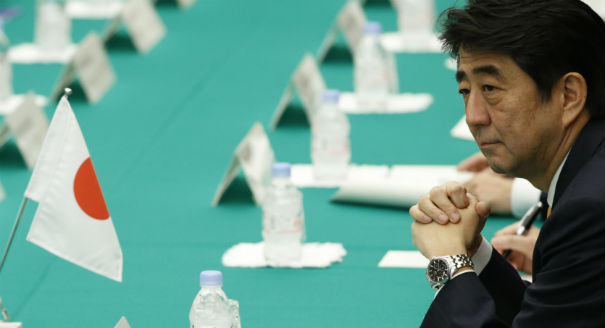
As Prime Minister Shinzo Abe meets with President Donald Trump again, it is important to also consider the implications of domestic political crises for the U.S.-Japan alliance in the long term.
Source: Diplomat
Japanese Prime Minister Shinzo Abe will return to Donald Trump’s “Winter White House” in Mar-a-Lago, Florida on April 17-18 for his third summit with the U.S. president. The meeting comes at a critical time: not only ahead of Trump’s planned talks with North Korean leader Kim Jong-un next month and amid early warning shots in a potential U.S.-China trade war, but also during a particularly weak phase of Abe’s political standing in Japan that have some wondering if this sixth year in power could be his last.
When Abe visited Mar-a-Lago last February, his cabinet’s approval rating hovered around 60 percent and all eyes were on the budding “Shinzo-Donald” relationship. Now Abe’s support has fallen to 38 percent (or less) and slipped below his disapproval rate. Although Trump fares no better in the polls, he is no longer a brand new president, and he appears more self-confident in the role.
It is worth considering what these two leaders’ political fortunes tell us about the long-term stability of U.S.-Japan alliance management and the mutual benefit it delivers, because this should always be the main agenda item for any summit. This time the key issues are mutual security reassurances and stepping away from trade protectionism, as we keep an eye on the underlying political dynamics in both countries.
Abe’s political standing in Japan is being undermined on multiple fronts. The government’s use of flawed data earlier this year stifled Abe’s signature effort for labor policy reform. Later, the Ministry of Finance’s alteration of documents related to a sweetheart land sale for people connected to Abe and his wife raised public suspicion of favoritism and a cover-up. Then the Ministry of Defense reported record-keeping failures and lapses of informing the legislature on Japan’s Self-Defense Force activities abroad, prompting further questions about the government’s trustworthiness and even its ability to exert civilian control of the military.
These governing snafus have implications for the future. In the short term, scandals at home divert Abe’s energy from vital foreign policy issues at hand, and they could lower his standing in the eyes of Trump. In the medium term, evaporating political support will diminish Abe’s chances of re-election this fall as the Liberal Democratic Party’s (LDP) president, which would mean a new prime minister and cabinet. Abe’s potential challengers from within the LDP, such as Shigeru Ishiba and Shinjiro Koizumi, have been openly critical of Abe’s leadership on these issues, joined of course by the political opposition.
Potentially more important and often overlooked, however, are longer-term implications of the current turmoil for public trust in government competence and its accountability to the people. It was concern in these areas that led to a previous erosion of support for the LDP in 2009 and ushered in a change of party power for only the second time in over 50 years, with the Democratic Party of Japan (DPJ) taking over. The DPJ failed the competence test, however, and three years later Abe and the LDP got a second chance. Abe has had a productive run, but he and the LDP must address recent shortcomings aggressively or risk a more substantial breakdown of public support.

Former Senior Fellow, Asia Program
James L. Schoff was a senior fellow in the Carnegie Asia Program. His research focuses on U.S.-Japan relations and regional engagement, Japanese technology innovation, and regional trade and security dynamics.
Feng Lin
Former James C. Gaither Junior Fellow, Asia Program
Carnegie does not take institutional positions on public policy issues; the views represented herein are those of the author(s) and do not necessarily reflect the views of Carnegie, its staff, or its trustees.

Russia is testing the waters of NATO’s mutual defense clause. What do strikes in Romanian and Bulgarian territorial waters mean for the alliance’s posture toward Moscow?

Dimitar Bechev

With its public finances in shambles, the far right polling at 35 percent ahead of the 2027 presidential election, and a growing protest movement, is France’s crisis a threat to the EU’s geopolitical awakening?

Rym Momtaz, ed.

Ahead of a tough winter for Ukraine, Donald Trump’s swing back toward Russia bodes ill. But instead of panicking, Kyiv’s European allies are focusing on action.
Rym Momtaz

Funding Ukraine remains a priority for European leaders. As Russia’s war of aggression heads into another winter, two feasible options to mobilize support for Kyiv should be fast-tracked.


Vladyslav Rashkovan, Gregory P. Wilson

While the EU and European governments are embracing the much-lauded middle-power moment, this entails three difficult conundrums.

Richard Youngs