

Article
Marc Pierini
{
  "authors": [
    "Marc Pierini"
  ],
  "type": "legacyinthemedia",
  "centerAffiliationAll": "dc",
  "centers": [
    "Carnegie Endowment for International Peace",
    "Carnegie Europe",
    "Malcolm H. Kerr Carnegie Middle East Center"
  ],
  "collections": [
    "Turkey’s Transformation"
  ],
  "englishNewsletterAll": "ctw",
  "nonEnglishNewsletterAll": "",
  "primaryCenter": "Carnegie Europe",
  "programAffiliation": "EP",
  "programs": [
    "Europe"
  ],
  "projects": [],
  "regions": [
    "Europe",
    "Türkiye",
    "Middle East",
    "Iran"
  ],
  "topics": [
    "Foreign Policy",
    "Political Reform"
  ]
}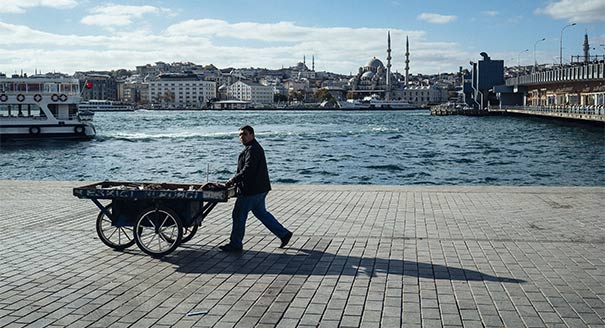
Source: Getty
For the citizens of Turkey, the upcoming elections boil down to a choice between a one-man-rule system with no checks and balances and a possible return to a more liberal and parliamentary system of governance.
Source: Axios
Turkey is slated to hold presidential and parliamentary elections on June 24. The current leadership has moved the vote forward by 16 months in the hopes of avoiding fallout from a badly deteriorating economy.
Why it matters: For Erdoğan, the combined elections are a matter of political survival after more than 15 years in power. For the opposition, they represent the first serious opportunity to send the incumbent president into retirement. For the citizens of Turkey, this boils down to a choice between a one-man-rule system with no checks and balances and a possible return to a more liberal and parliamentary system of governance.Turkey’s dual elections on Sunday are deeply flawed:
The possible outcomes:
The big picture: Most polls predict that Erdoğan will carry the presidency. In that event, liberties and tolerance in Turkey's diverse society would fall even further, followed by Turkey’s alliance with the West.

Senior Fellow, Carnegie Europe
Marc Pierini is a senior fellow at Carnegie Europe, where his research focuses on developments in the Middle East and Turkey from a European perspective.
Recent Work
Marc Pierini
Marc Pierini
Carnegie does not take institutional positions on public policy issues; the views represented herein are those of the author(s) and do not necessarily reflect the views of Carnegie, its staff, or its trustees.

Are Germany’s economic, industrial, and political struggles becoming a liability for the EU’s ability to rise to the geopolitical moment?

Rym Momtaz, ed.

European Commission President Ursula von der Leyen is about to give her annual address on the state of the EU. Here’s what she won’t—but should—say.
Rym Momtaz

Radical-right parties are expected to do well in upcoming elections in four of the EU's biggest member states. If successful, they could prevent the union from addressing key challenges ahead.

Stefan Lehne

The aftermath of the Ceuta crisis shows Europe has drawn the wrong lessons. Rather than doubling down on failed migration policies, the EU needs to address the underlying roots of such episodes.

Richard Youngs

An overwhelming victory by a far-right-wing party in a small state in eastern Germany will have major repercussions for Chancellor Friedrich Merz’s coalition.

Judy Dempsey