

Commentary
The European Commissioner for Trade is headed to China. But after President Xi’s bridge-building visit to Washington, can a more isolated EU overcome Beijing’s stranglehold on critical raw materials? Who will blink first?
Rym Momtaz, ed.
{
  "authors": [
    "Ivan Zuenko"
  ],
  "type": "commentary",
  "centerAffiliationAll": "",
  "centers": [
    "Carnegie Endowment for International Peace",
    "Carnegie Russia Eurasia Center"
  ],
  "collections": [
    "Pax Sinica"
  ],
  "englishNewsletterAll": "",
  "nonEnglishNewsletterAll": "",
  "primaryCenter": "Carnegie Russia Eurasia Center",
  "programAffiliation": "",
  "programs": [],
  "projects": [],
  "regions": [],
  "topics": [
    "Economy"
  ]
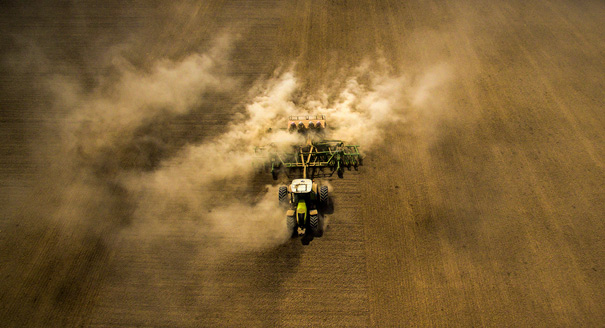
}
Source: Getty
The trade war with the United States has piqued China’s interest in Russian soybean imports. Russian officials are optimistic about the prospects of increasing soy exports to China, but their expectations are unrealistic.
This summer, in response to U.S. President Donald Trump’s tariffs on China, Beijing imposed tariffs on 659 American imports—including soybeans, of which it is the world’s largest consumer. Yet it depends heavily on imports of the oilseed, particularly from the United States. Beijing’s 25 percent tariff jeopardizes U.S. soy exports to China, which amount to 70 million tons a year and were worth $12 billion last year. Soybeans account for a critically important 60 percent of U.S. agricultural exports to China.
Could Russia provide China with more soybeans? Last year, Russia exported only 850,000 tons of soy to China. But some Russian officials are predicting that soy production could grow to meet Chinese demand. They say the Russian Far East has the perfect climate for soy cultivation, and given its proximity to China, shipping distances would be much shorter than from Brazil, the main substitute producer.
The Russian authorities have created preferential programs and investment structures to attract investments to the Russian Far East, including in agriculture. Valery Dubrovsky, head of the Far East Investment and Export Agency, stated that Russia expects an increase in foreign investment—around 50 percent of which would come from China—for developing 1 million hectares of farmland.
Yet Dubrovsky’s statements have elicited sarcastic smiles from regional agricultural experts. While the Russian Far East is often pictured as an endless expanse of pristine territory, the region lacks the capacity to significantly increase agricultural production, particularly in soybeans.
There is little additional arable land in the region, which is largely mountainous and swampy. Much of the fertile land is located in river basins and quickly floods during frequent typhoons.
At best, 50,000 to 70,000 hectares of uncultivated arable land are available in the Primorsky region and 150,000 to 200,000 hectares in the Amur province. In the Khabarovsk region and the Jewish Autonomous Oblast, even less land is available. Yet much of this land exists only as small plots, which cannot be combined into worthwhile agricultural enterprises without large-scale investment.
Land that would be suitable for soybean cultivation is already owned, and owners are not likely to sell their land at reasonable prices. Big players in agriculture, having invested heavily in their enterprises, are not going anywhere either.
The largest of these players is the national Rusagro Group. In recent years, Rusagro has aggressively entered the local market by purchasing land and leasing plots at inflated rates. Landowners who previously rented land at lower rates to the local Armada company (effectively a subsidiary company of Huasin, a Chinese border region corporation) preferred to do business with Rusagro. As a result, Armada lost its land leases and was forced to leave the agriculture sector.
Armada was the largest, most successful Chinese business affiliate in the Primorsky region. Now, foreign companies may find competing with companies like Rusagro more difficult—foreigners are not allowed to own land, and as a result of the Armada case, they may be hesitant to risk leasing land from local entities.
Furthermore, even if suitable land is available, it is expensive. In the Primorsky region, land costs 25,000 to 38,000 rubles per hectare. Foreign investors seeking to acquire land are often required to purchase all related infrastructure, including equipment and warehouses. Due to restrictions in Russian law on land ownership, foreign investors must find Russian proxy owners, who can be difficult to manage.
Converting existing farmland to soybean cultivation is also not a viable option. Soybeans are already cultivated on most arable land in the Russian Far East—soybeans occupy up to 70 percent of farmland in the Primorsky region. Russia produces four times as much soy as it did twenty years ago, because farmers have been drawn to the crop’s high profit margins.
In pursuit of profits, farmers have switched from growing wheat and oats to soybeans. Yet growing only soy could, paradoxically, decrease the productivity of the region’s soy cultivation.
Crop rotation is essential to replenish soil nutrients depleted by soy crops. But with fertilizers, farmers have been able to plant soybeans continuously for twenty years. In the Primorsky region, says agricultural policy official Vasily Tsybakov, farmers now use up to 300 kilograms of fertilizer per hectare, up from 70 kilograms in the past. They get more cash in advance from producers for their soy crops. But if they postpone soy crop rotation, they are causing problems for themselves as soil conditions deteriorate.
The construction of large meat and dairy processing plants—motivated by expectations of future demand from China—could also cause farmers in the Russian Far East to grow grains instead of soy. While meat and dairy exports to China are currently prohibited, they may resume as early as the end of this year.
In other words, soy production in the Russian Far East is already at its peak. Neither current producers like Rusagro nor potential Chinese investors will be able to increase soy production significantly in the near future.
With no land available and the industry at full capacity, it is irresponsible for officials to proclaim that increasing soy production is possible. They may promote the merits of agriculture in the Russian Far East with a flurry of meetings and press releases, but they do not reflect the realities on the ground.
Ivan Zuenko
Carnegie does not take institutional positions on public policy issues; the views represented herein are those of the author(s) and do not necessarily reflect the views of Carnegie, its staff, or its trustees.

The European Commissioner for Trade is headed to China. But after President Xi’s bridge-building visit to Washington, can a more isolated EU overcome Beijing’s stranglehold on critical raw materials? Who will blink first?

Rym Momtaz, ed.

The domestic impacts of how long it is taking to end the war in Ukraine have pushed the French electorate to the political extremes and compromised the country’s diplomatic capacity.
Rym Momtaz

A summer of escalation in the Black Sea has hurt Ukraine economically and is exacerbating world food security. A truce is needed—as is a broader reframing of Europe’s Ukraine strategy.

Thomas de Waal

As geopolitical rivalry weaponizes global supply chains, the EU’s true vulnerability lies in emerging-risk imports. For these goods, suppliers are growing more concentrated, substitution more difficult, and political risk is looming.

Sinan Ülgen
The EU is putting together a new security strategy to meet today’s myriad challenges. But for any proposal to be effective, the union needs to grapple with its identity and ambitions.

Pierre Vimont