

Commentary
Joseph Bahout
{
  "authors": [
    "Joseph Bahout"
  ],
  "type": "other",
  "centerAffiliationAll": "dc",
  "centers": [
    "Carnegie Endowment for International Peace",
    "Malcolm H. Kerr Carnegie Middle East Center"
  ],
  "collections": [],
  "englishNewsletterAll": "menaTransitions",
  "nonEnglishNewsletterAll": "",
  "primaryCenter": "Carnegie Endowment for International Peace",
  "programAffiliation": "MEP",
  "programs": [
    "Middle East"
  ],
  "projects": [],
  "regions": [
    "Middle East",
    "Lebanon",
    "Levant"
  ],
  "topics": [
    "Political Reform"
  ]
}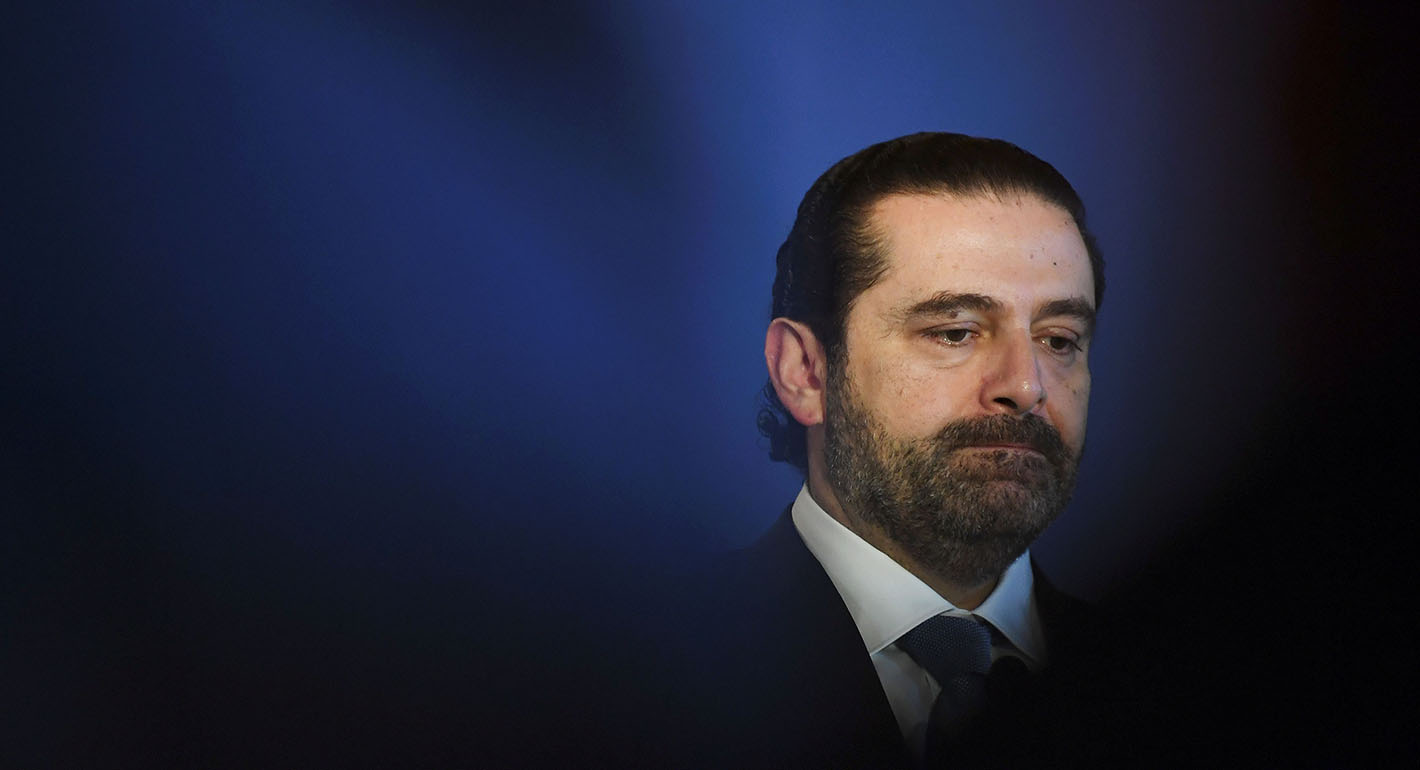
Source: Getty
The political landscape in the region, which is directly reflected in Lebanon, is now on the verge of being redesigned.
Source: Institut Montaigne
After being delayed five years in a row, parliamentary elections were finally held in Lebanon on May 6th 2018 - the first since 2009. While one might have expected the rapid formation of a new government following the elections, the process is still ongoing. Joseph Bahout, Senior Fellow at Carnegie Endowment in Washington DC, specialist of the Middle East, analyses the current situation.
After the elections, the presidential party's influence also decreased in Northern Lebanon and in Beirut, where the Lebanese Forces broke through, particularly in traditionally Aounist regions. Given these new dynamics, Aounists feared that the rival party would become dominant.
We also saw other things coming, but we had no idea they would gain such importance. The great novelty of this post-electoral situation is the return of the Syrian regime in the political game. It is now clear that the changing regional setting will increasingly influence the formation of the government. This will certainly become very obvious over time.
Moreover, one of the challenges of the election and of the formation of the government is that the presidency is willing to find a successor, as officially announced since 6 May. The presidential race has already begun within the Free Patriotic Movement, which already has a candidate: the President's son-in-law.
The scale of these factors increased significantly - much more than we could have imagined at the time of the elections, when we thought that the presidential compromise could continue to work and facilitate things. At the time, we believed that a government would be formed fairly quickly. Yet the obstacles encountered are bigger than expected, which makes the formation of a government more complex. The latter will obviously take a long time as increasingly important regional parameters have been gradually added to the process. Among them, American firmness towards Iran, greater Saudi firmness in Lebanon, as well as the International Court of Justice in The Hague, which, a few days ago, reopened the case on Rafik Hariri’s death in 2005. Taking into account the different presidential trips planned in the coming weeks, the formation of the government will most probably be postponed until October or November.
Some issues surfaced very quickly. Initially, the President, who was implicitly supported by Hezbollah, and his Aounist entourage hinted that agreements had been made before the election, notably between Hariri, Aoun and Geagea, who could have been the key players in the formation of the new government. When the election results came out, however, the government had not choice but to take a new circumstance into account, i.e. Hariri’s weakening. The latter is what led to the strengthening of power, and is what encourages Aoun to confront Hariri with rival Sunnis, which had never occurred in the political landscape before. Moreover, since the elections, the Syrian regime has made it very clear that it would not facilitate the formation of the government if Hariri did not commit to restoring an entirely normal relationship with Syria.
On the other hand, there is a latent, somewhat ongoing suspicion that Michel Aoun - with the support of Hezbollah - has a political plan regarding the formation of the government, and that his goal is to modify the Taif Agreement. His opponents are worried about this potential change of past policies, because such a transformation would aim to create a ministerial bloc in favor of the President. This is what led rivals - Walid Jumblatt, Nabih Berri and Samir Geagea - to form an alliance, in order to defend the Taif Agreement’s achievements and to avoid a dangerous imbalance.
The political landscape in the region, which is directly reflected in Lebanon, is now on the verge of being redesigned.
What is happening at the Syrian and regional level is key to understanding the government formation deadlock - more so than what is happening at the Lebanese national level, which is a reality but is adorned with false pretenses, alibis and pretexts that are not always watertight. It is therefore important to focus on the enormous transformation caused by the power struggle currently playing out in the region, the repercussions of which can be anticipated in Lebanon.
Three different elements can be distinguished. First, everyone knows, at least implicitly, that America is attempting to significantly weaken Iran. The regional power balance may change in the coming months, and what will come out of it remains unknown. Then, paradoxically, the evolution of the Syrian battlefield is increasingly turning to the regime’s advantage. Indeed, the end of the Battle of Idlib is expected to have a very clear consequence: the surrender of the opposite side. Given these unresolved issues, no one in Lebanon is keen to establish a government. The third important factor is the end of the hearings of the Special Tribunal for Lebanon (STL) expected by the end of September, four years after the opening of the trial of the assassinations of former Prime Minister Rafik Hariri and others in 2005. This trial’s stakes are high for Hariri as he awaits to see whether or not Hezbollah will be openly accused as the main perpetrator of these murders. This international decision would once again rebalance the power dynamics within the Lebanese political class.
It is therefore in everyone's interest today to play for time. The only pressing element is the economic factor, which could be well be the system’s death knell.
Yet banking on time is not necessarily a great strategy for Michel Aoun, insofar as waiting for the appointment of the new government undermines his presidential mandate, based on the slogan of a strong presidency. Considerations regarding the regional situation therefore lead us back to the hovering domestic question of the presidential election. According to Gebran Bassil, who has taken over the leadership of Michel Aoun's party, the government must reflect his inexorable rise to power, not alter his legitimacy. Yet today, with this caretaker government the Lebanese people are now so familiar with, the President finds himself in a contradictory position. He is indeed deprived of an executive - according to the Taif Agreement, executive power belongs to the Council of Ministers as a whole, not to the presidency.
This article was originally published in Institut Montaigne.
Former Nonresident Fellow, Middle East Program
Joseph Bahout was a nonresident fellow in Carnegie’s Middle East Program. His research focuses on political developments in Lebanon and Syria, regional spillover from the Syrian crisis, and identity politics across the region.
Recent Work
Joseph Bahout
Joseph Bahout
Carnegie does not take institutional positions on public policy issues; the views represented herein are those of the author(s) and do not necessarily reflect the views of Carnegie, its staff, or its trustees.

A notable degree of participative democracy has firmly arrived in Europe. But to have more far-reaching impact, democratic deliberation needs to move into a radically new phase.

Richard Youngs

Before the next wave of EU enlargement takes place, the union needs to grapple with thorny questions of how power is distributed among its members.


Emil Sondaj Hansen, Ditte Brasso Sørensen

As the EU confronts profound challenges, several leaders have called for fundamental reform to the union’s model—but only modest, superficial changes have resulted. What if Europe really could be reimagined from zero today: What should such a redesigned European order look like?
Richard Youngs, ed.

The EU’s new migration policy is not suited to today’s realities. With climate change increasingly becoming a driver of displacement, Europe needs to rethink its deterrence-focused approach.

Shana Tabak
Europe seems to have accepted its sidelining in the Middle East. The EU must reassert its support for the international rules-based order and step up engagement.

Rym Momtaz