

Commentary
Andrei Kolesnikov
{
  "authors": [
    "Andrei Kolesnikov"
  ],
  "type": "commentary",
  "centerAffiliationAll": "",
  "centers": [
    "Carnegie Endowment for International Peace",
    "Carnegie Russia Eurasia Center"
  ],
  "collections": [
    "Inside Russia"
  ],
  "englishNewsletterAll": "",
  "nonEnglishNewsletterAll": "",
  "primaryCenter": "Carnegie Endowment for International Peace",
  "programAffiliation": "",
  "programs": [],
  "projects": [],
  "regions": [
    "Russia"
  ],
  "topics": [
    "Political Reform"
  ]
}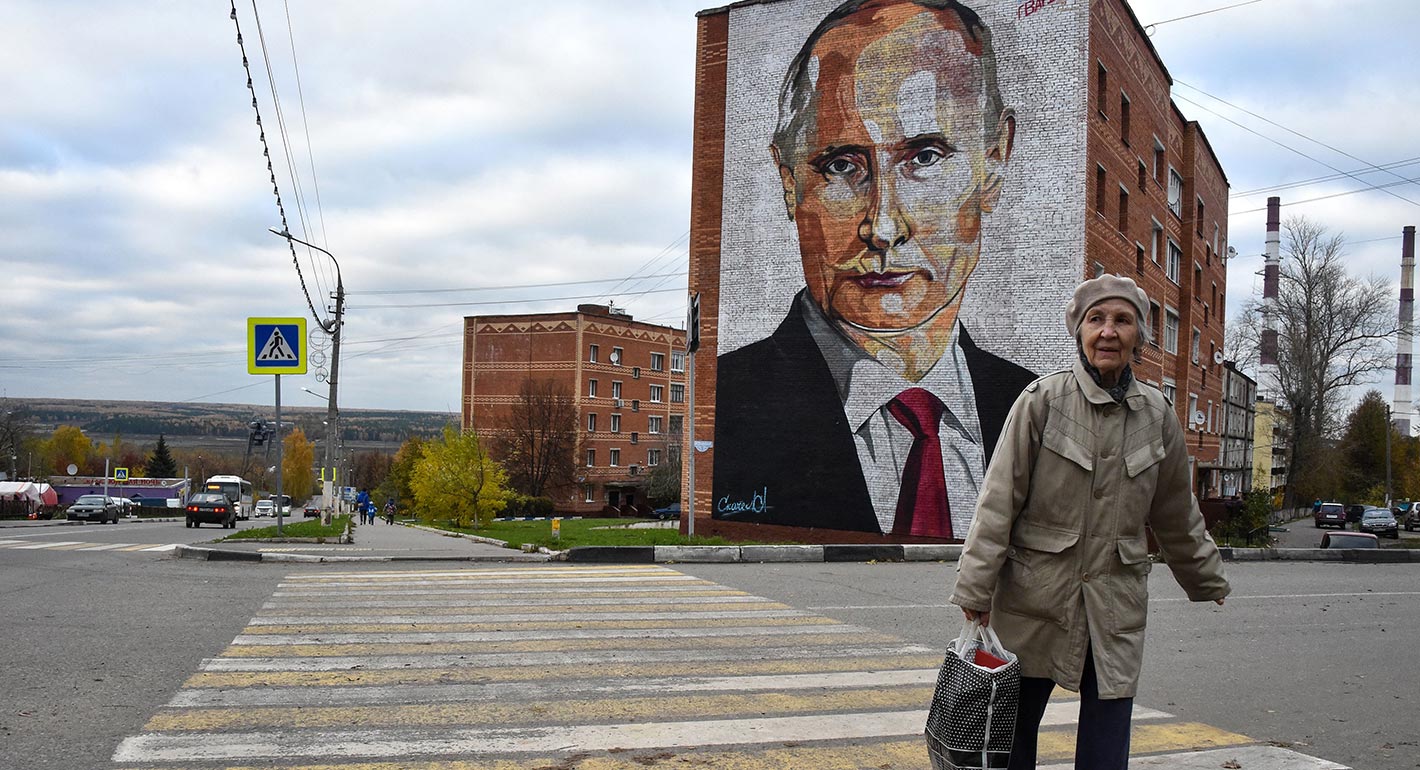
Source: Getty
Is Putin losing his touch? A new poll suggests that pension reform has damaged his approval ratings.
Russians’ trust in President Vladimir Putin has slumped. According to the most recent data (a September 2018 poll by the Levada Center) a disappointing 39 percent of Russians said they trusted Putin. This marks a 9 percent dip since June 2018 and a 20 percent plunge since November 2017.
Several more indicators suggest trouble, such as Putin’s falling approval ratings. In September 2018, 67 percent of Russians polled by the Levada Center said that they approved of the president’s activities in September 2018. That figure dropped from 82 percent in April and 79 percent in May.
In September 2018, 41 percent of Russians said they believed that the country was heading in the wrong direction, up from 26 percent in April following the presidential election. The same month, the Russian Army earned more confidence from the public than the president (as a state institution): 66 percent versus 58 percent.
The main reason for the slump in these ratings is the authorities’ proposal to increase the retirement age from 60 to 65 for men and from 55 to 60 for women.
This was an unexpected and blatant breach of Russia’s paternalistic, unwritten social contract: the people’s support in exchange for the government’s re-creation of imperial pride and provision of social benefits.
Admittedly, Putin had already lost some popularity before the announcement of the pension reform.
But after the hike in the retirement age in June, it became even more clear that he is not just a symbol—he also is the person responsible for implementing the most painful changes to Russia’s social welfare system in recent years.
Putin’s image and that of Mother Russia, which were synonymous, have now diverged for the first time since the annexation of Crimea in March 2014.
Putin can use his standard toolkit to reestablish his popularity: patriotism, militarism, whipped up external threats, and internal conflict with the so-called fifth column (people seen as undermining the country from within).
But the Crimea effect—the bump in nationalism after Russia annexed Crimea—has become routine, and many Russians feel fatigued by the permanent struggle with the West.
It’s symptomatic of this fatigue that the degree of hatred toward the United States among Russians has fizzled, from 69 percent in May 2018 to 40 percent in July. People are waiting for more friendly relations with the West.
Putin may have made Russia great again with his hawkish foreign policy, but many Russians feel it’s high time for him to focus on Russia’s domestic economic and social problems.
As a result, the options for boosting Putin’s popularity have narrowed. One thing is certain: the elites who support him will not try to make Russian politics more democratic nor try to modernize the state-driven economic system.
Former Senior Fellow, Carnegie Russia Eurasia Center
Kolesnikov was a senior fellow at the Carnegie Russia Eurasia Center.
Recent Work
Andrei Kolesnikov
Andrei Kolesnikov
Carnegie does not take institutional positions on public policy issues; the views represented herein are those of the author(s) and do not necessarily reflect the views of Carnegie, its staff, or its trustees.
Montenegro and Albania are frontrunners for EU enlargement in the Western Balkans, but they can’t just sit back and wait. To meet their 2030 accession ambitions, they must make a strong positive case.


Dimitar Bechev, Iliriana Gjoni
The U.S.-sponsored TRIPP deal is driving the Armenia-Azerbaijan peace process forward. But foreign and domestic hurdles remain before connectivity and economic interdependence can open up the South Caucasus.

Thomas de Waal, Areg Kochinyan, Zaur Shiriyev
The war in Ukraine is costing Russia its leverage overseas. Across the South Caucasus and Middle East, this presents an opportunity for Europe to pick up the pieces and claim its own sphere of influence.

William Dixon, Maksym Beznosiuk
Amid increased polarization and the influence of disinformation, radical-right parties are once again gaining traction across Europe. With landmark elections on the horizon in several countries, are the EU’s geostrategic vision and fundamental values under existential threat?


Catherine Fieschi, Cas Mudde

French President Emmanuel Macron has unveiled his country’s new nuclear doctrine. Are the changes he has made enough to reassure France’s European partners in the current geopolitical context?

Rym Momtaz, ed.