

Commentary
John Kerry
{
  "authors": [
    "John Kerry"
  ],
  "type": "legacyinthemedia",
  "centerAffiliationAll": "dc",
  "centers": [
    "Carnegie Endowment for International Peace"
  ],
  "collections": [],
  "englishNewsletterAll": "ctw",
  "nonEnglishNewsletterAll": "",
  "primaryCenter": "Carnegie Endowment for International Peace",
  "programAffiliation": "SCP",
  "programs": [
    "Sustainability, Climate, and Geopolitics"
  ],
  "projects": [],
  "regions": [
    "North America",
    "United States"
  ],
  "topics": [
    "Political Reform",
    "Climate Change"
  ]
}
Source: Getty
Scientists tell us we must act now to avoid the ravages of climate change. If we fail, future generations will judge us all as failures, not just this president.
Source: New York Times
This week is the third anniversary of the Paris climate agreement. The Trump administration marked it by working with Russia and Gulf oil nations to sideline science and undermine the accord at climate talks underway in Katowice, Poland.
While I was in New Delhi this week, where I met with solar energy advocates, a comment made thousands of miles away by the journalist Bob Woodward almost jumped off my iPad: The president, he said, “makes decisions often without a factual basis.” This isn’t a mere personality quirk of the leader of the free world. It is profoundly dangerous for the entire planet.
Scientists tell us we must act now to avoid the ravages of climate change. The collision of facts and alternative facts has hurt America’s efforts to confront this existential crisis. Ever since Mr. Trump announced that he would pull America out of the Paris accord, those of us in the fight have worked to demonstrate that the American people are still in.
But the test is not whether the nation’s cities and states can make up for Mr. Trump’s rejection of reality. They can. The test is whether the nations of the world will pull out of the mutual suicide pact that we’ve all passively joined through an inadequate response to this crisis.
Talk to leaders who are gathered in Poland. They acknowledge that we aren’t close to getting the job done in reducing the greenhouse gas emissions that warm the planet. People are dying today because of climate change, and many more will die and trillions of dollars of damage to property will occur unless America gets back in the fight.
The evidence is hard to miss. Fifteen of the biggest fires in California history have occurred in the past 18 years. We roll our eyes when the president suggests “raking” the forest is the answer. But clever internet memes don’t help when the stakes are this high.
Hurricanes Maria, Harvey and Irma cost the United States some $265 billion in damages. Historic droughts are matched by historic floods. Heat waves stole 153 billion hours of labor globally last year. Infectious diseases are moving into new areas and higher altitudes. Crop yields are down in more than two dozen countries, and by 2050 the Midwestern United States could see agricultural productivity drop to its lowest level in decades. But this is a mere preview of what’s to come.
The latest report by the Intergovernmental Panel on Climate Change warned that the changes required to hold global warming to 2.7 degrees Fahrenheit (1.5 degrees Celsius), as called for in the Paris agreement, would require changes on a scale with “no documented historic precedent.”
Every day we lose ground debating alternative facts. It’s not a “he said/she said” — there’s truth, and then there’s Mr. Trump. Even the recent congressionally mandated climate assessment warns that “with continued growth in emissions at historic rates, annual losses in some economic sectors are projected to reach hundreds of billions of dollars by the end of the century — more than the current gross domestic product of many U.S. states.”
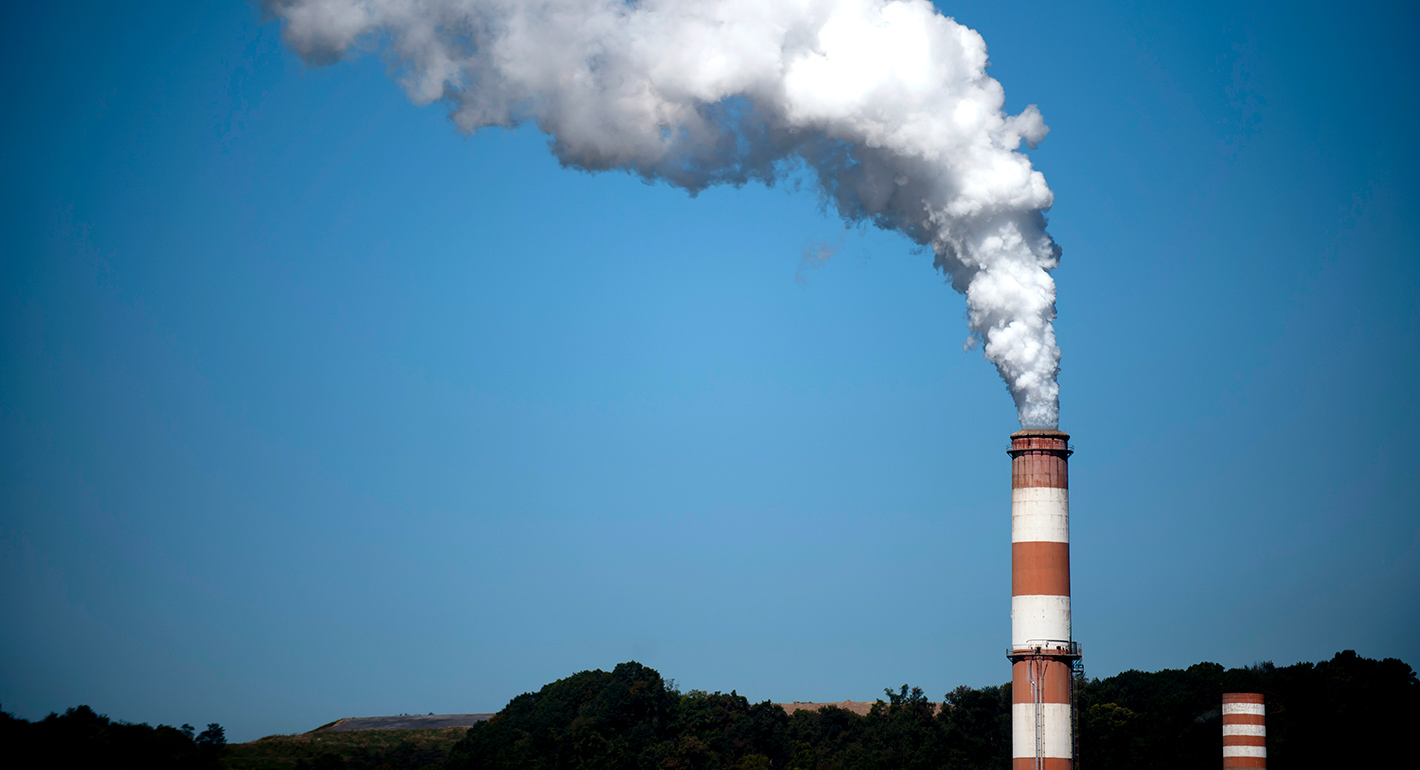
Emissions are forecast to go up by 2.7 percent worldwide this year. Instead of reining them in, the Trump administration would unleash more by replacing the Clean Power Plan with a rule that could allow power plants to unload 12 times more carbon dioxide in the atmosphere. Instead of controlling fuel emissions, the administration is rolling back fuel economy standards that the auto industry had embraced. Instead of keeping a lid on methane, it’s making it more likely that this potent greenhouse gas will leak into the atmosphere.
Future generations will measure us by whether we acted on facts, not just debated or denied them. The verdict will hang on whether we put in place policies that will drive the development and deployment of clean technologies, re-energize our economies, and tackle global climate change. Every day that goes by that we’re paralyzed by the Luddite in the White House is a day in the future that our grandchildren will suffer. That’s not hyperbole — that’s science.
Instead of tacitly accepting that inaction is preordained for the remaining two years of the Trump presidency, Congress should send Mr. Trump legislation addressing this crisis. It will force him to make choices the American people will long remember: Will he say no to deploying solar technology that would turn the American West into the Saudi Arabia of solar? No to turning the Midwest into the Middle East of wind power? No to a manufacturing revolution that could put West Virginia back to work in ways that his beloved coal never will?
Make him choose — and let’s find out.
Senator Chuck Schumer, the Democrat from New York and Senate minority leader, is right to demand that infrastructure legislation actually hasten the transition to a clean energy economy and increase climate resilience. In soon-to-be Speaker Nancy Pelosi, he has a partner who wrangled the votes in the House in 2009 to pass a landmark cap-and-trade program to limit emissions of heat-trapping gases (though it never made it out of the Senate), and can join him in seeking investments in low carbon infrastructure. And if Mr. Trump says no, make climate change the galvanizing issue for 2020 for millennials who will vote as if their lives depend on it — because they do.
If we fail, future generations will judge us all as failures, not just this president. They will have no time for excuses. Facts matter. Act on them.
This article was originally published by the New York Times.
Nonresident Scholar, Sustainability, Climate, and Geopolitics Program
John Kerry is a nonresident scholar the Carnegie Endowment for International Peace.
Recent Work
John Kerry
John Kerry
Carnegie does not take institutional positions on public policy issues; the views represented herein are those of the author(s) and do not necessarily reflect the views of Carnegie, its staff, or its trustees.

Trump is distracted and Ukraine wants Europe to step up. The continent’s leaders must find their voice and assert it in talks with Russia.

Alissa de Carbonnel
Over the past ten years, NATO has held almost as many summits as it did during the entirety of the Cold War. Are they still useful, or is it time to stop holding annual meetings?

Rym Momtaz, ed.

As the EU confronts profound challenges, several leaders have called for fundamental reform to the union’s model—but only modest, superficial changes have resulted. What if Europe really could be reimagined from zero today: What should such a redesigned European order look like?

Richard Youngs, ed.

Nearly a year and a half after Europeans leaned into sucking up to Trump, the strategy has produced some benefits when it comes to Ukraine.
Rym Momtaz

Autonomous AI agents are increasingly prevalent in cyberspace. The EU needs a real-time monitoring strategy, to invest in AI defenses, and to reduce its strategic dependence on U.S. frontier models.


Raluca Csernatoni, Patryk Pawlak