

Q&A
Paul Haenle, Philippe Le Corre
{
  "authors": [
    "Philippe Le Corre"
  ],
  "type": "legacyinthemedia",
  "centerAffiliationAll": "dc",
  "centers": [
    "Carnegie Endowment for International Peace"
  ],
  "collections": [],
  "englishNewsletterAll": "asia",
  "nonEnglishNewsletterAll": "",
  "primaryCenter": "Carnegie Endowment for International Peace",
  "programAffiliation": "AP",
  "programs": [
    "Asia",
    "Europe"
  ],
  "projects": [],
  "regions": [
    "East Asia",
    "China",
    "Western Europe",
    "France",
    "Iran"
  ],
  "topics": [
    "Political Reform",
    "Global Governance",
    "Foreign Policy"
  ]
}
Source: Getty
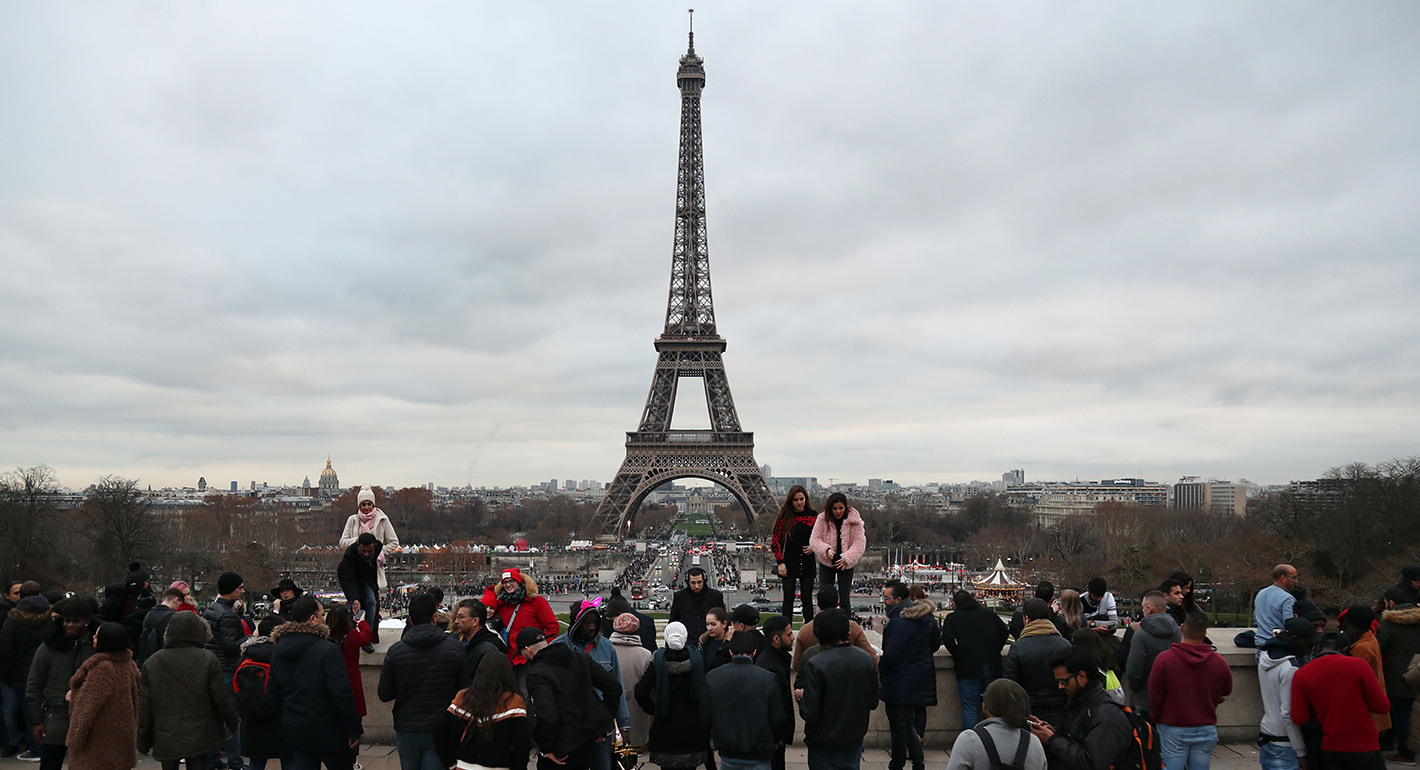
Sino-French relations are on the rise, but there are still doubts about long-term collaboration between France and China.
Source: South China Morning Post
Across Europe, people are starting to acknowledge the rise of China as a new global player. No matter what the political and economic uncertainties might be, citizens are becoming accustomed to a growing and assertive China.
A recent survey conducted in France by Kantar Public for the think tank Institut Montaigne suggested that French people are increasingly aware of this rise, and not necessarily in a negative way.
For example, China is only perceived as a threat by 31 per cent of the respondents, against 35 per cent for the United States and 44 per cent for Russia, two nations traditionally better-known to the French.
In addition, 81 per cent perceive China as an influential country in the world, and 47 per cent think of it as an influencer in France (13 per cent even see it as “very influential” at home). Compared with 10 years ago, there is just much more China-related activity in the media, business and world affairs.
China is now seen as a political, economic, scientific and technological power, with only 6 per cent of respondents describing it as a “manufacturing country, offering low-cost manufactured goods”. In the eyes of many, China has reached power status.
The most striking aspects are related to the economy. As Chinese “counters” in department stores and high-scale boutiques multiply, a majority of French people are aware of the benefits their country is getting from Chinese tourists (2 million visitors in 2017).
No less than 78 per cent of the respondents see this Chinese influx as a positive. The Ile de France region, and especially Paris, is benefiting a lot from Chinese tourists, with an average spending of €3,400 (US$3,865) per person per visit.
In the Paris region alone, 84 per cent see Chinese tourism as positive; in southwest France, where several hundred vineyards have been bought by Chinese acquirers, 66 per cent of respondents see it as positive. Other regions seem more doubtful.
Will it lead to a more long-term Chinese presence in France? Not necessarily. The topic of Chinese investments in France appears controversial, as 50 per cent of those surveyed hold a negative perception.
This may be due to the lack of visible progress of Chinese projects in France. For example, plans for industrial estates (in Chateauroux, central France, or in Mulhouse, in the east) were publicly announced in the last decade without being implemented.
Few French jobs have been created by Chinese companies; and in some cases, such as the massive dairy factory of Carhaix acquired by Synutra in 2013, the Chinese buyer is now renegotiating its involvement, leading to more doubts among locals.
There are also concerns about technology transfers.
One interesting side aspect of the survey is that the French perceive their country as lagging behind China in the fields of digitalisation and technology (47 per cent believe China is “ahead of France” in these fields, while 19 per cent think “France is ahead of China” and 29 per cent “neither France or China”).
There is also a generational gap on this question: 55 per cent of people aged 35 and below think China is “ahead of France” (65.2 per cent of those aged between 18-24). It means the highly digitalised, young French generation might be more willing to engage with China than their parents.
In France, brands such as WeChat, Weibo, Baidu, JD, Tencent or Alibaba (the owner of the South China Morning Post) have become better known to the general public.
As China’s digital sector keeps booming, celebrity CEOs such as Jack Ma, Pony Ma or Robin Li have become recognised names among the French elites.
Chinese companies in general are also more visible, although it is not clear if it will lead to more opportunities for the French in terms of jobs and business.
In addition, China is seen as one of the leaders of research in artificial intelligence: 50 per cent of global investment in that field is made in China.
The government has included AI in its “Made in China 2025” programme, alongside semiconductors, electric cars, aviation and biotechnology.
French engineers might see China’s rise in technology as an opportunity, rather than a threat.
The French are somewhat ambivalent when it comes to dealing with this new power: should the right approach be at EU-level or national government level?
In 2018, France had a €€30 billion trade deficit with China (while the EU as a whole has a €176 billion trade deficit).
The sample does not seem to hold a clear view of the EU’s China policy, including the foreign investment screening mechanism adopted by the European Parliament late last year.
Nor do people understand Brussels’ key roles in trade and intellectual property matters. Relations between China and the EU are seen as “unbalanced” by 47 per cent of the respondents, while 14 per cent only are calling them “balanced”. At the same time, the French want their “special relationship” with China to be maintained.
After all, France was the first leading Western European nation to establish diplomatic relations with China in 1964, leading the two countries to engage more closely than others (for example, both are permanent members of the UN Security Council).
Still, the French are pro-European and they want to be able to leverage their EU role when dealing with powerful countries, including Russia, the US and China.
The French survey is a clear expression of a changing China in Western eyes, although French elites – government, business leaders and those interacting with Beijing on a regular basis – might have different views.
In other words, Sino-French relations are on the rise, but there are still doubts about long-term collaboration between countries of the Western-led international order – including France – and the aspiring super power, China.
This article was originally published by the South China Morning Post.
Former Nonresident Senior Fellow, Europe Program
Philippe Le Corre was a nonresident senior fellow in the Europe Program at the Carnegie Endowment for International Peace.
Recent Work

Paul Haenle, Philippe Le Corre

Erik Brattberg, Philippe Le Corre, Paul Stronski, …
Carnegie does not take institutional positions on public policy issues; the views represented herein are those of the author(s) and do not necessarily reflect the views of Carnegie, its staff, or its trustees.

Ahead of a tough winter for Ukraine, Donald Trump’s swing back toward Russia bodes ill. But instead of panicking, Kyiv’s European allies are focusing on action.

Rym Momtaz

Funding Ukraine remains a priority for European leaders. As Russia’s war of aggression heads into another winter, two feasible options to mobilize support for Kyiv should be fast-tracked.


Vladyslav Rashkovan, Gregory P. Wilson

While the EU and European governments are embracing the much-lauded middle-power moment, this entails three difficult conundrums.

Richard Youngs

Europe is facing rising populism internally as well as external pressures from Russia, China, Turkey, and the United States.

Dimitar Bechev

A notable degree of participative democracy has firmly arrived in Europe. But to have more far-reaching impact, democratic deliberation needs to move into a radically new phase.
Richard Youngs