

Paper
Eugene Rumer, Richard Sokolsky
{
  "authors": [
    "Richard Sokolsky"
  ],
  "type": "other",
  "centerAffiliationAll": "",
  "centers": [
    "Carnegie Endowment for International Peace"
  ],
  "collections": [],
  "englishNewsletterAll": "",
  "nonEnglishNewsletterAll": "",
  "primaryCenter": "Carnegie Endowment for International Peace",
  "programAffiliation": "",
  "programs": [],
  "projects": [],
  "regions": [
    "North America",
    "United States",
    "East Asia",
    "South Korea"
  ],
  "topics": [
    "Security",
    "Foreign Policy"
  ]
}
Source: Getty
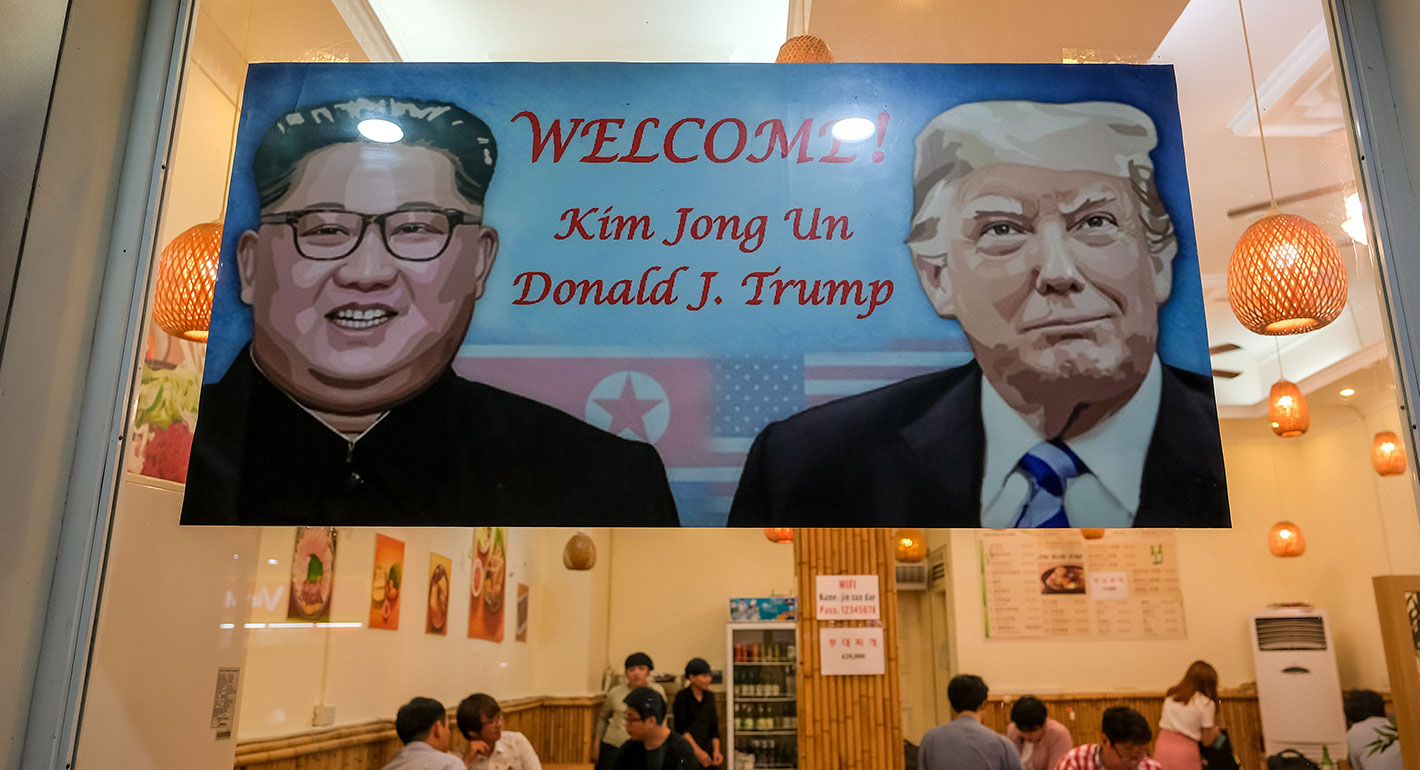
Washington and Seoul must agree on the purpose of their alliance if it is no longer needed to deter aggression by a hostile North Korea. Reaching a consensus on this question will not be easy.
Source: 38 North
Further progress toward building a permanent peace and security regime for the Korean Peninsula will require, at least in the short-run, heavy lifting from North and South Korea if the Trump administration continues to thwart progress on a declaration officially ending the Korean War and other steps to lower tensions and build trust on the peninsula.1 If the two Koreas are successful in moving toward a peace treaty, or if the Trump administration decides to pull US troops out of South Korea, Washington and Seoul will need to take a hard look at adapting the US-South Korean alliance to changing geopolitical dynamics in the region. In the event that US troops leave South Korea, there are alternative security and military arrangements the two countries can and should adopt if North Korea ceases to be a military threat and enduring North-South reconciliation is achieved. These changes are feasible and affordable and would maintain stability and the balance of power in Northeast Asia. Before they are implemented, however, Washington and Seoul must first agree on the purpose of their alliance if it is no longer needed to deter aggression by a hostile North Korea. Reaching a consensus on this question will not be easy.
1 This report is adapted from a previous article by the author and Daniel R. DePetris published on 38 North on November 15, 2018, entitled, “Imagining a New US-South Korean Security Architecture.”

Nonresident Senior Fellow, Russia and Eurasia Program
Richard Sokolsky is a nonresident senior fellow in Carnegie’s Russia and Eurasia Program. His work focuses on U.S. policy toward Russia in the wake of the Ukraine crisis.
Recent Work
Eugene Rumer, Richard Sokolsky
Eugene Rumer, Richard Sokolsky
Carnegie does not take institutional positions on public policy issues; the views represented herein are those of the author(s) and do not necessarily reflect the views of Carnegie, its staff, or its trustees.
The full list of humiliations Europe has endured since Donald Trump returned to the White House makes for grim reading. But Washington’s adversarial approach to its allies undermines its own power base.

Rym Momtaz
The closure of the Strait of Hormuz has triggered a global energy crisis, but Europe is stuck in reaction mode. Without more strategic foresight, the EU will remain dependent on fossil fuels and will never be truly secure.


Milo McBride, Pauline Gerard
Debate is heating up on how Turkey could be integrated into a common European defense framework. Commercial and industrial deals offer a better chance at alignment than sweeping political efforts.

Marc Pierini
After spending much of 2025 trying to placate Donald Trump, some European leaders are starting to change posture. But is even a hostile Washington still so important to Europe that the U.S. president’s outbursts are worth putting up with?
Rym Momtaz, ed.
European leaders have now not only lost faith in Donald Trump’s U.S. presidency, but also in America’s hegemony as a whole. But short-term challenges make an immediate divorce unwise.
Rym Momtaz