
• Research
  • Strategic Europe
  • About
  • Experts
Carnegie Europe logoCarnegie lettermark logo
EUUkraine
  • Donate
{
  "authors": [
    "Anirudh Burman",
    "K.P. Krishnan"
  ],
  "type": "other",
  "centerAffiliationAll": "",
  "centers": [
    "Carnegie Endowment for International Peace",
    "Carnegie India"
  ],
  "collections": [],
  "englishNewsletterAll": "",
  "nonEnglishNewsletterAll": "",
  "primaryCenter": "Carnegie India",
  "programAffiliation": "",
  "programs": [],
  "projects": [
    "Political Economy"
  ],
  "regions": [
    "India"
  ],
  "topics": [
    "Domestic Politics",
    "Economy"
  ]
}

Source: Getty

Other
Carnegie India

Statutory Regulatory Authorities: Evolution and Impact

Statutory regulatory authorities are bound by the same principles of administrative law as other government agencies, as defined by the judiciary from time to time.

Link Copied
By Anirudh Burman and K.P. Krishnan
Published on Apr 4, 2019
Project hero Image

Project

Political Economy

This program studies contemporary developments in India’s political economy, with a view towards understanding and informing India’s developmental choices. Scholars in the program analyze economic and regulatory policies, design and working of public institutions, interfaces between politics and the economy, and performance of key sectors of the economy such as finance and land.

Learn More

Source: Hart Publishing

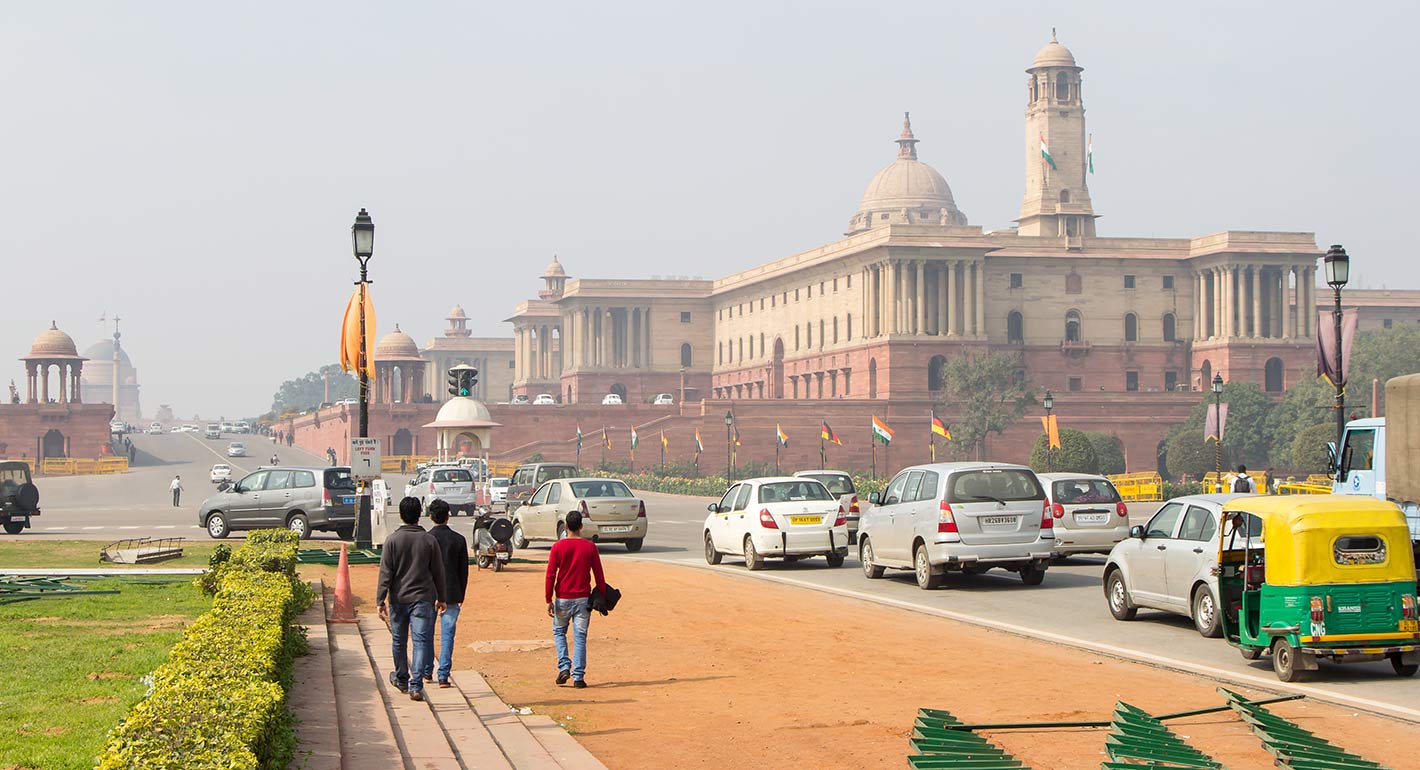
A number of statutory regulatory authorities have emerged in India since the 1990s. Statutes that have established regulators focus broadly on: (a) the design of the apex decision-making body (board or authority); (b) the substantive powers of the regulator, and; (c) accountability mechanisms such as audits, accounting and reporting. Such statutes are usually ‘thin’ on guidance to regulators on how to conduct their administrative functions. Consequently, statutory regulatory authorities are bound by the same principles of administrative law as other government agencies, as defined by the judiciary from time to time. However, independent regulators perform their functions in ways that are distinct from government departments.

First, statutory regulatory authorities concentrate legislative (regulation-making), executive (monitoring and supervision) and judicial (issuing orders) powers in contrast to the normal structure of government departments.1 This structure potentially violates the principle of separation of powers and affects the design of statutory regulatory authorities. Second, the frequency and volume of regulation-making is significantly higher due to the responsibility of regulators to react to dynamic market requirements. Third, there is an independent and specialised appellate mechanism against the regulatory actions of most regulators.

Read Full Text

This book chapter was originally published by Hart Publishing.

NOTES

1 See generally Financial Sector Legislative Reforms Commission, ‘Report of the Financial Sector Legislative Reforms Commission’, 2013, https://dea.gov.in/sites/default/files/fslrc_report_vol1_1.pdf.

About the Authors

Anirudh Burman

Former Associate Research Director and Fellow, Carnegie India

Anirudh Burman was an associate research director and fellow at Carnegie India. He works on key issues relating to public institutions, public administration, the administrative and regulatory state, and state capacity.

K.P. Krishnan

K.P. Krishnan is the secretary of the Ministry of Skill Development and Entrepreneurship of the Government of India.

Authors

Anirudh Burman
Former Associate Research Director and Fellow, Carnegie India
Anirudh Burman
K.P. Krishnan

K.P. Krishnan is the secretary of the Ministry of Skill Development and Entrepreneurship of the Government of India.

Domestic PoliticsEconomyIndia

Carnegie does not take institutional positions on public policy issues; the views represented herein are those of the author(s) and do not necessarily reflect the views of Carnegie, its staff, or its trustees.

More Work from Carnegie Europe

  • Commentary
    Strategic Europe
    How Europe Can Survive the AI Labor Transition

    Integrating AI into the workplace will increase job insecurity, fundamentally reshaping labor markets. To anticipate and manage this transition, the EU must build public trust, provide training infrastructures, and establish social protections.

      Amanda Coakley

  • EU democracy support policies
    Paper
    European Democracy Support Annual Review 2025

    European democracy support strategy in 2025 prioritized protecting democratic norms within Europe. This signals the start of a structural recalibration of the EU’s approach to democracy support.

      • Elena-Viudes-Egea
      • +6

      Richard Youngs, ed., Elena Viudes Egea, Zselyke Csaky, …

  • Commentary
    Strategic Europe
    Taking the Pulse: Can the EU Attract Foreign Investment and Reduce Dependencies?

    EU member states clash over how to boost the union’s competitiveness: Some want to favor European industries in public procurement, while others worry this could deter foreign investment. So, can the EU simultaneously attract global capital and reduce dependencies?

      • Rym Momtaz

      Rym Momtaz, ed.

  • Commentary
    Strategic Europe
    Europe Falls Behind in the South Caucasus Connectivity Race

    The EU lacks leadership and strategic planning in the South Caucasus, while the United States is leading the charge. To secure its geopolitical interests, Brussels must invest in new connectivity for the region.

      Zaur Shiriyev

  • Commentary
    Strategic Europe
    Taking the Pulse: Is It Time for Europe to Reengage With Belarus?

    In return for a trade deal and the release of political prisoners, the United States has lifted sanctions on Belarus, breaking the previous Western policy consensus. Should Europeans follow suit, using their leverage to extract concessions from Lukashenko, or continue to isolate a key Kremlin ally?

      Thomas de Waal, ed.

Get more news and analysis from
Carnegie Europe
Carnegie Europe logo, white
Rue du Congrès, 151000 Brussels, Belgium
  • Research
  • Strategic Europe
  • About
  • Experts
  • Projects
  • Events
  • Contact
  • Careers
  • Privacy
  • For Media
  • Gender Equality Plan
Get more news and analysis from
Carnegie Europe
© 2026 Carnegie Endowment for International Peace. All rights reserved.