

Paper
Erik Brattberg, Tomáš Valášek
{
  "authors": [
    "Tomáš Valášek"
  ],
  "type": "legacyinthemedia",
  "centerAffiliationAll": "",
  "centers": [
    "Carnegie Endowment for International Peace",
    "Carnegie Europe"
  ],
  "collections": [
    "EU Integration and Enlargement"
  ],
  "englishNewsletterAll": "",
  "nonEnglishNewsletterAll": "",
  "primaryCenter": "Carnegie Europe",
  "programAffiliation": "",
  "programs": [],
  "projects": [],
  "regions": [
    "Europe"
  ],
  "topics": [
    "EU"
  ]
}
Source: Getty
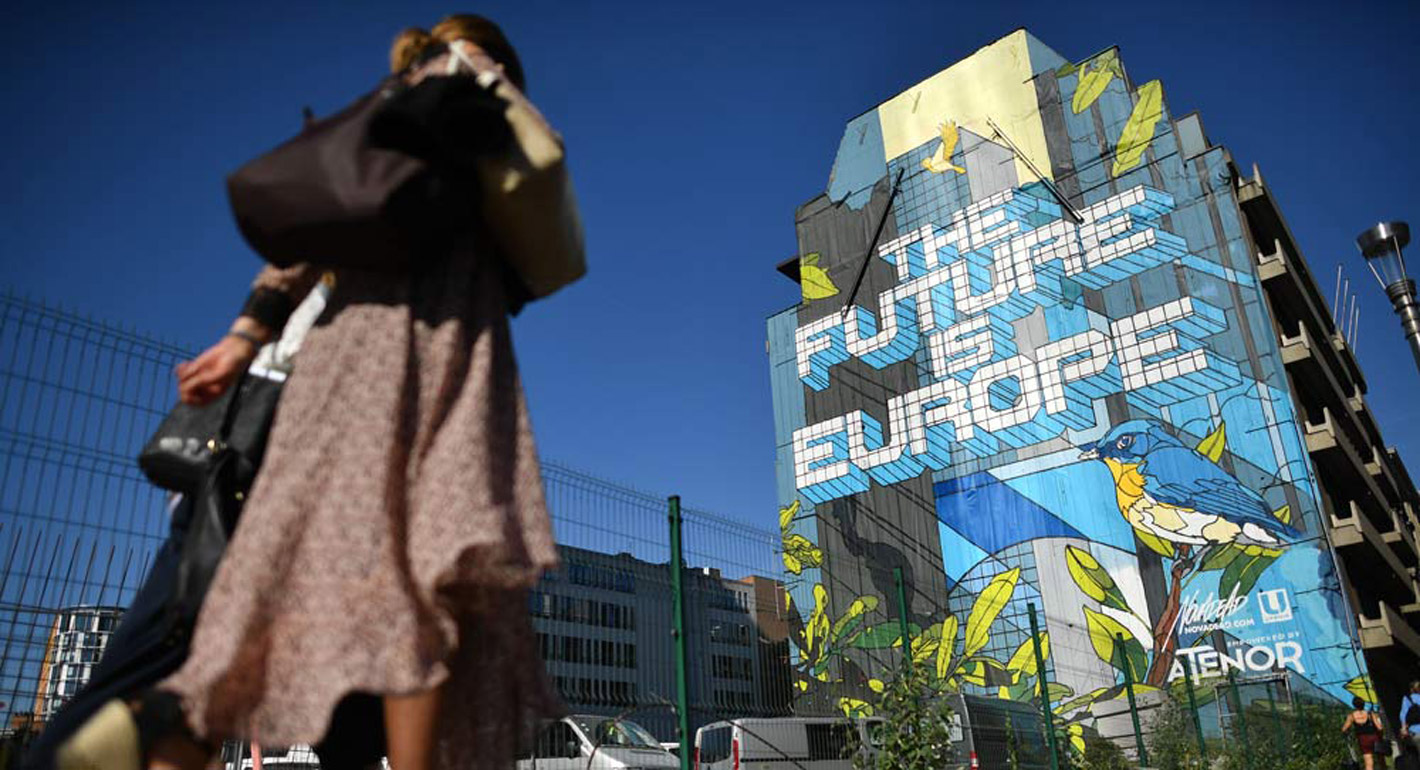
Fifteen years after the EU’s biggest expansion, Central Europe still doesn’t feel part of the club. The bloc can hope to survive the many forces trying to tear it apart only by repairing its fraught East-West relationship.
Source: Politico Europe
Fifteen years after Europe’s big-bang enlargement, the EU still feels like two halves rather than a whole.
Many Western Europeans still refer to the Central and Eastern European member states that joined in or after 2004 as “new,” implying a failure to become fully “European.” The Central and Eastern European countries, for their part, are increasingly less inclined to fall into line, with some, such as Hungary, making a virtue of rebelling against the EU’s status quo.
The situation has crippled the EU’s ability to respond to challenges to the rule of law in the region, effectively leaving its democrats out in the cold and exacerbating a worrying trend: Populists are on the rise in the region, and Western Europe’s response to domestic issues in their countries risks boosting them further.The feeling that the EU treats the post-2004 accession states as second-class citizens and fails to take them seriously is a major part of the appeal of Central Europe’s populists. This isn’t just something people in the region, far from Brussels, believe. It’s a common refrain among senior, accomplished EU officials from Central European states too.
So, how did we get here? Some of the responsibility can reasonably be laid at the feet of the accession states.
Many of their governments stayed stuck in a rule-taking mindset even after joining the EU; they became comfortable in their role as passengers rather than taking the wheel. Their lack of agency inevitably led to a backlash at home. It didn’t help that when governments did speak up — to oppose proposals for mandatory quotas on asylum seekers during the migration crisis, for example — the language they used bordered on racism.
And yet, the “older,” more established EU members are partly to blame, too.
In earlier rounds of enlargement, diplomats from Austria, Spain or Portugal were “chaperoned” by older states, who taught them the ropes when their countries joined the club. This didn’t happen in 2004, or afterward. Some new members quickly became accustomed to the thorny task of co-writing EU rules and policies, others did less well. Considering the steep learning curve, it’s hardly surprising some gave in to feelings of inferiority and, eventually, rebellion.
In hindsight, it’s easy to see that both parties underestimated just how different the 2004 enlargement process would be from previous rounds. In the past, enlargement was mainly about bringing in countries from the same Western political bloc — people had traveled to each other’s countries, knew each other’s traditions and histories in a way that is simply not true for the ex-Soviet bloc states.
That sense of otherness matters: We’re more inclined to be patient, seek common ground and make compromises with members of the same family. Outsiders, on the other hand, are prone to be treated with suspicion and prejudice. In the standoff between Brussels and members of Central Europe over the rule of law, it’s clear which approach is in play.
Far too many myths still plague Western-Central European relations. What many misunderstand is that the East-West divide is no more consequential than other such EU divides — between large and small countries, for example, or North and South. It is simply less well understood, owing to the two sides’ unfamiliarity with each other.
The good news is that it is not past time to repair the damage. While it is probably too late to try to resurrect “chaperoning” as a concept — 15 years after accession, Central European states would see it as presumptuous and condescending — a similar effect can be achieved by “twinning.” Central European governments could be nudged into joining up with other countries on EU policies where their interests overlap. This would give newer member states an added sense of control over their destinies in the EU — thus reducing the temptation to rebel — and have the added benefit of improving their reputation. As it stands, older EU members can too easily claim that Central Europeans prefer to block policy ideas over proposing their own.
Addressing the unfamiliarity that still holds back East-West relations will be a generational project. But steps such as making sure that textbooks in Central Europe say a lot more about Robert Schuman or Konrad Adenauer, while those in Western Europe introduce readers to József Antall or Lech Wałęsa could start making a difference within few years.
Only by repairing its fraught East-West relationship can the EU hope to survive the many forces trying to tear it apart.
Former Director, Carnegie Europe
Valášek was director of Carnegie Europe and a senior fellow, where his research focused on security and defense, transatlantic relations, and Europe’s Eastern neighborhood.
Recent Work

Erik Brattberg, Tomáš Valášek
Tomáš Valášek

Ahead of a tough winter for Ukraine, Donald Trump’s swing back toward Russia bodes ill. But instead of panicking, Kyiv’s European allies are focusing on action.

Rym Momtaz

Funding Ukraine remains a priority for European leaders. As Russia’s war of aggression heads into another winter, two feasible options to mobilize support for Kyiv should be fast-tracked.


Vladyslav Rashkovan, Gregory P. Wilson

While the EU and European governments are embracing the much-lauded middle-power moment, this entails three difficult conundrums.

Richard Youngs

Europe is facing rising populism internally as well as external pressures from Russia, China, Turkey, and the United States.

Dimitar Bechev

A notable degree of participative democracy has firmly arrived in Europe. But to have more far-reaching impact, democratic deliberation needs to move into a radically new phase.
Richard Youngs