

Q&A
Eugene Rumer
{
  "authors": [
    "Eugene Rumer"
  ],
  "type": "legacyinthemedia",
  "centerAffiliationAll": "dc",
  "centers": [
    "Carnegie Endowment for International Peace",
    "Malcolm H. Kerr Carnegie Middle East Center"
  ],
  "collections": [],
  "englishNewsletterAll": "ctw",
  "nonEnglishNewsletterAll": "",
  "primaryCenter": "Carnegie Endowment for International Peace",
  "programAffiliation": "russia",
  "programs": [
    "Russia and Eurasia"
  ],
  "projects": [
    "The Return of Global Russia: A Reassessment of the Kremlin’s International Agenda"
  ],
  "regions": [
    "Middle East",
    "North Africa",
    "Russia"
  ],
  "topics": [
    "Political Reform",
    "Foreign Policy"
  ]
}
Source: Getty
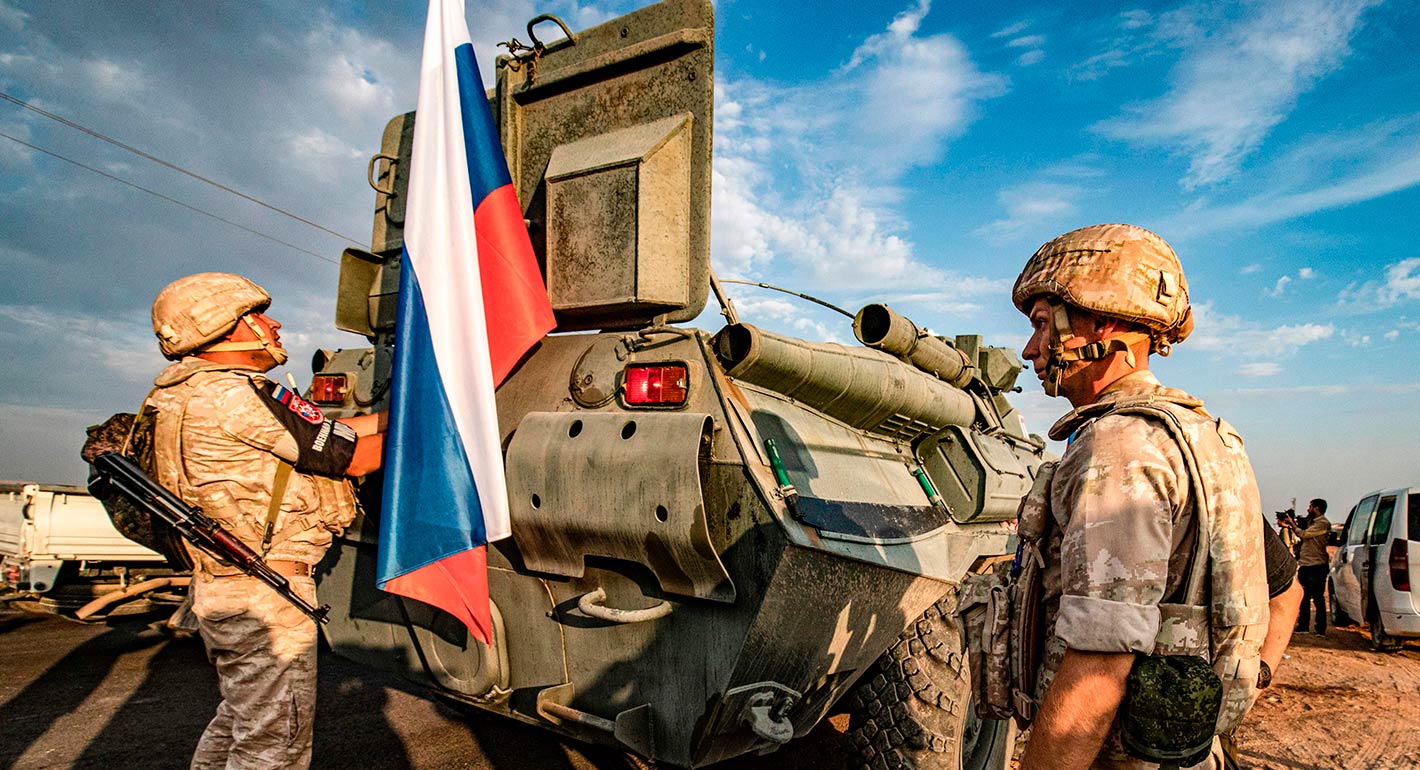
The reemergence of Russia as a major power broker in the Middle East is striking because for a quarter century after the Cold War, Russia had been absent from the region. But Russia’s absence, and not its return, is the anomaly.
Source: Foreign Affairs
Russia is on a roll in the Middle East. Russian airpower saved the Assad regime from certain defeat. Turkey and Israel must now accept the presence of Russian troops on their borders. Saudi Arabia has given Russian President Vladimir Putin the red-carpet treatment. And U.S. President Donald Trump thanked Putin for facilitating the operation to kill Abu Bakr al-Baghdadi, the leader of the Islamic State (or ISIS). Throughout the Middle East, from North Africa to the Persian Gulf, Russia is ubiquitous, with its high-level visitors, its weapons, its mercenaries, and its deals to build nuclear power plants. Russia has gotten involved in this region as the United States pulls back from it—a trend that even the success of the Baghdadi raid can do little to conceal.
The reemergence of Russia as a major power broker in the Middle East is striking not only in contrast with the United States’ erratic posture in the region but because for a quarter century after the Cold War, Russia had been absent from the region. But Russia’s absence, and not its return, is the anomaly....
Director and Senior Fellow, Russia and Eurasia Program
Rumer, a former national intelligence officer for Russia and Eurasia at the U.S. National Intelligence Council, is a senior fellow and the director of Carnegie’s Russia and Eurasia Program.
Recent Work
Eugene Rumer
Eugene Rumer
Carnegie does not take institutional positions on public policy issues; the views represented herein are those of the author(s) and do not necessarily reflect the views of Carnegie, its staff, or its trustees.

With its public finances in shambles, the far right polling at 35 percent ahead of the 2027 presidential election, and a growing protest movement, is France’s crisis a threat to the EU’s geopolitical awakening?

Rym Momtaz, ed.

Ahead of a tough winter for Ukraine, Donald Trump’s swing back toward Russia bodes ill. But instead of panicking, Kyiv’s European allies are focusing on action.
Rym Momtaz

Funding Ukraine remains a priority for European leaders. As Russia’s war of aggression heads into another winter, two feasible options to mobilize support for Kyiv should be fast-tracked.


Vladyslav Rashkovan, Gregory P. Wilson

While the EU and European governments are embracing the much-lauded middle-power moment, this entails three difficult conundrums.

Richard Youngs

Europe is facing rising populism internally as well as external pressures from Russia, China, Turkey, and the United States.

Dimitar Bechev