

Commentary
H. A. Hellyer
{
  "authors": [
    "H. A. Hellyer"
  ],
  "type": "legacyinthemedia",
  "centerAffiliationAll": "dc",
  "centers": [
    "Carnegie Endowment for International Peace"
  ],
  "collections": [],
  "englishNewsletterAll": "menaTransitions",
  "nonEnglishNewsletterAll": "",
  "primaryCenter": "Carnegie Endowment for International Peace",
  "programAffiliation": "MEP",
  "programs": [
    "Middle East"
  ],
  "projects": [],
  "regions": [
    "Middle East"
  ],
  "topics": [
    "Political Reform",
    "Security"
  ]
}
Source: Getty
Rather than reveling prematurely in the death of Baghdadi, the world would be well advised to consider carefully the conditions that led to his rise and how to ensure that they are prevented from ever arising again in the future.
Source: Foreign Policy
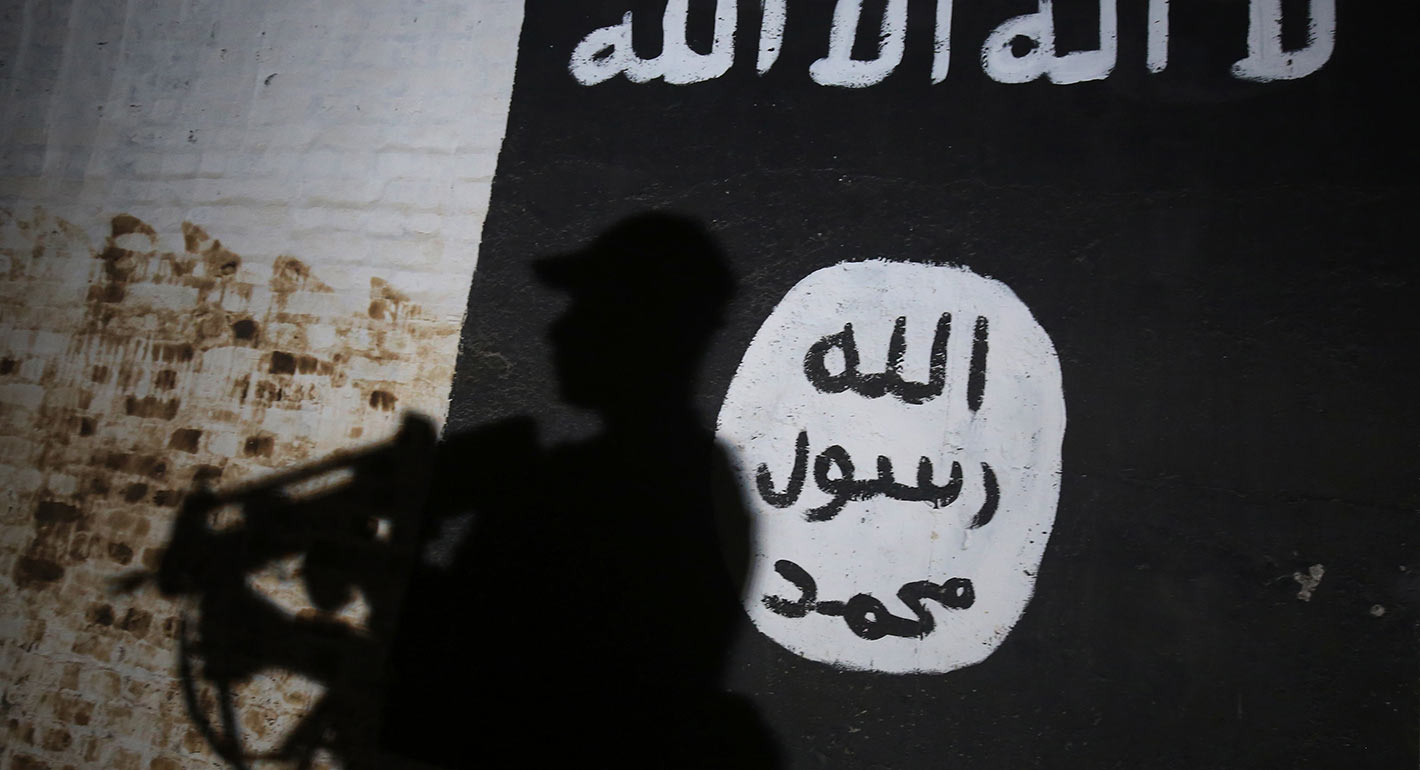
As the world begins to process what the death of Abu Bakr al-Baghdadi, the infamous head of the so-called Islamic State, means, there is a temptation to believe that the group has finally been eradicated. While there’s reasonable cause for celebration—not least for the group’s victims in the region—the threat of the Islamic State will remain as long as the world fails to address why it arose in the first place.
In life, Baghdadi, the self-proclaimed “caliph of all the Muslims,” was meant to serve as a symbolic figure who could claim leadership over an actual territorial entity, in the name of religion, with the corresponding duty of Muslims worldwide to pay him allegiance. But that narrative was always flawed.
Empirically, the overwhelming majority of Muslims worldwide rejected him and failed to take his leadership seriously. His victims included mostly fellow Muslims, as well as Yazidis (subjected to an attempted genocide), Christians, Kurds, Iraqis, Syrians, Turks, and others. The peoples of this region, Muslim and non-Muslim, were the ones who were most targeted by the Islamic State; they were the ones who sacrificed the most in fighting against the Islamic State; and it is they who will be feeling the most relief today.
Baghdadi’s followers ironically found common cause with Islamophobes who sought to promote him as some kind of religious authority representing the essence of Islam. But Muslim religious authorities within and outside the region frequently derided him and his group as promoting deviancy and heresy.
Indeed, the so-called caliph had little to show in the way of authoritative religious credentials: He held a religious studies degree from a substandard university set up by Saddam Hussein’s regime and even within the group wasn’t regarded as particularly erudite. As for genuine Muslim religious authorities, the key difference of opinion seemed to be whether the Islamic State’s ideas were sufficient to expel someone from the faith altogether or just meant they were incredibly sinful. The lack of religious literacy in public discourse around Islam seems to have meant that, for a lot of people, this characterization of the group being deviant or heretical according to Muslims generally was overlooked, despite efforts to the contrary.
But for his followers, Baghdadi was the caliph, and he ruled a so-called state. If their collective morale was at its peak when he was able to claim that he indeed ruled a territory, it has been a downward spiral since the pretensions to a state were proved wrong. Even when the Islamic State held territory in Syria and Iraq, it couldn’t be described as a state in any real sense—and it came crashing down.
Now the group lacks both a leader and a territory, but it is not simply going to vanish. Since it suffered its territorial setbacks in Iraq and Syria, the Islamic State has been transforming from within: Different factions have appeared, and affiliates around the world have been focusing more on their own domestic concerns and grievances. That process was already underway, and the death of Baghdadi will likely speed it up. It may mean that members leave the affiliates and join up with other militant terrorist groups; it may mean they desert the field of this type of international gangsterism altogether; or it may mean the affiliates mutate into other groups completely. No one knows yet.
What’s clear is that the factors that coalesced to make the creation of the Islamic State possible continue to exist. The ideological underpinning of the group, a certain marriage of two very modern heterodox religious interpretations (two offshoots of radical Islamism and purist Salafism), still has its fans. In that regard, it may be considered similar to the so-called Positive Christianity movement promoted by the Third Reich in the Nazi era, which was considered to be outside of any recognized traditions of Christian confession.
Eventually, Positive Christianity died out. It wasn’t sufficient that the near entirety of Christian churches rejected it; those churches needed to be considered credible by their flocks in saying so. But with the end of Nazism as a governing structure, it lost its main source of backing, and neo-Nazis found themselves trying to infiltrate society via other means.
One would hope that the existing religious establishments in the Sunni Muslim world would be able to effectively tackle the Islamic State’s ideological underpinnings—but they are deeply hamstrung.
One would hope that the existing religious establishments in the Sunni Muslim world would be able to effectively tackle the Islamic State’s ideological underpinnings—but they are deeply hamstrung.
Such religious establishments might play decent roles in terms of laying down the bedrock for mainstream education that would prevent the group’s ideology from gaining recruits. But they are ill-equipped to do much in the arena of countering extremism.
Credibility in that countering space is indelibly linked to being considered as “speaking truth to power,” and that’s seldom possible in most of the wider Arab world, due to different types of autocratic state structures. As such, the vulnerable target crowd often views such religious establishments as part of the problem, not part of the solution. Without the space and freedom to critique institutions of power in autocratic countries, those religious authorities are then going to be hamstrung in terms of their credibility to take on the Islamic State’s arguments.
For recruits, grievances are partially about external influence in the region but more about domestic abuses. And the abuses that are visited on many of these populations in the region will mean that such strategies will continue to have resonance, particularly as the brutal regime of Bashar al-Assad retakes territory in Syria and authoritarianism tries to root itself deeper within the region. Autocracy is indelibly linked to the grievances that Islamic State propagandists play on even if it doesn’t automatically draw people to extremism.
After all, even in Syria, the vast majority of people who experienced Assad’s rule did not join groups like the Islamic State. Indeed, it is important to remember that the most brutal force against civilians in Syria was, by far, the Assad regime. It is a testament to the immense resilience of the peoples of the wider Arab world that, despite all the human rights abuses and repression in many of their countries, such terrorist groups have such an incredibly tiny audience.
Never has it been truer to note that good governance, accountability, and respect for fundamental freedoms are core ingredients in any sustainable and comprehensive security strategy for the countries of the region.
Far too few leaders in the region are willing to admit the necessity of reform. Their lessons from the Arab revolutionary uprisings seem to be all about how to be more repressive, not less so.
Unfortunately, far too few leaders in the region are willing to admit the necessity of reform. Their lessons from the Arab revolutionary uprisings seem to be all about how to be more repressive, not less so, despite the reality that the demographic changes that are inevitable make such modes of rule inherently less sustainable.
Their allies in Western capitals, likewise, seem all too comfortable in accepting the notion that the peoples of the region are best served by short-term securitized stability regimes led by strongmen. Arabs, it’s claimed, just can’t do any better. It’s shortsighted but all too common to hear such talk among political elites in the West, on both the left and the right. It’s cynicism at best and bigotry at worst.
Baghdadi will in the future be known as a failed terrorist who adhered to a heretical doctrine, aspired to delusions of grandeur, and brought untold misery to millions of Syrians and Iraqis, finally ending his own life while on the run. But rather than reveling prematurely in his death, the world would be well advised to consider carefully the conditions that led to his rise and how to ensure that they are prevented from ever arising again in the future. That will require leadership from within and beyond the Middle East—a commodity that is currently in short supply.
Former Nonresident Scholar, Middle East Program
Dr. H.A. Hellyer was a nonresident scholar at the Carnegie Endowment for International Peace. He serves as a senior associate fellow at the Royal United Services Institute for Defence and Security Studies in London, and as a Cambridge University fellow.
Recent Work
H. A. Hellyer
H. A. Hellyer
Carnegie does not take institutional positions on public policy issues; the views represented herein are those of the author(s) and do not necessarily reflect the views of Carnegie, its staff, or its trustees.

Russia is testing the waters of NATO’s mutual defense clause. What do strikes in Romanian territorial waters mean for the alliance’s posture toward Moscow?

Dimitar Bechev

With its public finances in shambles, the far right polling at 35 percent ahead of the 2027 presidential election, and a growing protest movement, is France’s crisis a threat to the EU’s geopolitical awakening?

Rym Momtaz, ed.

Europe is facing rising populism internally as well as external pressures from Russia, China, Turkey, and the United States.
Dimitar Bechev

A notable degree of participative democracy has firmly arrived in Europe. But to have more far-reaching impact, democratic deliberation needs to move into a radically new phase.

Richard Youngs

Before the next wave of EU enlargement takes place, the union needs to grapple with thorny questions of how power is distributed among its members.


Emil Sondaj Hansen, Ditte Brasso Sørensen