

Commentary
The EU can impose sanctions but struggles to enforce them without the United States. With Washington increasingly disinterested in backing European interests, the bloc must now fend for itself.
Nicu Popescu, Tiago Antunes
{
  "authors": [
    "Aaron David Miller",
    "Richard Sokolsky"
  ],
  "type": "legacyinthemedia",
  "centerAffiliationAll": "",
  "centers": [
    "Carnegie Endowment for International Peace"
  ],
  "collections": [],
  "englishNewsletterAll": "",
  "nonEnglishNewsletterAll": "",
  "primaryCenter": "Carnegie Endowment for International Peace",
  "programAffiliation": "",
  "programs": [],
  "projects": [],
  "regions": [
    "North America",
    "United States",
    "Middle East",
    "Syria"
  ],
  "topics": [
    "Democracy",
    "Security",
    "Military"
  ]
}
Source: Getty
Letting the Turks loose and repatriating a million Syrian refugees will create another humanitarian disaster, ignite a Turkish-Kurdish conflict, and give the self-proclaimed Islamic State a boost.
Source: Hill
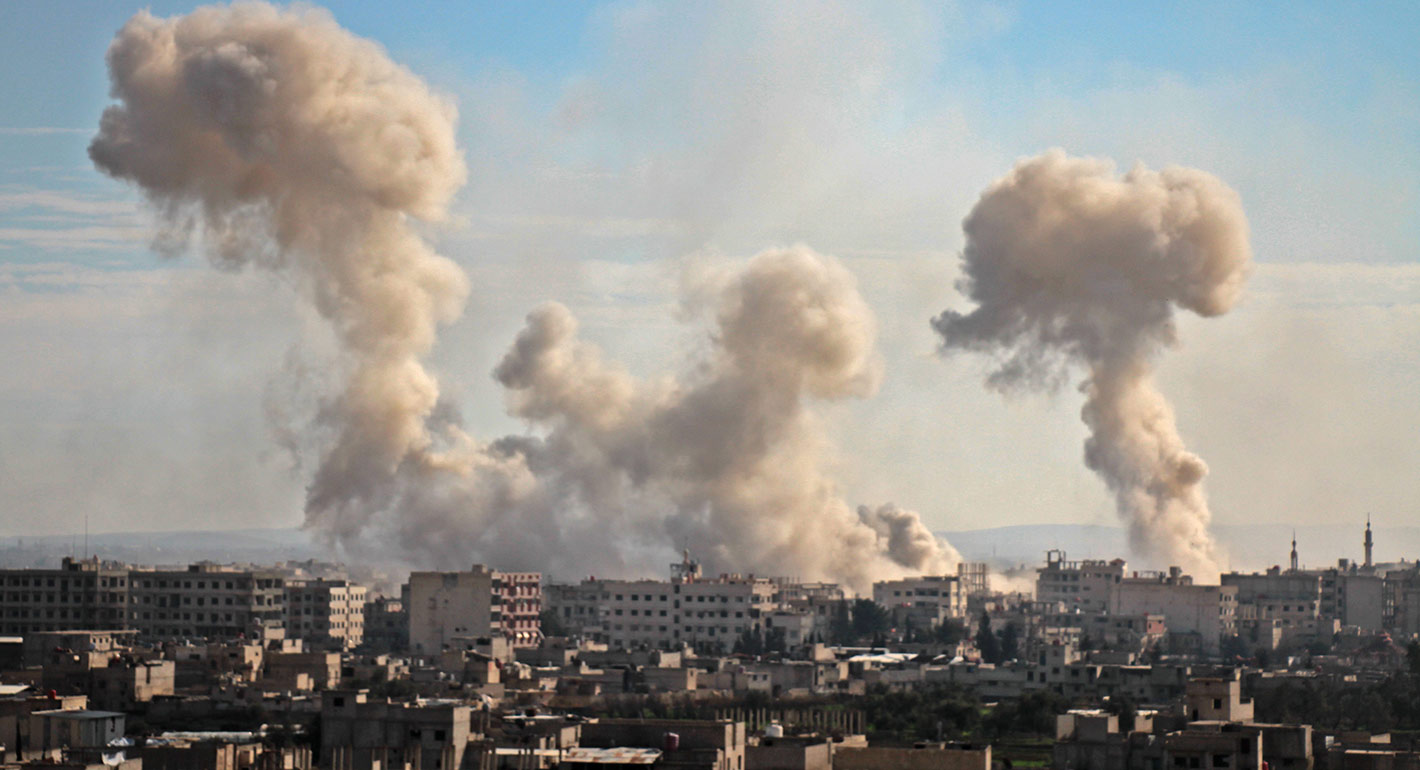
President Trump’s recently announced decision to withdraw U.S. forces from the Turkish-Syrian border is ill-timed, poorly conceived and divorced from any coherent strategy to achieve America’s overriding objective in Syria of defeating the Islamic State. Given the push back from Congress, that decision may, hopefully, not be final. Still, we should have no illusions: Syria is a mess, and the president’s decision, if he follows through, will make it even messier. Letting the Turks loose and repatriating a million Syrian refugees will create another humanitarian disaster, ignite a Turkish-Kurdish conflict and give ISIS a boost.
But the small number of American troops in Syria can’t fix this broken country or make it appreciably better. Syria’s future will be determined by those who are willing – unlike Washington – to invest significant blood and treasure there. The Trump administration does not consider Syria a vital U.S. interest and neither did its predecessor. It’s about time that those who think otherwise accept several unpleasant realities.
Trump’s decision may have blindsided the State and Defense Departments, but anyone genuinely surprised by the announcement clearly hasn’t been paying attention. Nor should the Kurds be shocked by Trump’s betrayal. The U.S. has a history of abandoning them, and the signs that they were dispensable tools in the administration’s anti-ISIS campaign were evident long before today. At least twice before, Trump had threatened to pull out of Syria.
Trump’s aborted decision last December to withdraw U.S. forces from Syria prompted former Secretary of Defense James Mattis to resign and accelerated former Special Envoy Brett McGurk’s departure from the administration.
Both were justifiably horrified for moral and strategic reasons that Trump would abandon America’s only reliable allies in Syria in the fight against ISIS. Then again, Trump had no stake in encouraging Kurdish separatism, getting in the middle of a Turkish-Kurdish conflict or alienating Turkish President Erdogan. Indeed, it was only a matter of time before a risk-averse and politically attuned president, eager to fulfill his campaign promise to get America out of “endless foreign wars,” would take another shot at making it happen.
The president’s decision triggered a hostile reaction, especially from Republicans on the Hill, who found the idea of abandoning a loyal partner morally abhorrent and feared it would invite a large scale Turkish invasion and decimation of the Kurds. Lindsay Graham (R-S.C.), one of the president’s most avid supporters, called it a “disaster in the making” and threatened sanctions on Turkey if it mounted an attack against the Kurds. Senate Majority Leader Mitch McConnell (R-Ky.) opined that it would only benefit America’s enemies — Iran, Russia and the Assad regime. Congress has been down this road before, passing a formal bipartisan resolution in January 2019 criticizing the president for previous threats to withdraw.
Trump may – as he’s done before – reverse this latest decision. Within hours of the Hill’s reaction, the president tweeted that he’d move to restrain any Turkish military move, threatening to “obliterate” the Turkish economy. In fact, Erdogan has never been comfortable with a total U.S. withdrawal from Syria, which would leave Ankara to address the entire problem on its own.
The Turkish president made clear that he’d wait to discuss the “depth of (the Turkish military) operation” until he sees President Trump next month in Washington, perhaps indicating a large-scale Turkish military move against the Kurds isn’t imminent.
The president should use this time and the meeting with Erdogan to negotiate badly needed arrangements to protect the Kurds from decimation and enable America’s partner to continue its fight against ISIS.
This may be a bridge too far, or one crossed too late. Erdogan may well decide to mount a cross border incursion against the Kurds sooner rather than later. And besides, Trump is desperate to achieve a foreign policy “win” and to make good on his campaign commitment to extricate America from its wars in the Middle East. Erdogan knows this and so do the leaders of Syria, Russia and Iran. None of them fear deeper U.S. military involvement in Syria, and thus have no incentive to give away anything to the U.S. in negotiations.
Indeed, the U.S. is at a deep disadvantage in Syria because Trump (and Obama) have made it very clear that Syria is not a vital U.S. interest and America is therefore unwilling to incur the costs and risks, in lives, treasure and credibility, that the other major players are prepared to absorb. The inconvenient truth is that these countries are prepared to pay a far higher price to achieve their objectives than Washington is to realize its goals. This asymmetry in will and interests is at the heart of America’s inability to bend Syria in a more positive direction.
The critics of the president’s decision need to be realistic about what the U.S. can achieve in Syria. Assad is not going anywhere. The small U.S. military presence provides no leverage to remove him from power and they cannot, without help from its Kurdish partners, contain the threat from the Islamic state or leverage the Syrians, Iranians, Russians and Turks into getting this job done. No matter how much Republicans and Democrats deplore the president’s decision, very few – and we put ourselves at the top of the list – would advocate deploying thousands of more troops to Syria and getting more involved in Syria’s own forever war.

Senior Fellow, American Statecraft Program
Aaron David Miller is a senior fellow at the Carnegie Endowment for International Peace, focusing on U.S. foreign policy.

Nonresident Senior Fellow, Russia and Eurasia Program
Richard Sokolsky is a nonresident senior fellow in Carnegie’s Russia and Eurasia Program. His work focuses on U.S. policy toward Russia in the wake of the Ukraine crisis.
Carnegie does not take institutional positions on public policy issues; the views represented herein are those of the author(s) and do not necessarily reflect the views of Carnegie, its staff, or its trustees.

The EU can impose sanctions but struggles to enforce them without the United States. With Washington increasingly disinterested in backing European interests, the bloc must now fend for itself.


Nicu Popescu, Tiago Antunes

Russia is testing the waters of NATO’s mutual defense clause. What do strikes in Romanian territorial waters mean for the alliance’s posture toward Moscow?

Dimitar Bechev

With its public finances in shambles, the far right polling at 35 percent ahead of the 2027 presidential election, and a growing protest movement, is France’s crisis a threat to the EU’s geopolitical awakening?

Rym Momtaz, ed.

Ahead of a tough winter for Ukraine, Donald Trump’s swing back toward Russia bodes ill. But instead of panicking, Kyiv’s European allies are focusing on action.
Rym Momtaz

While the EU and European governments are embracing the much-lauded middle-power moment, this entails three difficult conundrums.

Richard Youngs