

Q&A
Darshana M. Baruah, Satyendra Prasad, Denghua Zhang
{
  "authors": [
    "Darshana M. Baruah"
  ],
  "type": "legacyinthemedia",
  "centerAffiliationAll": "dc",
  "centers": [
    "Carnegie Endowment for International Peace",
    "Carnegie India"
  ],
  "collections": [],
  "englishNewsletterAll": "ctw",
  "nonEnglishNewsletterAll": "",
  "primaryCenter": "Carnegie India",
  "programAffiliation": "SAP",
  "programs": [
    "South Asia"
  ],
  "projects": [
    "Security Studies",
    "Indian Ocean Initiative"
  ],
  "regions": [
    "Asia",
    "South Asia",
    "India",
    "Indo-Pacific"
  ],
  "topics": [
    "Foreign Policy"
  ]
}
Source: Getty
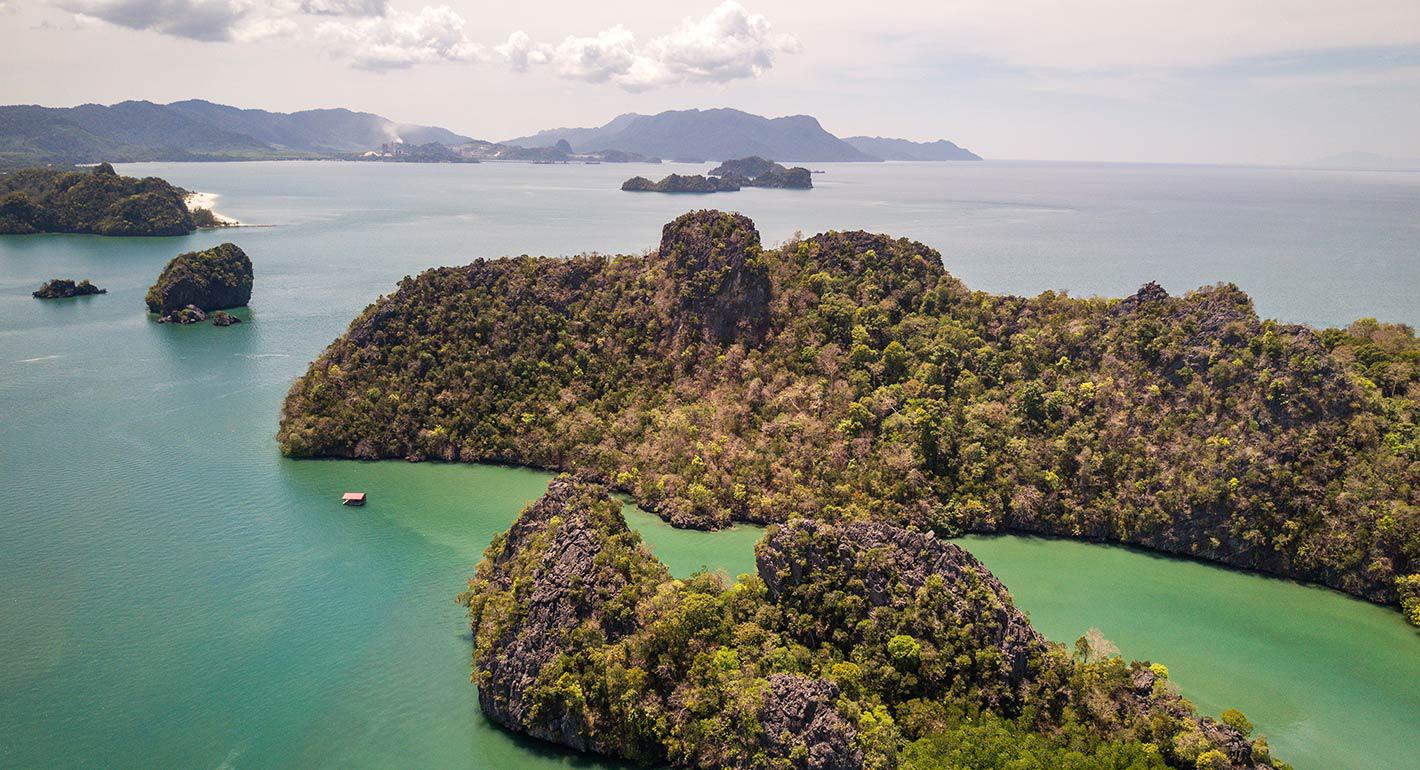
As countries in the Indo-Pacific continue to deepen maritime collaborations between friends, partners, and allies, the island territories in the region are well-positioned to offer tremendous support and strategic leverage to India and its partners.
Source: Asian Maritime Transparency Initiative
As countries in the Indo-Pacific continue to deepen maritime collaborations between friends, partners, and allies, the island territories in the region are well-positioned to offer tremendous support and strategic leverage to India and its partners. Island territories in particular facilitate a greater maritime presence, help generate a common picture for maritime domain awareness (MDA), and allow for new strategic collaborations.
Across the Indo-Pacific, and particularly in the Indian Ocean, the Western Pacific, and the South Pacific, there is a growing concern about the development of possible Chinese military bases, or commercial ports with strategic significance, within island states. The resident powers and traditional security providers across these subregions—India, the United States, Japan, Australia, and France—are wary of new Chinese military bases or influence that might undermine their strategic advantages. But despite their rush to secure their strategic interests and maintain their advantages, these countries have thus far failed to fully tap into the potential of their island territories, both individually and collectively.
Together, the resident powers have access to a set of island territories that occupy key chokepoints across the Indo-Pacific. The United States’ base at Diego Garcia and France’s at La Reunion Island are positioned to support operations in the Southern and Western Indian Ocean; Australia’s Cocos (Keeling) Islands look over the approaches to the Sunda, Lombok, Ombai, and Wetar Straits from the Indian Ocean; and India’s Andaman and Nicobar Islands provide access to the Malacca Straits. The Japanese and U.S. bases on Okinawa watch over the Taiwan Strait, while U.S. facilities at Guam, Wake Island, and Hawaii combine with France’s in French Polynesia and New Caledonia to provide unmatched access across the Pacific. Reciprocal access and logistics agreements concluded in recent years would, theoretically, allow India and its partners to navigate and utilize this entire network of islands.
These island territories provide two critical benefits for India and its partners:
Many of these island territories sit close to chokepoints such as the Strait of Malacca and the Mozambique Channel. The ability to be present in these areas and carry out MDA operations will allow partner navies to develop a more coherent picture of what is happening on the water—a priority for all in the region. The information generated through MDA missions is useful in dealing with both traditional and non-traditional threats. MDA allows one to track the increasing military presence from competing nations as well as monitor non-traditional threats such as illegal fishing and drug smuggling. While information on sub-surface vessels might be of particular interest for the traditional players in the region, like India and the United States, information on illegal fishing and non-traditional challenges are of keen interest to island states—key stakeholders in the Indian and the Pacific Oceans.
Most navies place significant emphasis on maintaining presence near chokepoints for protecting sea lines of communication and securing strategic and economic interests. Given the vast scope of the Indo-Pacific, coordination between these nations and access to each other’s facilities allows them to be present in areas far from their own shores. For instance, India’s access to Reunion Island allows the Indian Navy to maintain a presence in the western Indian Ocean, including the east coast of Africa—an area where Indian Navy engagements and presence are limited. Such access and coordination are made available through appropriate agreements such as the 2016 Logistics Exchange Memorandum of Agreement between India and the United States. India has signed logistics agreements with France, Singapore and South Korea. Concluding similar agreements with Tokyo and Canberra should be a priority for Delhi.
As India explores deeper collaborations with its maritime partners, it should look to capitalize on the advantages provided by these island territories. One potential opportunity lies in the growing interoperability between air components of the Indian Navy and its partners. India, Australia, and the United States all share variations of the Boeing P-8 aircraft used for reconnaissance and surveillance purposes. This could be leveraged during bilateral and multilateral exercises. For example, India and Australia could use their respective P-8s to fly between the Cocos and the Andaman and Nicobar Islands during their bilateral exercise, AUSINDEX. Similarly, India, the United States, and Japan could use their respective aircraft to fly between the Andamans and either Diego Garcia, Okinawa, or Guam as part of Exercise Malabar, or as part of JIMEX for India and Japan. Delhi and Paris have already effected such an arrangement for Exercise Varuna, which in 2018 made use of Reunion Island. As I have argued previously, these engagements “would allow Delhi to signal intent, show force and presence, and generate MDA over a large area covering key sub-regions and critical chokepoints.”
Their island territories are well placed to support the converging maritime interests among India and its friends. In particular, these territories strengthen Delhi’s presence across the Indian Ocean and help expand its reach in the wider Indo-Pacific without the need for new bases or facilities for which India has neither the capital nor the political will. Moreover, the access, presence, and security provided by these island territories allow New Delhi to focus on security concerns – primarily non-traditional in nature- prioritized by island nations in the Indo-Pacific. In the emerging new geopolitical competition in the maritime domain, island territories will play a significant role- a development Delhi and its partners must acknowledge and understand to secure their own strategic interests.
This article was originally published by the Asia Maritime Transparency Initiative.

Former Nonresident Scholar, South Asia Program
Darshana M. Baruah was a nonresident scholar with the South Asia Program at the Carnegie Endowment for International Peace where she directs the Indian Ocean Initiative.
Recent Work

Darshana M. Baruah, Satyendra Prasad, Denghua Zhang
Darshana M. Baruah
Carnegie does not take institutional positions on public policy issues; the views represented herein are those of the author(s) and do not necessarily reflect the views of Carnegie, its staff, or its trustees.

The aftermath of the Ceuta crisis shows Europe has drawn the wrong lessons. Rather than doubling down on failed migration policies, the EU needs to address the underlying roots of such episodes.

Richard Youngs

Canadian Prime Minister Mark Carney has twice inspired praise for standing up to U.S. President Donald Trump: at the 2026 World Economic Forum in Davos and on Canada-U.S. trade negotiations. Is Carney showing a third way better than the EU has in dealing with the Trump administration?

Rym Momtaz, ed.

The EU’s responses to two recent incidents expose the gulf between European perceptions and capabilities. Unless the union can bridge that gap, it will never become a real geostrategic power.
Rym Momtaz

European states control several Overseas Countries and Territories around the world that carry strategic, economic, and environmental weight. As great powers challenge the rules-based order, defending them is a geopolitical imperative for Europe.

Marc Pierini

As we close out another season of Strategic Europe, it is worth taking stock of the deep shifts underway.
Rym Momtaz