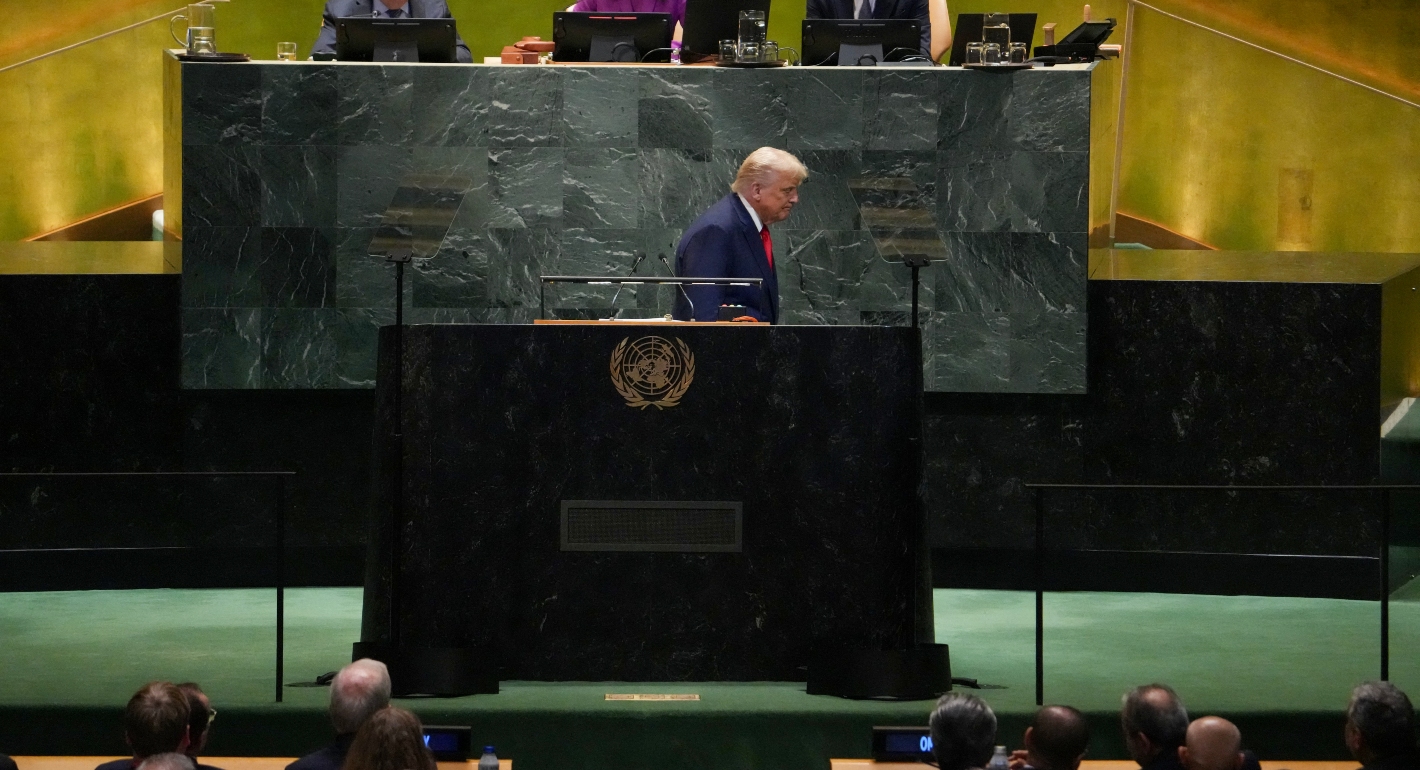

For years, the United States anchored global cyber diplomacy. As Washington rethinks its leadership role, the launch of the UN’s Cyber Global Mechanism may test how allies adjust their engagement.
Patryk Pawlak, Chris Painter
{
"authors": [
"R. K. Misra",
"Arjun Kang Joseph"
],
"type": "legacyinthemedia",
"centerAffiliationAll": "",
"centers": [
"Carnegie Endowment for International Peace",
"Carnegie India"
],
"collections": [],
"englishNewsletterAll": "",
"nonEnglishNewsletterAll": "",
"primaryCenter": "Carnegie India",
"programAffiliation": "",
"programs": [],
"projects": [
"Technology and Society"
],
"regions": [
"South Asia",
"India"
],
"topics": [
"Technology"
]
}Source: Getty
It is projected that two out of every three people in the world will live in cities by 2050.
Source: Print
It is projected that two out of every three people in the world will live in cities by 2050. With its current trend of urbanisation, India is likely to have more than 60 cities with populations exceeding one million and six megacities with populations of 10 million or more by 2030. Mumbai and Delhi, which are already among the world’s largest cities, would continue to be the centres of urban explosion.
Nonresident Scholar, Technology and Society Program
R. K. Misra is a nonresident scholar at Carnegie India. Based in Bengaluru, he drives Carnegie India’s Technology and Society program, and engages with technology innovators and policymakers.
Former Senior Research Analyst and Co-Convenor, Global Technology Summit, Carnegie India
Arjun Kang Joseph is a senior research analyst with the Technology and Society Program at the Carnegie Endowment for International Peace India. He works primarily on data, privacy, and the intersection of health and technology.
Carnegie does not take institutional positions on public policy issues; the views represented herein are those of the author(s) and do not necessarily reflect the views of Carnegie, its staff, or its trustees.
For years, the United States anchored global cyber diplomacy. As Washington rethinks its leadership role, the launch of the UN’s Cyber Global Mechanism may test how allies adjust their engagement.
Patryk Pawlak, Chris Painter
Integrating AI into the workplace will increase job insecurity, fundamentally reshaping labor markets. To anticipate and manage this transition, the EU must build public trust, provide training infrastructures, and establish social protections.
Amanda Coakley
As European leadership prepares for the sixteenth EU-India Summit, both sides must reckon with trade-offs in order to secure a mutually beneficial Free Trade Agreement.
Dinakar Peri
Tech giants are increasingly able to wield significant geopolitical influence. To ensure digital sovereignty, governments must insist on transparency and accountability.
Raluca Csernatoni
The second Trump administration has shifted the cornerstones of the liberal international order. How the EU responds will determine not only its global standing but also the very integrity of the European project.
Rym Momtaz